Eloquent Images by Gary Hart
Insight, information, and inspiration for the inquisitive nature photographer
Night Vision
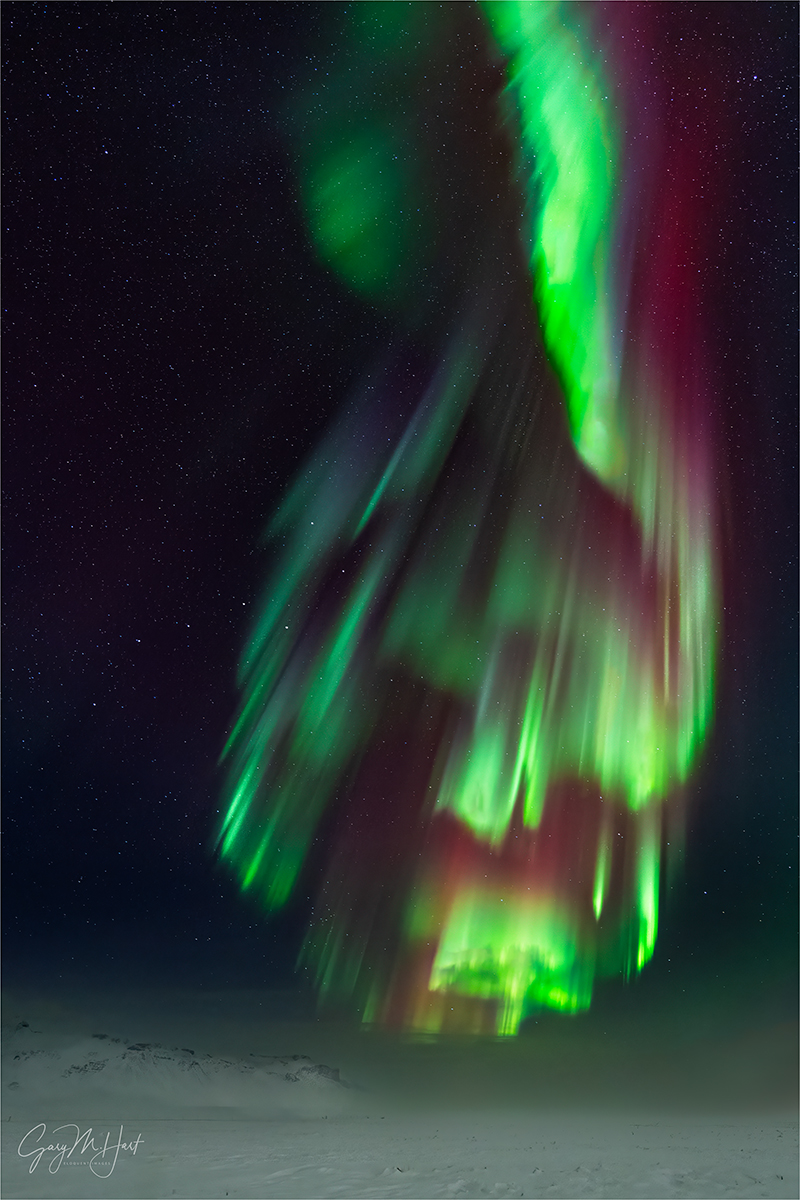
Looking North, Aurora and Big Dipper, Snaefellsnes Peninsula, Iceland
Sony α1
Sony 14mm f/1.8 GM
ISO 3200
f/1.8
4 seconds
When it comes to natural beauty, I’ll be the first to admit that there is nothing like being there. In person we get to enjoy all the movement and simultaneous multi-sensory input that’s lost in a still image—not to mention the synergistic amplification of awe and joy that comes with witnessing a special event with others. But let’s pause for a moment to appreciate what a camera brings to those experiences—more than just the way a camera freezes our a memory in time, a camera actually reveals aspects of the natural world that our eyes can’t see.
This advantage is particularly significant when the sun is down and our eyes struggle to wring photons from the darkness. Though the light capturing capability of the human eye is superior, our eyes have to start over with the passing each (infinitesimal) instant. A digital sensor accumulates incoming photons for whatever duration we choose, allowing exposures of just a few seconds to reveal a night sky brimming with more stars than we imagined possible—the longer the exposure, the more stars we see.
Perhaps even more powerful than unveiling hidden stars, a also camera reveals color that, while unseen by our eyes, is nevertheless very real. The human eye functions through a collaboration of two kinds of photoreceptors: rods and cones. In daylight, the cones do a wonderful job resolving our world’s exquisite detail and vivid color, pulling this visual information from a scene’s darkest shadows and brightest highlights much better than a digital sensor can. The cost of our cones’ efficiency is that they require lots of light to function at their best.

Milky Way Reflection, Colorado River, Grand Canyon
But things change in the dark. Evolution has determined that at night, job-one for our eyes is keeping us safe from obstacles and predators, giving our vision a strong bias toward detecting shape and movement. To achieve this, the bulk of the light gathering job is turned over to our eyes’ rods, which require very few photons to detect essential contrast and motion, but are blind to the color and detail our light-thirsty cones see. So, even in night’s feeble light, humans are able to avoid shapes well enough to navigate, and to detect pouncing predators, but we’re denied the night sky’s exquisite color and detail.
A digital sensor, on the other hand, is an equal opportunity light collector, capturing the color and detail our eyes miss—when given enough time. To the unaided eye on a dark night, the center of the Milky Way is a distinct but still faint cloud of light. But in the right hands (metaphorically speaking—you’ll need a tripod), a camera reveals magnificent color woven into meandering bands of star-sprinkled dust forming our galaxy’s core. Following the hazy glow away from the core reveals that a dimmer band of the Milky Way stretching from horizon to horizon.

Comet Tsuchinshan–ATLAS and Mt. Whitney, Alabama Hills, California
And it’s not just more stars that a camera pulls out. A naked-eye comet, while undeniably beautiful to behold, enters an entirely new dimension of beauty in a camera: it brightens, the tail doubles or triples in length, and sometime bluish ion tail emerges from the darkness.
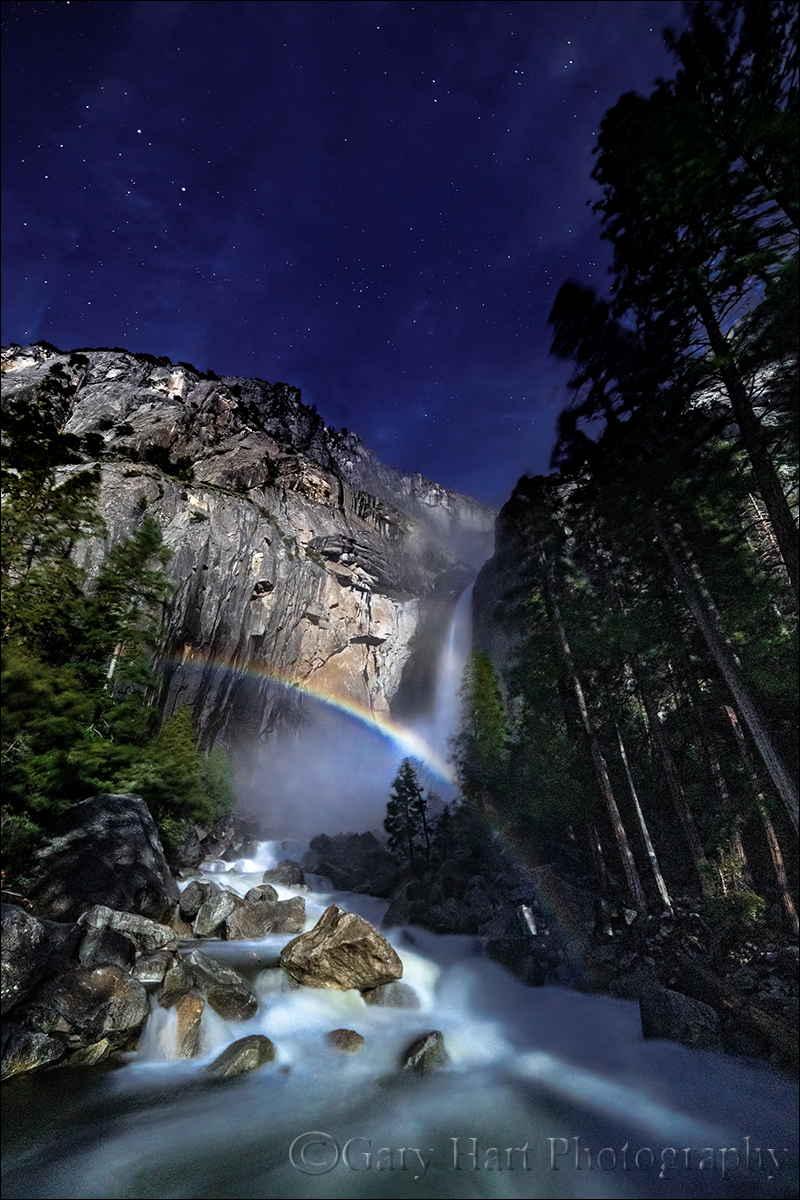
Moonbow, Lower Yosemite Fall, Yosemite
One of the best examples of the camera’s color rendering superiority is a moonbow, a lunar rainbow that appears to our eyes as a shimmering silver band when rain or mist at the base of a waterfall is illuminated by the light of a full moon. Captured by a camera, using a long exposure, this monochrome band transforms into an arcing prism in living color.
And then there’s an aurora, a kinetic display of multi-color shafts and sheets that is arguably the most beautiful natural sight Nature delivers. Without denying the fact that no camera can match the experience of witnessing a dancing aurora with your own eyes, a camera exposes color that enhances the aurora magic even more.
I am extremely grateful for the many opportunities I’ve had to simultaneously view and photograph an active aurora. My most recent aurora experience was the show Don Smith and I shared with our Iceland workshop group in February. We were settled in at our remote hotel in an uninhabited region of the Snaefellsnes Peninsula in Iceland, but a forecast of cloudy skies and minimal aurora activity had sent everyone to their rooms shortly after dinner. But just a couple of hours later, the group WhatsApp thread lit up with messages from a couple of participants who had briefly ventured out front and saw northern lights.
Skeptical, I nevertheless armored up with winter wear and grabbed my camera bag and hustled out the front door. Crossing the road to where a few in our group had already set up I glanced skyward expecting no more than a faint glow near the horizon, but stared in disbelief at the display overhead. After grabbing a spot (in two feet of snow) along the fence paralleling the road, I quickly set up, then stepped back from my camera to take attendance.
With each shape bundled against the cold and pretty much anonymous in the moonless darkness, and a handful other hotel guests mixed in, it took a while to determine who was present and who was missing. Once I sorted that out, after a few text messages and phone calls I was (relatively) confident everyone had been notified (turns out we missed one person who I thought was out there with us) and got down to serious picture taking business. Soon as the display intensified, and the giddiness that had initially engulfed us all gave way to quiet awe, broken only by the frequent click of shutters.
In a good aurora display, it is possible to see some color with your eyes, but whatever amount of color your eyes pick up, your camera will see more. All of the color our eyes saw this night was faint green, but my camera revealed a good mix of red with the green—all far more vivid.
I’ve witnessed enough auroras to have an idea of what the cameras of our group’s first-timers were adding to their experience. While the awe of an aurora never goes away, the first-time viewers had the added thrill of realizing the actual color their eyes couldn’t see, and looking skyward knowing the color in their camera was really there. It wasn’t just our images’ color our eyes—even our cameras’ live-view display showed much more color.
Most of my images were targeted northwest and directly across a snowy field toward the most prominent mountains, but when a spiraling, multi-layered shaft shot skyward to my right, I switched my camera to vertical and pointed more due north. In my very first frame the Big Dipper jumped out at me, and I decided to compose my next frame to make it and the North Star (the brightest star in the upper left) a more prominent part of my image.
This turned out to be one of the best aurora displays I’ve ever seen, not just for its brightness and color, but also for its motion and range, at various times coloring the sky north, east, and west. It was like looking up from inside a lava lamp, watching the glowing shapes twist and fold on themselves in all directions. Just one more reminder of the blessings Nature bestows, and my good fortune to witness them.
Join Don and Me for This Year’s Iceland Aurora Workshop
Workshop Schedule || Purchase Prints || Instagram
Night Vision
Click any image to scroll through the gallery LARGE
-

- Aurora Reflection, Glacier Lagoon, Iceland
-

- Heaven Sent, Comet Tsuchinshan–ATLAS Above the Sierra Crest, Alabama Hills
-

- New Zealand Night, Milky Way Over Tasman Lake
-
- Moonbow and Big Dipper, Lower Yosemite Fall, Yosemite
-
- Night Lights, Snaefellsnes Peninsula, Iceland
-
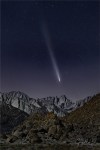
- Night Moves, Comet Tsuchinshan–ATLAS and Mt. Whitney, Alabama Hills
-
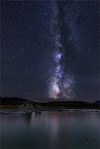
- Milky Way Reflection, South Tufa, Mono Lake
-

- Nature’s Light Show, Aurora Over Dyrhólaey Coast, Iceland
-
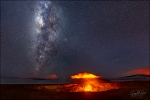
- Glow, Milky Way Above Kilauea, Hawaii
-
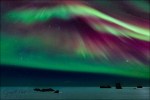
- Wings of Angels, Aurora Above Dyrhólaey, Iceland
-
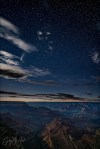
- Comet NEOWISE and the Big Dipper, Grandview Point, Grand Canyon
-

- Green Curtain, Kirkjufell Aurora, Iceland
-

- Aurora Streaks, Glacier Lagoon, Iceland
-

- Comet PanSTARRS and New Moon, Haleakala, Maui
-

- Silent Night, Milky Way Above Lake Wakatipu, New Zealand
-

- The Green Night, Aurora Above Kirkjufell, Iceland
-

- Milky Way and Small Magellanic Cloud, Lake Wakatipu, New Zealand
-
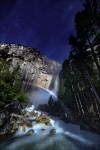
- Moonbow, Lower Yosemite Fall, Yosemite
-

- Milky Way Reflection, Colorado River, Grand Canyon
-

- Swoosh, Northern Lights Over Kirkjufell, Iceland
-
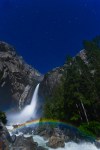
- Moonbow and Big Dipper, Lower Yosemite Fall, Yosemite
-

- Neon Night, Aurora and Glacier Lagoon, Iceland
-
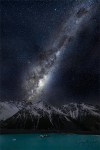
- Star Spangled Night, Milky Way and Tasman Lake, New Zealand
-

- Yosemite Dawn, Comet Neowise and Venus from Glacier Point, Yosemite
-

- Celestial Reflection, Milky Way Over the Colorado River, Grand Canyon
-
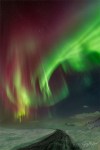
- Follow the Lights, Snaefellsnes Peninsula, Iceland
-

- Dark Night, Milky Way Above the Colorado River, Grand Canyon
-

- Northern Lights, Kirkjufell, Iceland
-

- Winter Night, Milky Way Above Tasman Lake, New Zealand
-
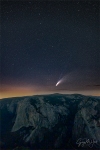
- Neowise and the Big Dipper Above El Capitan, Taft Point, Yosemite
-
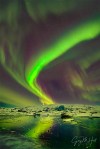
- Northern Lights Reflection, Aurora and Glacier Lagoon, Iceland
-

- Fire on High, Kilauea and Milky Way, Hawaii
-
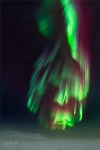
- Looking North, Aurora and Big Dipper, Snaefellsnes Peninsula, Iceland
-

- Stairway to Heaven, Milky Way Over the Puna Coast, Hawaii
-

- Comet Tsuchinshan–ATLAS and Mt. Whitney, Alabama Hills, California
 Eloquent Images by Gary Hart
Wow
Pingback: Looking Back at 2025: I Was There | Eloquent Images by Gary Hart