Eloquent Images by Gary Hart
Insight, information, and inspiration for the inquisitive nature photographer
Rise and Shine
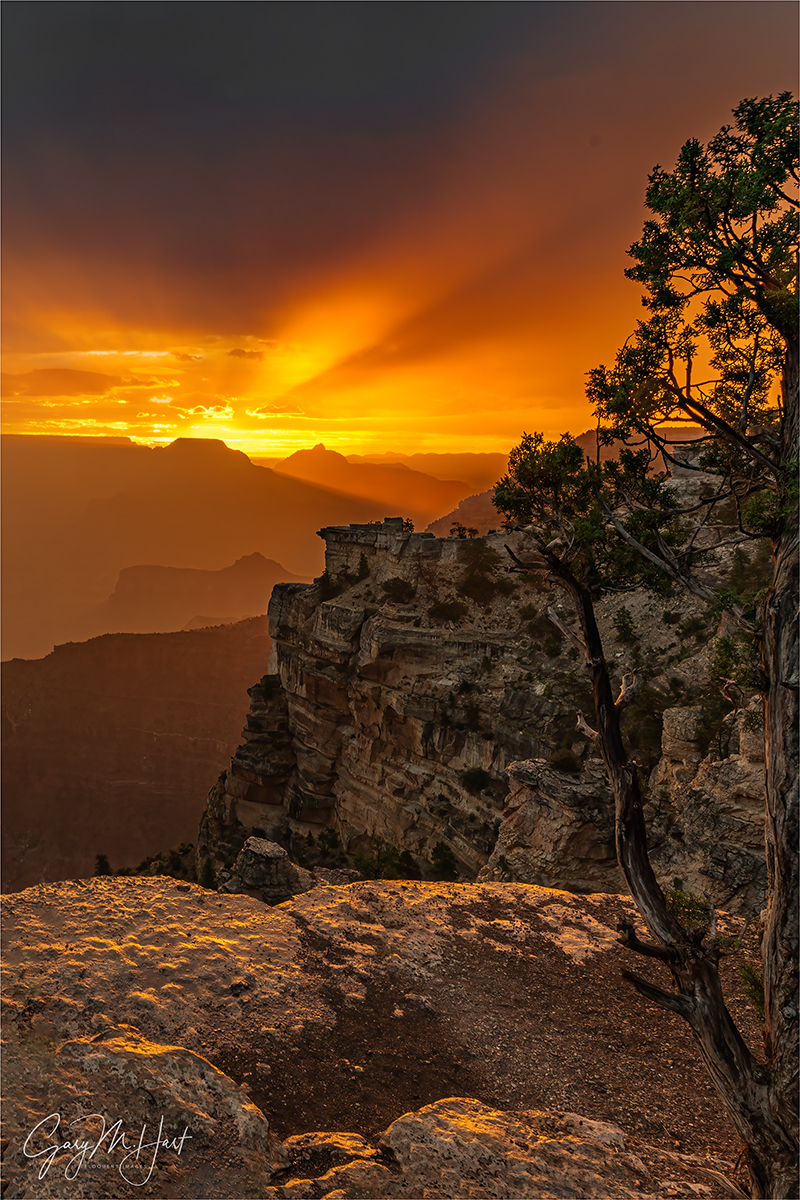
Rise and Shine, Mather Point, Grand Canyon
Sony α1
Sony 16-35 f/2.8 GM
ISO 100
f/14
2.5 seconds
Imagine a world unmarred by the din of civilization, a world so quiet you can hear nature’s every stirring, where each breath carries a pristine bouquet of subtle fragrances and the sky is a continuously shifting kaleidoscope of indigo, blue, yellow, orange, and pink. Not a fantasy dreamscape or a garden planet in a galaxy far, far away, I’m describing the world just beyond your front door, before the sunlight and warmth have enticed the noisy, dirty, oblivious masses.
The morning magic begins when a crack of light brightens on the eastern horizon and a few stars still burn overhead. It’s still too dark for the eye to register detail and color, and nearby objects loom as vague shapes. Lacking enough light for the eyes to do their thing, the pre-sunrise experience amplifies the non-visual senses, allowing the sounds like gentle breezes, flowing water, and stirring creatures to mingle with the fresh aroma of dew-laden plants.
For the next 30 minutes, the eastern horizon brightens faster than the rest of the scene. Prodded by the advancing day, the shrinking Earth’s shadow pushes toward the opposite horizon and the sun’s longest wavelengths battle through the atmosphere to color the western sky pink.
Photographing this pre-sunrise show can begin earlier than your eyes might tell you. In fact, the camera’s ability to capture aspects of the natural world that differ from the human perspective might just be my favorite thing about photography, and these sunrise moments provide a wonderful opportunity to engage one of the camera’s greatest strengths. Experienced photographers understand that what we perceive as darkness is just our eyes’ relatively limited ability to gather light, combined with the brain’s insistence on processing this limited input instantaneously. But a camera’s sensor accumulates light, capturing every photon to strike it, stretching the “instant” of perception for whatever duration the shutter speed prescribes.
Another advantage a digital sensor has over the human eye is its ability to extract color from apparent darkness. The human eye uses rods and cones to collect light, with the rods doing the heavy lifting in low light, pulling enough monochrome information to discern vague shapes and detail, but providing little help with color and depth. The cones can’t complete the scene’s color and depth information until much more light has arrived. A digital sensor, though blind to depth, captures photons without discrimination, enabling it to “see” color in very low light.
One particularly special sunrise

Rise and Shine, Mather Point, Grand Canyon
There are a lot of excuses to skip sunrise, but I rarely hear anyone who overcomes the urge to stay in bed express regret after they’ve actually gone out for sunrise. That said, the reasons to miss this morning’s sunrise were both many and strong. In addition to the always popular, “You want us to leave at what time?” (in this case, 4:45 a.m.) and a weather forecast calling for rain, lightning, and thunder, my Grand Canyon workshop group was still basking in the glow of the previous evening’s spectacularly productive lightning shoot at Desert View. How can we top that?
Nevertheless, everyone showed up dark-and-early at the designated meeting spot and by 5:00 a.m. we were setting up our camera gear on the rim near Mather Point. But just about the same time we became aware of lightning brightening the clouds south of us. There was no rain yet, and we weren’t hearing thunder, but these storms moving up from from the south can advance quickly and are easy to miss until it’s too late because we’re all looking in the other direction.
Speaking of the other direction, as portentous as the weather behind us was, the sunrise approaching behind Wotan’s Throne (the flat monolith in the upper left of my image), looked especially promising. Though still not quite ready for primetime, the view just kept getting better. With the arrival of thunder with the lightning, a clear indication that the storm was getting closer, I checked my watch and started counting the seconds: 10 miles, 8 miles, 5 miles… When few splats of rain turned to sheets and stiff wind kicked up, I gave the approaching sunrise scene a (regretful) parting glance and told my group it was time time to retreat to the cars for safety. By the time we were safely sheltered, everyone was soaked and the lightning was within 2 miles.
The actual sunrise was still 15 minutes away. Even though I couldn’t actually see the horizon, I could tell by the light in that direction that it was really ramping up. When I realized the thunder had faded and the lightning seemed less frequent, I checked my lightning app and saw that the threatening cell had taken a sudden eastward detour away from our position. After pausing a minute or so just to be sure, I hustled everyone out of the cars and back to the rim (nearly getting trampled in the process).
Rather than take the time to head to the more conventional view, I stopped at a spot closer to the cars that I’d noted earlier, making it just as shafting light shot skyward from behind Wotan’s Throne. Working quickly, I went with both horizontal and vertical compositions. Because a nearby tree and the textured rock ledge supporting me featured prominently in my composition, I stopped down to f/14 and focused at the far edge of the ledge.
I underexposed the brilliant gold sunlight enough to hold the color, keeping an eye on the shadows side of my histogram to ensure that I didn’t darken them beyond the point of no return. It helped that thick, moisture-laden air in the canyon obscured most of the detail down there anyway, and that the rocky ledge at my feet was a reflective whitish-tan that was easily recovered in post. Turns out, aside from darkening the highlights and brightening the shadows, this image required very little processing.
In hindsight, I shudder to think how close we came to missing this sunrise altogether. Of course if the lightning had persisted, we’d have had no choice, but as wet as we all were it would have been very easy to just motor back to the hotel to warm up and fill our tummies. But we stuck it out, and were rewarded with one of my most memorable Grand Canyon sunrises.
Morning Glory
Click any image to scroll through the gallery LARGE


 Eloquent Images by Gary Hart
Great images and tips Gary. I agree about sunrises, but rarely push myself to catch a sunrise. There have been times when watching and photographing sunsets was a joyful routine.
Thanks so much, Brad. 🙏
Divine! ✨🙏🏻
Thanks, Michele.
The ” good stuff” definetly happens in early morning! Sometimes it’s difficult to convince others that it is worth getting up early to see what surprises mother nature has designed for us, but she rarely disappoints. Your sunrise is spectacular and brings back fond memories of your workshop that took me there. How wonderful that you were able to enjoy and catch another memorable sunrise!
Gary, These are great photos, thanks for inspiring me! Judy
Sent from my iPhone
Thanks so much, Judy.
❤️ love all of them! Awesome photography!
Much thanks!
Stunning
Thank you, Tatiana.
Pingback: Rise and Shine | Eloquent Images by Gary Hart - Photography