Eloquent Images by Gary Hart
Insight, information, and inspiration for the inquisitive nature photographer
No-Excuse Photography
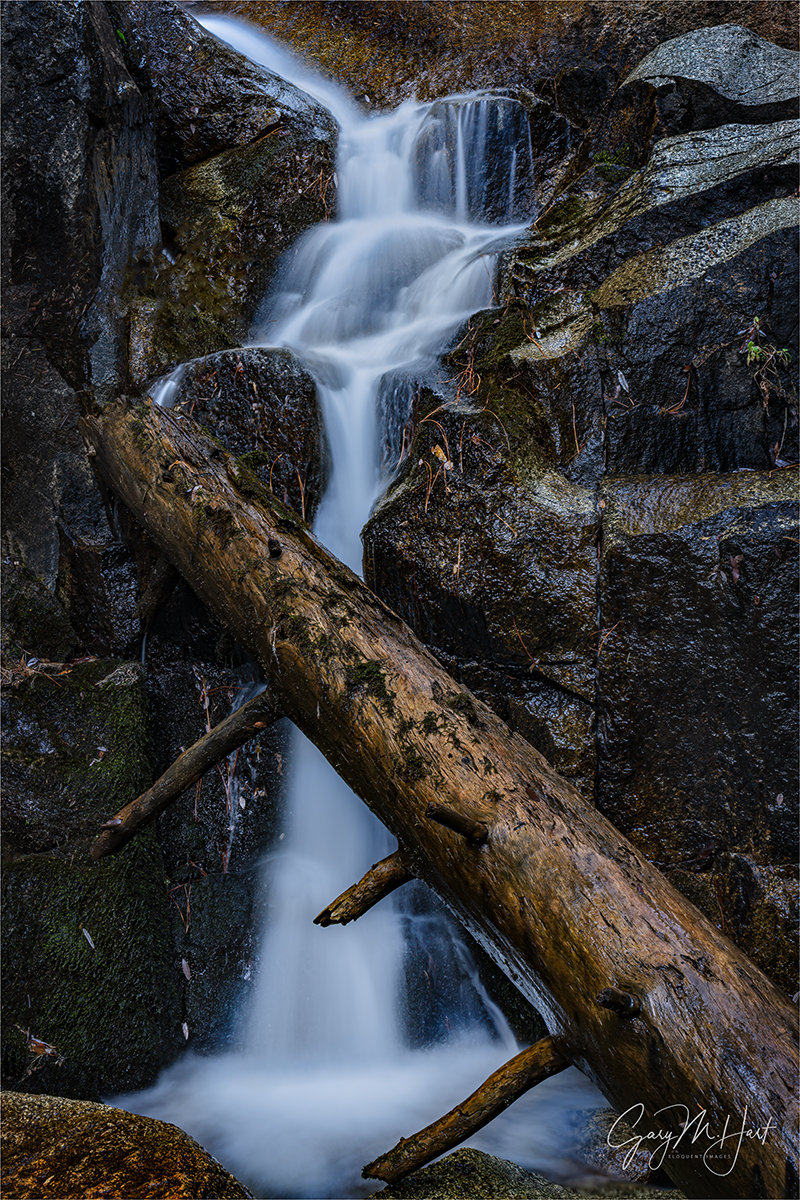
Wildcat Fall, Yosemite
Sony a7R V
Sony 24-105 f/4 G
ISO 100
f/16
5 seconds
“Many of us would probably be better fishermen if we did not spend so much time watching and waiting for the world to become perfect.”
― Norman Maclean, A River Runs Through It
I haven’t fished in years. But then, Norman Maclean’s words really aren’t about fishing anyway. I’m reminded of this quote every time I see photographers frozen by minutia, mired in the moment by small distractions that matter very little on the path to their grand objectives (better pictures), or who dig deep for excuses to stay home or to keep their camera holstered. Tell me if you’ve ever heard yourself proclaiming, mumbling, or simply thinking things like: “The light was better yesterday,” “The light will be better tomorrow,” “This lens is too soft,” “I don’t like that rock/tree/shrub/log/sky/foreground/background,” “I need a camera with more resolution/dynamic range/low light vision,” “It’s too hot/cold/wet/windy,” “I’m too exhausted/sleepy/hungry,” (I could go on, but I think you get the point) before settling down in the recliner, or doing an about face for home.
There’s nothing wrong with your camera (or mine)
Near the top of photographers’ list of self-imposed obstacles seems to be insecurity about their gear. Instead of doing what photographers do (photograph), many spend far too much time online reading reviews, scouring specifications, checking prices, and abusing the social media posts of other photographers. Whether these photographers’ are trying to validate the status of their current equipment, justify the purchase of the next life-changing camera, or maybe lament the expense a long coveted tripod, each of these easy rationalizations betrays an underlying need to define their worth by their equipment.
The most perplexing manifestation of photographic insecurity is the irrational obsession with the technology choices of other photographers: camera, computer, software, mobile phone, or whatever…. When I switched from film to digital in the early aughts, the biggest technology battles were Canon vs. Nikon and Apple vs. Microsoft. Later that decade we saw the first salvos in the iPhone vs. Android wars that persist to this day. Then in the teens came the mirrorless vs. DSLR skirmishes that flamed up for a few years before being settled in favor of team mirrorless. Sadly, the other battles persist to one degree or another.
But whatever side of whatever technology argument you find yourself on, let me reassure you that it’s very unlikely that anyone’s technical choices, yours or theirs, are a significant enabling or limiting factor. The best photographers make the best of whatever gear is available, because “lousy” gear doesn’t make you a lousy photographer, any more than great gear makes you a great photographer.
One way I try to convey to my workshop students (and anyone else who will listen) that inferior gear can still create superior images is by sharing my own images captured more than 20 years ago, with my 6 megapixel Canon 10D, using non-L (amateur) lenses. Not only does this equipment pale in every way when compared to today’s most basic camera systems, it wasn’t even considered pro-worthy at the time.
“Inferior” Images From My Canon 10D
-

- Bridalveil Dogwood, Yosemite
-

- Champagne Glass Poppies, Merced River Canyon, California
-
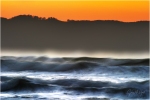
- Sunrise, Drake’s Bay, Point Reyes National Seashore
-
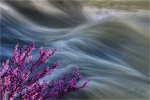
- Redbud, Merced River Canyon
-
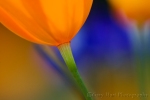
- Poppy Lanterns, Merced River Canyon
-

- El Capitan Reflection, Yosemite
Still not convinced? Or perhaps you believe these images are the product of some Photoshop shenanigans. Then you should know that each was captured as a jpeg, then printed and sold long before I learned how to process raw files.
If I were shooting with that 10D today, I’d probably be crazy-frustrated with the camera’s 6 megapixel, 1.6 crop sensor, its postage-stamp size LCD, poor low-light performance, and limited dynamic range—but that doesn’t change the fact that I got great images from that now ancient beast, images that I’ve enlarged and sold as prints up to 24×36 to people who walked right up and scrutinized each pixel. In fact, a 24×36 print of the dogwood image hangs prominently in my office. In other words, if the images I got from that DSLR dinosaur and entry-level lenses are still usable, there’s no reason whatever “less-than” camera equipment you might own qualifies as a valid excuse to not do what photographers do—take pictures!
Rip off the bandaid
Even those photographers who haven’t succumbed to technology paralysis aren’t immune to other “not today” maladies. There are a million excuses not to go out and take pictures, usually based on some version of physical hardship. But the best photographers, the ones who always seem to somehow find Nature’s most spectacular moments, have adopted a rip off the bandaid approach that forces them out when the conditions are harshest.
I do this by reminding myself that the majority of my most memorable photography experiences—memorable both for the experience of being out there, and for the images that resulted—happened when the urge to stay inside was strongest, and my expectation of success was lowest. Part of that is the simple fact that the best conditions for photography are usually the worst times to be outside: wild weather, when the urge to stay warm and dry is almost irresistible; sunrise, when the tug of that warm, soft bed is strongest; sunset, when dinner beckons; and after dark, which can be cold, difficult to see, and (potentially) unsettling or even downright creepy.
But no less significant is the euphoria that ensues when seemingly impossible conditions give way to something truly special. It’s these times that whatever discomfort I might have been feeling magically melts away and I’m reminded why I do this photography thing. Even though success is never guaranteed, and I often return with no reward at all, the times when the magic does happen makes up for the failures many times over.
Glad I Didn’t Stay Home
-
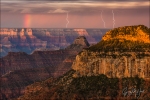
- Three Strikes, Lightning and Rainbow from Bright Angel Point, Grand Canyon North Rim
-

- Comet Tsuchinshan–ATLAS and Mt. Whitney, Alabama Hills, California
-

- Sunrise Mirror, Mono Lake
-
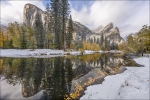
- Autumn Snow, El Capitan and Three Brothers Reflection, Yosemite
-
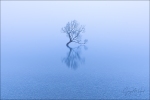
- Infinity, Lake Wanaka, New Zealand
-

- Double Rainbow, Tunnel View, Yosemite (2009)
Overcoming expectations
And finally, and perhaps most insidious, are the reasons not to photograph even after you’ve made it to the scene. These excuses tend to be conditions-based, usually because we arrived with preconceived expectations that weren’t met: a moonrise (or sunrise, or sunset, or…) blocked by clouds, a potential mirror reflection whipped by wind, a trickling waterfall, and so on….
These are the times to remember that photographic success is limited only by your creative vision, and just because you don’t see a shot, doesn’t mean one isn’t there if you cast your net a little wider. This simple fact is proven over and over in my workshop image review sessions, when everyone in my group shares an image from a location we all photographed together. Not only are my students surprised over and over by what someone else found at a location they photographed too, I often find myself envious of something someone else in my group saw that I missed.
Digging Deep
-

- Sunset, Hopi Point, Grand Canyon
-

- Lily Reflection, Hawaii Tropical Botanical Garden, Hawaii
-

- Frozen Sunset, Vatnajökull Glacier Ice Cave, Iceland
-

- Simple Elegance, California Poppy, Sierra Foothills
-

- Floating Leaves, Merced River, Yosemite
-

- Autumn Swirl, Half Dome, Yosemite
Landing the metaphor
Wildcat Fall is a small, ephemeral cataract tumbling down vertical granite just west of Yosemite Valley on Highway 140. Though it isn’t far from the road, you really can’t see it from your car as you drive by (a higher section is visible if you crane your neck at just the right time and know exactly where to look). The fall runs reliably only a few months each spring, but in wet winters, or after good rain, can spring to life for a few days or weeks. And while I doubt there’s much fishing here, the photography is pretty good.
Despite the quality of this photographic fishing hole, I must confess that I don’t make it to Wildcat Fall very often—there really isn’t enough room for even a moderate-size workshop group to work comfortably, and brilliant sunlight leaks through the leafy canopy for much of the day. (Yes, I know I’m in the midst of a blog post preaching about avoiding excuses such as lousy light, but its proximity to Yosemite Valley means there’s almost always something better to photograph nearby when the light at Wildcat is poor.)
When I arrived at Wildcat Fall on this gray January afternoon, I expected to find the scene I remembered from my previous visit many years earlier. What I found instead was an obstacle course of downed trees, a lot of brush interfering with my preferred photo position, and a huge log embedded the middle of the scene. Faced with all this, I had to decide whether to fish or cut bait—as tempting as it would have been to move to a more promising fishing spot, I decided to wet my line here for a while anyway.
The first thing I did was work my way back across the creek and over a large bolder near the small pool at the base of the fall. From here it became clear that there was really no way to eliminate the photobombing log, so I just leaned into it and made the log the foundation of my foreground. Then I shifted among the boulders until I found an angle that worked, eventually ending up directly in front of the fall. To minimize the (abundant) peripheral busyness, I chose a vertical orientation and framed it tight. I went with f/16 and focused near the middle of the log ensure front-to-back sharpness. And with every square inch of my scene wet and glazed by distracting glare, carefully dialing my polarizer was a significant improvement.
Given the dense overgrowth, late afternoon dimness, small aperture, and maximum polarization, I knew freezing the plummeting water would be impossible at any reasonable ISO. And since the motion blur difference with any shutter speed longer than 1/2 second was pretty much indiscernible, I just went with my camera’s native (best quality) 100 ISO and let the shutter speed fall where it may.
I’ll fully admit that this catch isn’t the grand eye-popper that will make me rich, but working hard to reel in something that pleases me is far more satisfying than any big one that might jump right into my boat.
Join me in Yosemite
More Intimate Waterfalls
Click any image to scroll through the gallery LARGE


 Eloquent Images by Gary Hart
I remember all of these wonderful photos that you took.
>
Thank you, Marcella.
Gary, Thanks for the encouragement….and more!
Cheers >
You’re most welcome—thanks!
My brother is a bird photographer. Loved this post.
That’s great to hear, S.D. Thanks!
Great tips and reminders Gary. And gorgeous photos, even from your old camera. I especially liked the poppy and sunrise mirror images.
Thanks, Brad. Yeah, I’m a real sucker for poppies and reflections. 😄
Me too!