Eloquent Images by Gary Hart
Insight, information, and inspiration for the inquisitive nature photographer
Where in the World is Gary?
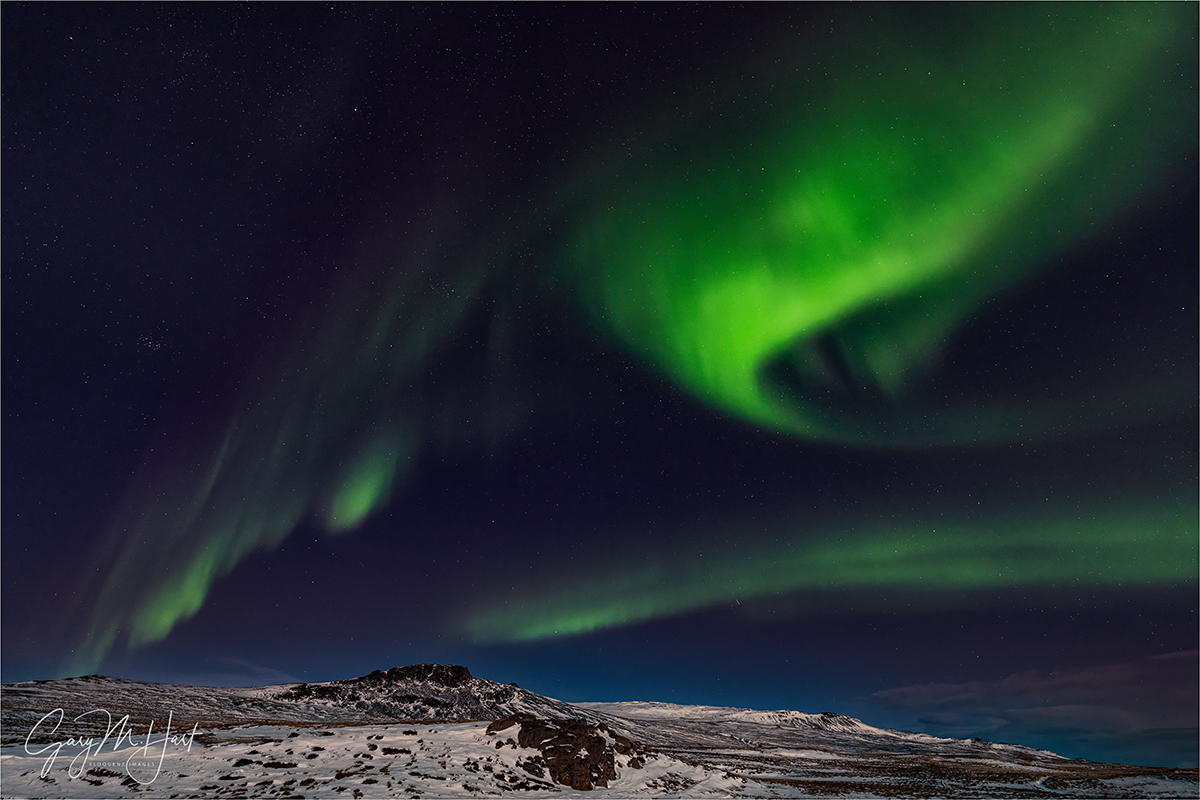
Winter Night, Aurora Over Vatnsnes Peninsula, Iceland
Sony α1
Sony 12-24 GM
3.2 seconds
F/2.8
ISO 3200
You may (or may not) have noticed that my “weekly” blog posts have slowed somewhat in the last month or two. I haven’t gone anywhere—or more precisely, I’m still going the same places and doing the same things I always have, I’m just prioritizing my time differently. After 15 years of stressing, staying up late, missing meals, and in many other ways pushing myself too hard to meet that once-a-week blog goal, I simply decided not to let myself be ruled by arbitrary, self-imposed commitments (I’m a slow learner). I still love writing this blog and have no plans to quit—I’m just going to adjust my time management a bit to emphasize other priorities, especially when my travel schedule starts to take its toll. But anyway…
So exactly where in the world have I been in the last two months? I thought you’d never ask. At the end of January and into early February, I was in Death Valley and the Alabama Hills for my (final) Death Valley workshop; a couple of weeks later I was off to (snowy!) Yosemite for my Horsetail Fall workshop. A storm that dropped record snowfall meant no Horsetail Fall, but seeing Yosemite smothered in white was more than sufficient compensation. A week after that, I jetted off to (snowy and icy) Iceland for Don Smith’s and my annual aurora workshop. Don and I have been doing this trip for many years now, but this year we mixed things up a bit by following a more northerly itinerary. I was home from Iceland for less than 36 hours before making a 13-hour drive to Phoenix for my annual MLB Spring Training trip (go Giants!). Phoenix had record-shattering (for March) highs in the 90s—going from multiple layers of wool and down to shorts, tank tops, and flip-flops was probably the most extreme weather whiplash I’ve ever experienced. And though my Spring Training trip isn’t for photography, I did pack my camera bag because on my drive home I added a day so I could detour through Death Valley to check out the super-bloom (nice, but nothing like the one I witnessed in 2005). I made it home to Sacramento (where our highs are only in the 80s) last Wednesday night, and am looking forward to a 5-week break from the travel.
Thanks to all this recent travel, the only thing in my life accumulating faster than unprocessed images seems to be the dull but essential tasks associated with running a business. Sigh. But I had to process something, so today I’m sharing a northern lights image from the first of two beautiful aurora shows this year’s group enjoyed. The aurora forecast for this night wasn’t great, but the sky was clear (-ish), so despite the late hour, temps in the low 20s (upper teens?), and no specific location in mind, we piled into our spacious Sprinter van decided to go aurora hunting. Why? Because that’s what photographers do.
We were in northern Iceland’s inherently remote Vatnsnes Peninsula, but somehow found an even more remote road and just drove until we liked the view. How remote? We were out there more than two hours and didn’t see a single other car. (I’m pretty sure our guide knew where we were, but no on else had a clue.)
For the first hour or so we had enough green glow to get the aurora newbies excited, but nothing exciting enough to make this grizzled aurora veteran take his camera out. Had I been by myself I might have clicked a frame or two, but I was content to spend my time making sure everyone was ready in the event the activity ramped up. It actually worked out nicely to have a dedicated practice session to get everyone up to speed with the challenges of night photography.
Not long after we told the group we’d give it another 20 or so minutes, a rising, nearly full moon poked through clouds behind us and bathed the snow and rock in moonlight. That was nice, but couple of minutes after the moon’s appearance, almost like magic a green shaft materialized on the northeast horizon and within seconds stretched above our heads to touch the opposite horizon—the real show was on. Soon we were all oooo-ing and ahhhh-ing, spinning around and trying to monitor the ever-changing overhead display—one minute the best show would be in the northeast, the next it would be due west. For the first-timers the priority was the best aurora, regardless of the foreground; those of us with prior aurora successes could afford to be more selective about our foregrounds. Though nothing on the ground out here was spectacular, I liked the view across the road, facing more west and northwest. Wanting to avoid including any road in my frame, I walked to the other side and framed up a small moonlit mountain.
My go-to night photography lens in my 14mm f/1.8—so imagine my surprise after arriving in Iceland to discover that its slot in my camera bag was empty—oh yeah, I took it out right before my Yosemite workshop because we wouldn’t be doing any night photography, then never thought about it again. Oops. If this had been a Milky Way shoot, where every photon counts, I’d have been pretty bummed (understatement). But for a good aurora display, especially one above a moonlight-augmented landscape, f/2.8 is plenty fast. And even though I don’t use my 12-24 f/2.8 a lot, when I do need it I really need it (especially in Yosemite), so it’s a fulltime resident of my camera bag. Which is how I ended up shooting this entire scene at 12mm and f/2.8. It didn’t take long to realize that I appreciated being able to include a little more sky much more than I missed that 1.3 stops of light.
This aurora show was memorable less for its spectacular nature—it was very nice, but didn’t compare to many other northern lights shows Don and I have shared with prior workshop groups—than it was for the fact that it enabled Don and me to breathe a collective sigh of relief, knowing that everyone in our group got to see and photograph the prime reason they signed up for an Iceland winter photo workshop: a legitimate northern lights display.
The next day we traveled to another region farther east, trying for the aurora again that night at a location with a much better foreground. That night we saw a little bit of green, but by then everyone had seen firsthand that it could be much better. What Don and I hadn’t told them after our first aurora success was how much better it could. But before we were done, they learned that for themselves. But that’s a story for a different blog post…
Workshop Schedule || Purchase Prints || Instagram
Celestial Wonders
Click any image to scroll through the gallery LARGE


 Eloquent Images by Gary Hart
What, no spring training shots? Kidding. Fantastic set, Gary! The Big Dipper peeking through the Aurora is a standout.
Thanks, Jane!
https://www.dropbox.com/scl/fi/fh12r9c8plm68mgs59q7u/IMG_4767.HEIC?rlkey=6je29f643mh430ujgnb6c0zr3&dl=0
Gorgeous images Gary.
Pingback: Still Learning | Eloquent Images by Gary Hart