Eloquent Images by Gary Hart
Insight, information, and inspiration for the inquisitive nature photographer
You Keep Using That Word…
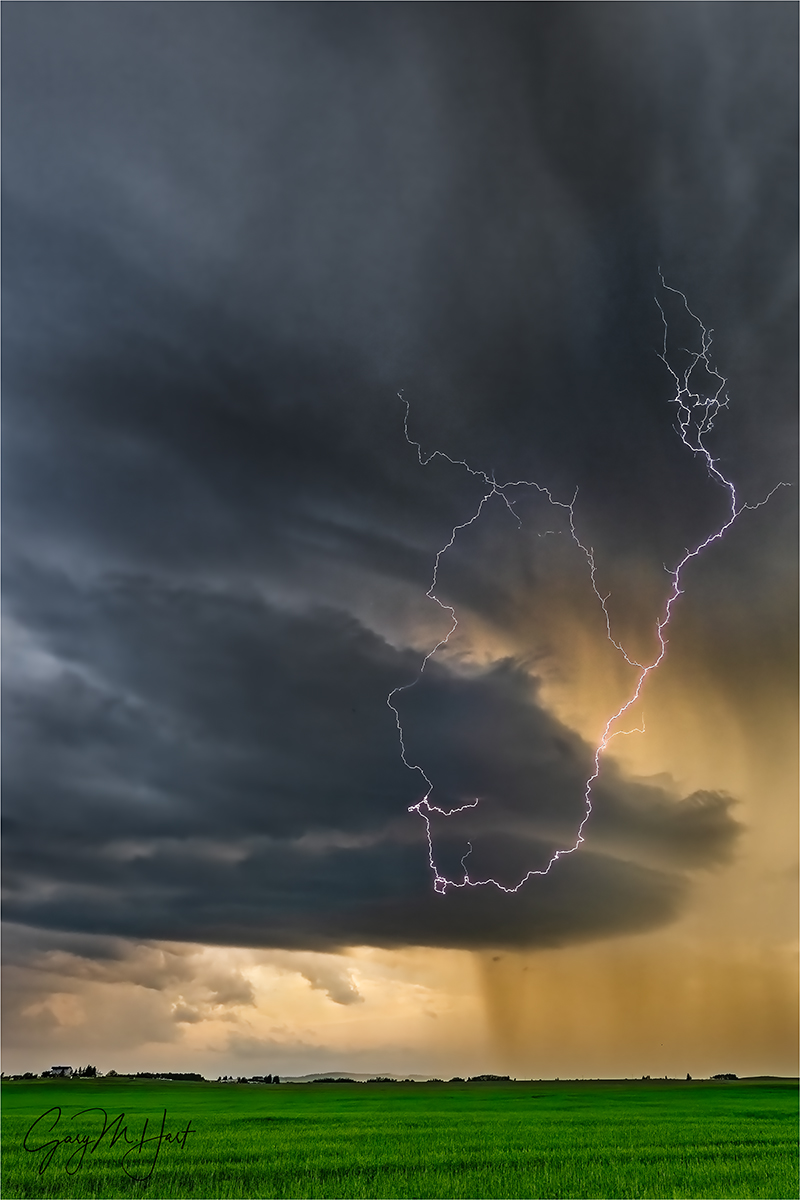
Circle Lightning, Western Alberta, Canada
Sony a7R VI
Sony 12-24 f/2.8 GM
1/60 second
F/9
ISO 400
Retirement?
… I do not think it means what you think it means.
I’ve been talking about retirement for a few years now, mentally plotting that soft landing into a rocking chair on my porch, chasing kids off the lawn, by 2030. Comparing this year’s workshop schedule to the 2024 schedule, at first glance it might appear that I’m right on track. Gone are one Yosemite workshop, my Grand Canyon raft trip, Hawaii, Eastern Sierra, and Death Valley. All that remains from that 2024 schedule are my three favorite Yosemite workshops (winter, spring dogwood, and autumn), Grand Canyon monsoon (lightning!), plus Iceland and New Zealand with Don Smith.
But what’s this? Storm chasing? Where did that come from? After having never scheduled a single storm chasing trip in the first twenty years of my photo workshop life (Grand Canyon monsoon is more storm waiting), last year I did one, this year I did one, next year I have three, and there’s already one (sold out!) in 2028—with more coming. That doesn’t sound like any definition of retirement I’ve ever heard.
Last year’s Midwest storm chasing workshop with Jeremy Woodhouse was intended to be a one-and-done, for the sole purpose checking off a long-time bucket list item: see a tornado. And by the end of day six, I’d checked the tornado box multiple times. But what I hadn’t expected was the appeal of the other things that come with storm chasing: supercells and lightning. And just as compelling as these trip’s visual treats was all the fun our group had chasing them—lots of laughs and great food with fantastic group of people.
Returning from that trip with a storm chasing itch that could only be scratched by doing more, I was disappointed to realize that all the 2026 US-based storm chasers had already been booked. (Safe and successful storm chasing requires a qualified storm chaser; I’m a photographer who chases storms, not an actual storm chaser.) But when my storm chasing partner Jeremy Woodhouse, a photographer who has been putting together storm chasing workshops for many years, suggested chasing storms Canada in 2026, I was intrigued. Dubious, but intrigued.
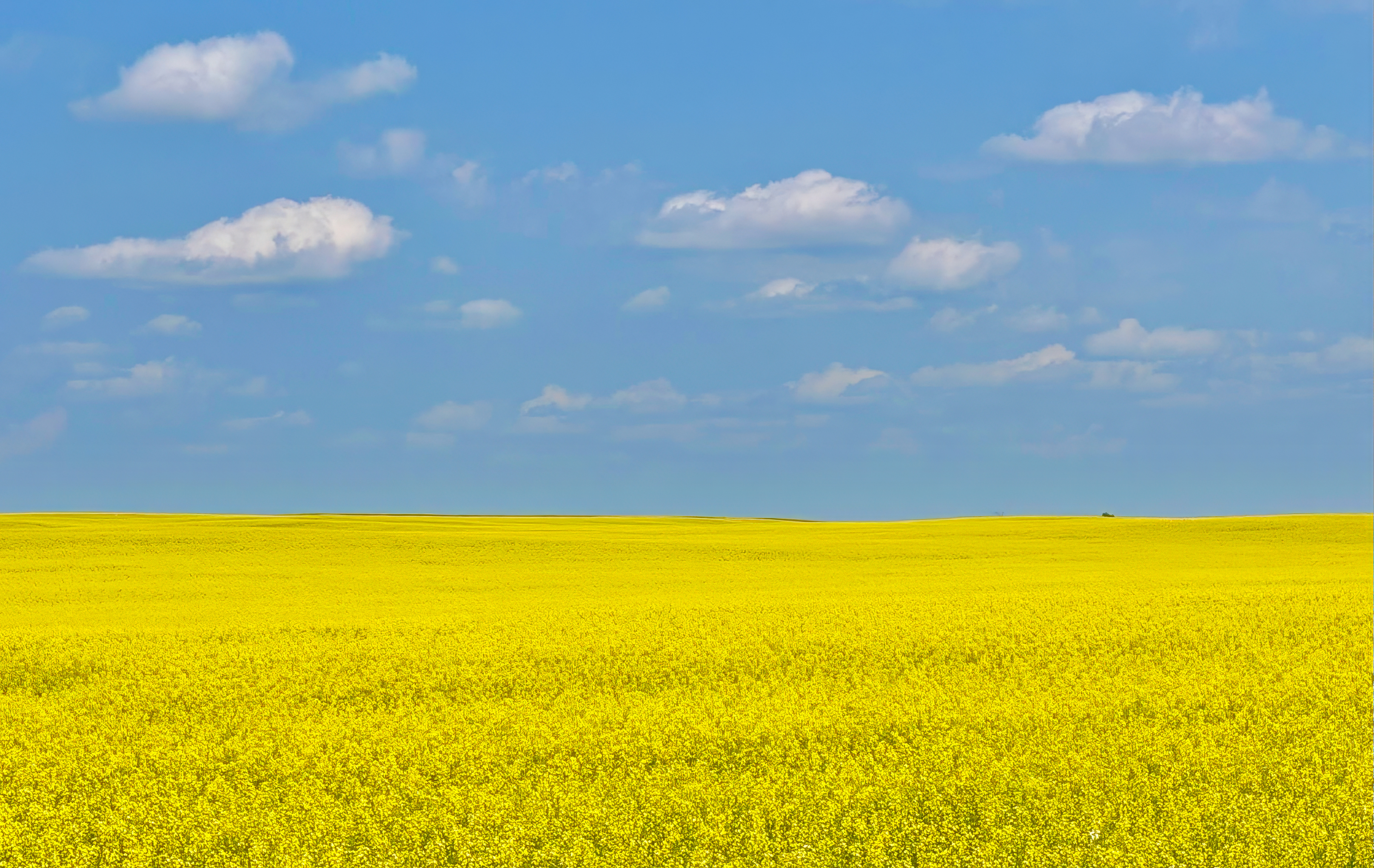
Canola in Bloom, Alberta, Canada
So I did some research and confirmed that the Canadian prairies do indeed enjoy the same atmospheric and topographic features that generate Midwest supercells and tornados, albeit a little later in the summer. I’d been aware for a long time that peak tornado activity in the US shifts from south to north as spring moves toward summer, starting in the deep south in March, moving into the midwest plains in April and May, and up to the northern plains in June.
Since weather doesn’t know country boundaries, it stands to reason that July would be the peak Canadian tornado season. So, not wanting to wait until 2027 to feed my new storm chasing habit, Jeremy and I partnered with Paul Botten, a 20-year professional storm chaser Jeremy has worked with for many years, and scheduled a July 2026 Canada trip.
Did we get tornados in Canada this year? Not quite. But we did get multiple supercells, lots of lightning, and one afternoon, while we waited at a park in Saskatchewan (with a couple dozen other storm chasing vehicles following the same forecast we had), two EF2 tornadoes touched down in Alberta, a couple of hours west (where no storm chasers expected them). Such are the frustrations of storm chasing—you study the conditions and do your best to maximize your chances, but sometimes Mother Nature has other ideas.
Unlike all the other storm chasers waiting with us in Saskatchewan that afternoon (most of whom simply packed up and went home), we pointed our vans toward Alberta and arrived in time to catch one of the best lighting shows of our trip. Like the lightning image I shared a few weeks ago, I captured this circular bolt (that never actually touched down) using the pre-capture feature of my brand new Sony a7R VI. (This is also the shoot that caused me, after seeing the success of a couple of other photographers in the group, to switch from Lightning Trigger to Bolt Hunter.)
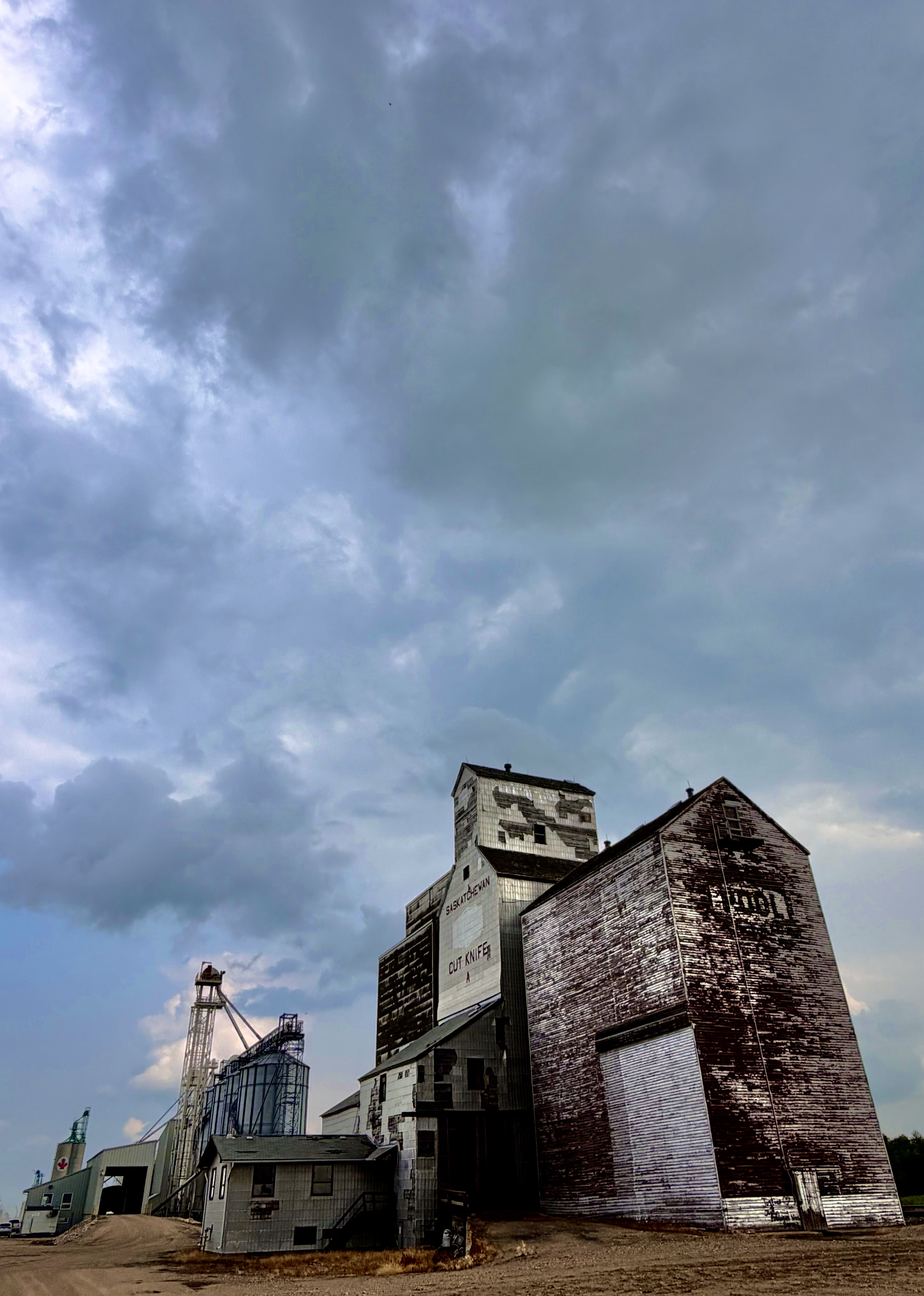
Grain Elevator, Cut Knife, Saskatchewan, Canada
When all was said and done, this year’s group saw lots of great lightning, but after the two tornadoes we missed, Canada was done with tornados for the duration of our trip. I found some consolation in the knowledge that this year’s tornado shortage wasn’t Canada’s fault: from all accounts (both first-hand and online), this wasn’t a good tornado chasing year in the US either. But I did learn that even without tornadoes, Canada is a great place for storm chasing—in some ways, better even than the US.
In fact, if this first Canada storm chasing trip was a proof of concept, the concept was proven beyond my wildest expectations. For one thing, there’s very little chasing competition in Canada. On some of last year’s chases, the roads were so crowded, gridlock was a genuine concern and it parking was sometimes difficult to impossible. In Canada this year, we’d occasionally encounter other chasers, but even when perfectly situated for a supercell, we were always able to drive and park wherever we needed to be.
And despite the tornado drought, we never lacked for photo opportunities. Not just the daily dose of electrical storms (and multiple supercells) Canada delivered for us, but also the incredibly photogenic scenery that far exceeded what I expected, and anything we saw in last year’s Midwest chase. We even saw multiple moose!
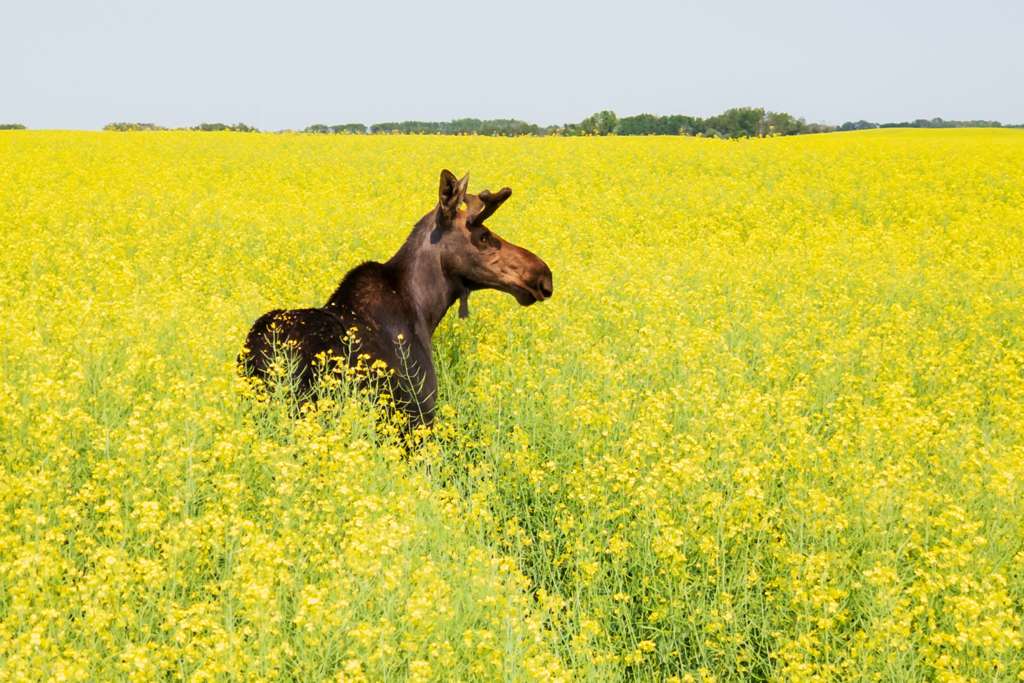
Moose in Canola by Jeremy Woodhouse
Though I’ve never been to the Palouse, I couldn’t help thinking how much the Alberta and Saskatchewan countryside reminded me of the Palouse pictures I’ve seen—minus the crowds. Throughout the trip, we were surrounded by rolling hills quilted with blooming canola and swaying wheat—in places the yellow canola stretched as far as the eye could see. And then there were the ubiquitous silos and grain elevators. If ever we needed a foreground subject, we didn’t need to drive far before a striking grain elevator (or silo) popped into view.
Grain elevators really aren’t my thing, but I have to admit that they’re quite photogenic, each with its own unique character that is a clear source of local pride. Some are painted into actual works of art, and the rest are weathered in the best possible way. In fact, someone could probably do an entire photo workshop based on nothing but the grain elevators of the Canadian Prairie.
Given all this pastoral splendor and the almost daily lightning displays, its easy to understand why Jeremy, Paul, and I have decided to make this Canadian storm chasing trip an annual event. And storm chasing in general is also the reason, even as I wind down the rest of my workshop schedule, the thought of completely retiring is inconceivable.
Upcoming Storm Chasing Trips
O Canada
Click any image to scroll through the gallery LARGE (better on a computer)


Welcome to the club! I’ve been retired for ages and barely have any time to process my photos! Clearly you are enjoying your retirement as much as I enjoy mine!
Shirley Sanderson
>
I do not think it means what you think it means, Gary. 😊
-Cheryl B.