Eloquent Images by Gary Hart
Insight, information, and inspiration for the inquisitive nature photographer
Unsung Creative Essentials (at the Bottom of my Camera Bag)
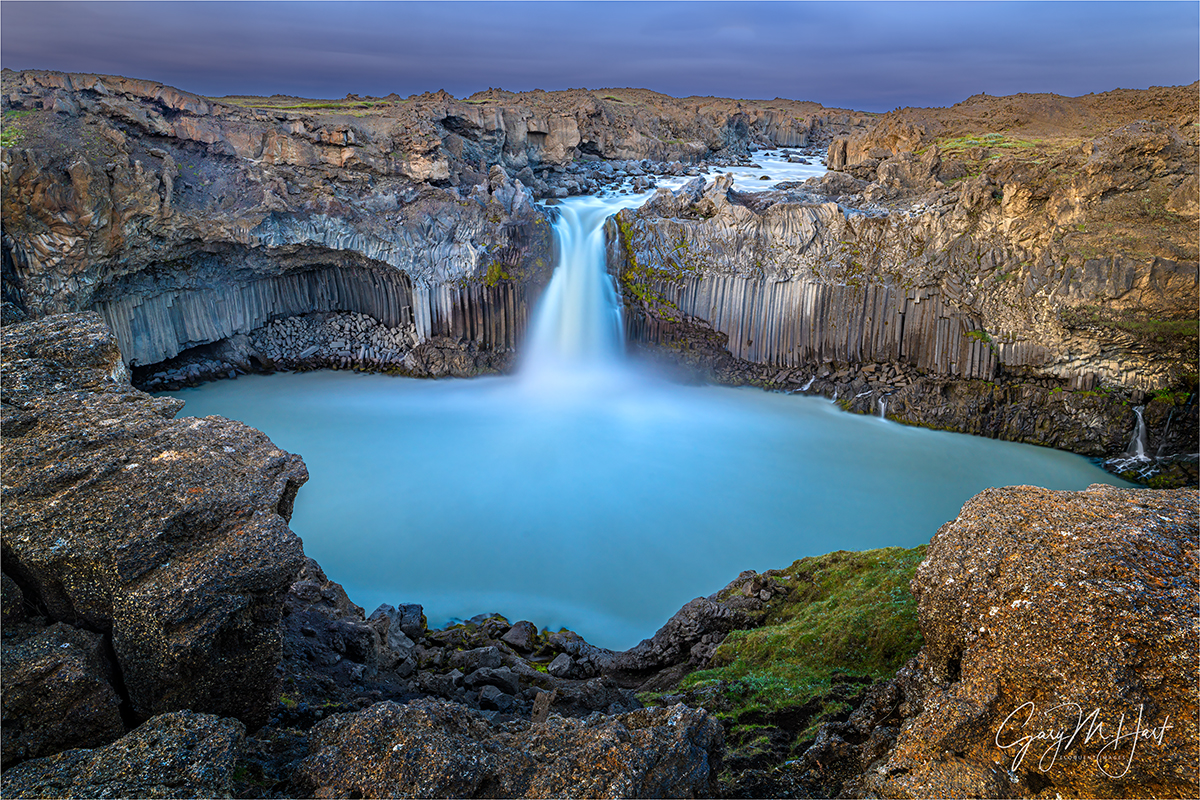
Smooth, Aldeyjarfoss, Iceland
Sony a7r V
Sony 16-35 GM II
Breakthrough 10-stop magnetic ND filter
5 minutes
F/16
ISO 100
We nature photographers spend a lot of time obsessing over our equipment. Most of that energy is directed toward the high-ticket items like cameras, lenses, and tripods, but I want to spread a little love for three creative essentials that live at the bottom of my bag—they’re not sexy, and don’t come out a lot, but sometimes they make the difference between a thrilling shoot and a complete dud.
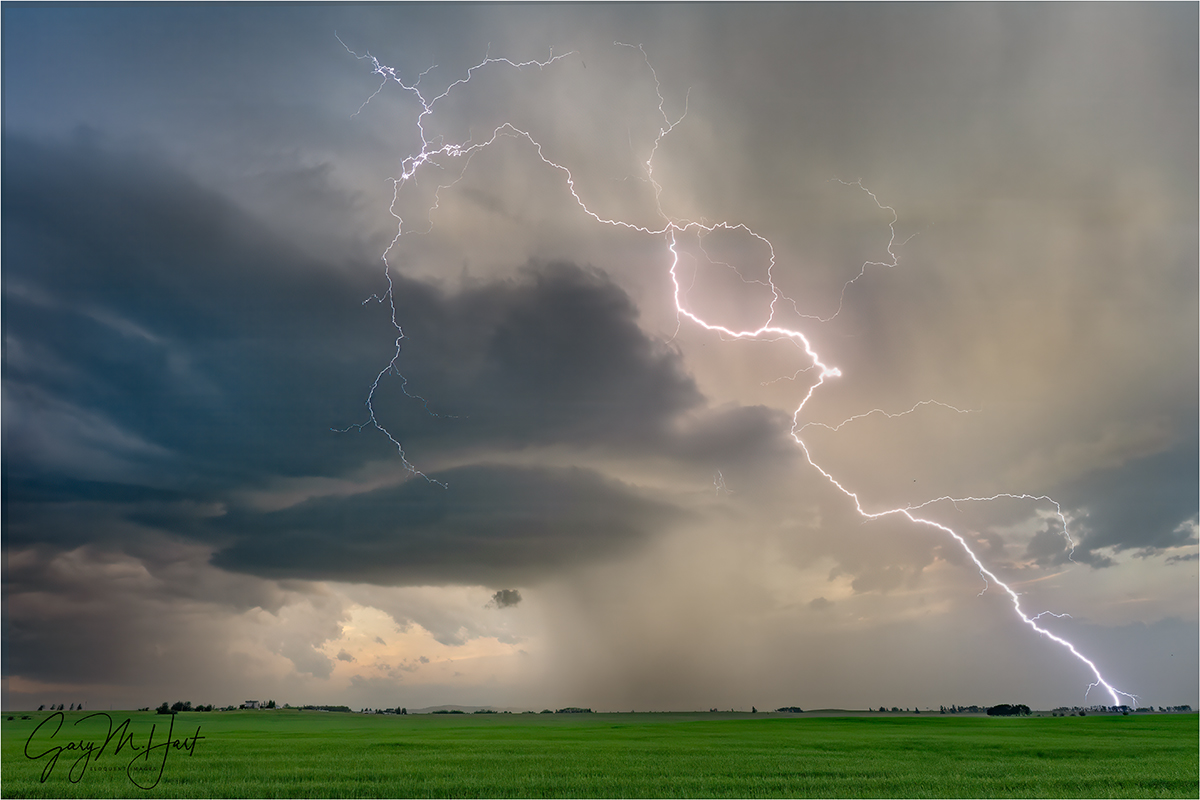
Diagonal Lightning Bolt, Alberta, Canada
For example, for most of my photography life I’ve treated my lightning sensor (that detects lightning and fires my shutter much faster than I can) as a luxury item that takes up too much space to justify fulltime residence in my bag—especially given the infrequency of lightning here in California. Doubling-down on storm chasing the last couple of years still wasn’t enough for me to carve out fulltime camera bag real estate—until I replaced my old reliable Lightning Trigger with the far more advanced, sturdy, and compact Bolt Hunter.
Suddenly, with a new schedule providing more opportunity to photograph lightning, a lightning sensor that’s easier to use, captures lightning at least as well as my old Lightning Trigger, and occupies less than half the space, I never leave home without my Bolt Hunter. Even though I can’t change the fact that lightning is relatively rare in California, I no longer worry about my lightning app notifying me of unexpected nearby lightning, only to realize that my sensor is collecting dust in my office.
In fact, given that my Bolt Hunter (okay, Bolt Hunters—I have two) has demonstrated how much the electronics have shrunk in modern lightning sensors, while the technology has significantly progressed in the 15 years since I purchased my (still unchanged) Lightning Trigger, I can make the case that a lightning sensor should be a permanent resident of every serious photographer’s camera bag.

Champagne Glass Poppies, Merced River Canyon, California
Next on my must-carry list is extension tubes. An extension tube is an open (no optics) cylinder that attaches between the camera and lens. By increasing the distance between the lens and sensor, extension tubes shift the lens’s focus range closer and shrink it. This ability to focus closer also means you can no longer focus to infinity, which of course is not a problem when your goal is to look as close as possible.
Though extension tubes can be used with any lens, they’re most useful at telephoto focal lengths. On the other hand, while photographers say they should only be used on a telephoto lens, I love using mine with my 90mm macro lens (turning it into a super-macro), and have even been known to use them with wide angle lenses.
Whatever your lens choice, because extension tubes have no optics, there’s no glass to compromise image quality, so you can purchase third-party versions to avoid paying the original-manufacturer premium. If you don’t get your camera manufacturer’s version (I don’t even know how many camera manufactures make them anymore), just make sure that your extension tubes do provide the electronic connections that allow the camera and lens to communicate (most extension tubes do), so you don’t lose the ability to meter and autofocus.
Extension tubes usually come in sets of 2 or 3, which can be stacked: the more extension, the closer you can focus, and the narrower the range of sharpness around your focus point.
The downside of extension tubes is that they reduce the amount of amount light reaching the sensor: the more extension, the less light reaches the sensor—at least full stop less light, and usually more as you add more extension to focus extra close. Given the high ISO capability of today’s cameras, rather than compensating for the lost light with a longer shutter speed, I usually just increase my ISO.
Extension tubes have become my favorite tool for the soft-focus-background images I love so much, and I rarely carry a macro lens anymore. Whether it’s soft-background poppies or dogwood in spring, colorful leaves in autumn, droplets of dew or rain on a leaf in any season, I have a blast getting up-close and personal with my chosen subject.

Solitary Leaf, Bridalveil Creek, Yosemite
This brings me to the third item I never leave home without: neutral density filters. Accurately rendering our dynamic world in a still image is literally impossible, so photographers convey their scene’s motion using shutter speed, either freezing or blurring it.
ND filters are exactly what their name implies: neutral (no color tint added) and dense (dark). They come in a ranges of density, most commonly between three and ten stops. (And don’t confuse neutral density filters with graduated neutral density filters, which have an entirely different purpose.) You can even get ND filters that allow you to dial in the amount of density, but I’ve never liked these because they tend to vignette.
Motion or not, to cut reflections I’ve always used a neutral polarizer for most of my daylight images. This reduces the light captured by about 2 stops (essentially a default 2-stop ND filter), which is enough to achieve slight but noticeable blur in whitewater and surf under daylight-overcast or shade if I drop my ISO to 50 and/or stop down to f/16. But packing ND filters provides much greater flexibility to add more blur, in any light.
Though whitewater and surf is the most common use for ND filters, I also use mine to smooth a choppy lake surface. Even just a few seconds of exposure is usually enough to smooth out distracting waves white-caps.
For years my go-to ND filter was a screw-on 6-stop Dark Polarizer from Breakthrough Filters—a polarizer that also adds 6 stops of density without vignetting. But a couple of years ago I switched to Breakthrough’s magnetic filter system; at the same time I added 77mm and 82mm 10-stop ND filters to my ND arsenal (while keeping the 6-stops).
Now I can easily run a range of shutter speeds to achieve a wide variety to motion effects. To freeze water, I start by removing my polarizer and maybe (depending on available light) increase my ISO. For a little blur, I reduce my ISO and reattach my standard polarizer—for example, the polarizer’s 2-stops of density turns a 1/4-second exposure to 1-second. Replacing the polarizer with a 6-stop ND takes that up to 15 seconds without changing my f-stop and ISO; my 10-stop ND stretches my shutter speed all the way to 4 minutes at the same f-stop and ISO.
Why would I want a 4-minute exposure? A multi-minute exposure conveys an ethereal mood that’s impossible to achieve any other way (and usually difficult to visualize without trying it). It doesn’t always work, but when I find myself looking for a fresh take on a scene with lots of moving water and/or clouds, I often reach for my 10-stop ND filter just to see how it looks.
Smooth, Aldeyjarfoss, Iceland
Sony a7R V
Sony 16-35 GM II
Breakthrough 10-stop magnetic ND filter
5 minutes
F/16
ISO 100
For example, last August (2026) Don Smith and I brought our group to Aldeyjarfoss in northern Iceland for sunset. Let me just say that, in a land brimming waterfalls of every height, width, shape, and flow imaginable, Aldeyjarfoss still stands out, both for its aqua hue and for the volume of water pouring through a wall of 9000-year-old basalt columns. Aldeyjarfoss’s relative remoteness discourages crowds, which, combined with its spectacular rocky vantage point high above the fall’s circular basin, makes it one of Iceland’s best waterfalls to photograph.
In March, with the help of extra guides navigating two extreme off-road 4WD vans (sporting tires as tall as I am), we battled our way through dense snow to make it up to Aldeyjarfoss—definitely and E-ticket ride. I wouldn’t say the trip is a breeze in summer, but at least our regular guide was able to get us up here in our own van. And though the view was no surprise, it was still mind-blowing to be here without snow for the first time.
We all enjoyed a really nice shoot in perfect waterfall light (overcast), but when it became clear that the colorful sunset we’d hoped for would be lost to that overcast, about half the group started the trek back up to the van. Though the shoot was winding down, I wasn’t quite ready to pack it in and started thinking about trying my 10-stop ND filter. I was both surprised and pleased that most of those remaining had a 10-stop ND of their own, so I suggested we all try a few ultra-long exposures, just to see how it looked.
I don’t think most of them had used their 10-stops much, but I was able to help everyone work out the exposure by doing the math in my head: starting with the shutter speed without the filter, I doubled the duration 10 times, counting each increase on my fingers until I reached 10.
It was really fun to hear everyone’s reaction when the first pictures popped up on their LCDs. We were all enjoying ourselves so much we didn’t want to stop, but with half the group waiting for us back at the van, and not wanting to make the short but steep ascent in full darkness, we reluctantly wrapped up after just a handful of images.
This shoot was a prime topic of conversation at breakfast the following morning, as several in the group who had already processed their multi-minute images shared them with everyone else. Clearly the experience made an impression, both to those who had been there and those who just viewed the results, because I noticed a lot of 10-stop NDs throughout the rest of the workshop.
Don and I return to Iceland in February
Workshop Schedule || Purchase Prints || Instagram
More Products of my Creative Toolkit
Click any image to scroll through the gallery LARGE


Beautiful!!!