Eloquent Images by Gary Hart
Insight, information, and inspiration for the inquisitive nature photographer
Yosemite and the Joys of Spring
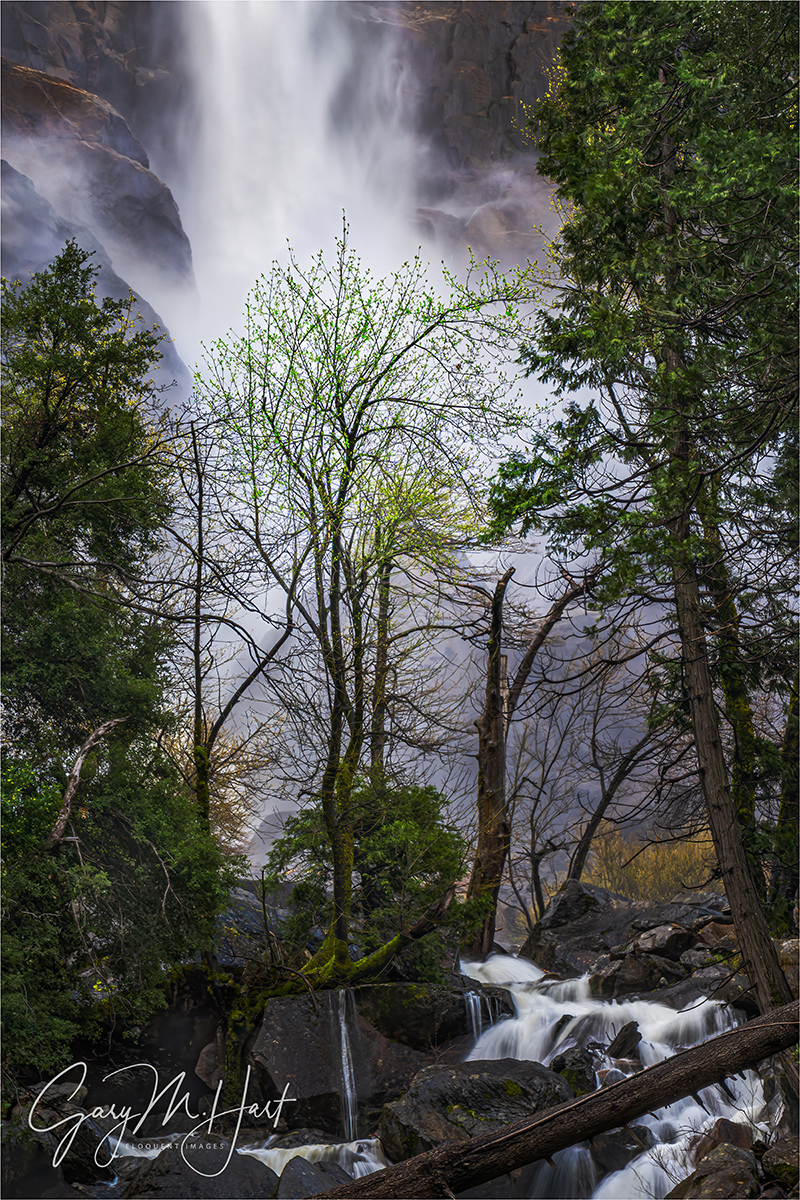
Tree and Bridalveil Fall, Bridalveil Creek, Yosemite
Sony a7R V
Sony 24-105 f/4 G
ISO 200
f/16
1/5 second
Probably the number one question I’m asked about Yosemite is, “What’s the best season for photography?” My response always sounds as if crafted by a waffling politician, but I swear I just don’t have the absolute answer everyone wants. And since I get to photograph Yosemite far more than the average photographer, and have for many years, my priorities are quite likely different than those of the average photographer.
I can say that my least favorite season is summer, because that’s when the waterfalls dry, the sky suffers from a chronic case of the blues (great for tourists, not so much for photography), and tourists swarm the park like ants to ice cream on pavement. But even summer offers beauty not possible any other season, mostly in the form of High Sierra splendor. Closed by snow most of the year, (usually) by late spring the high country roads to Glacier Point and Tuolumne Meadows have opened vehicular access to the exposed granite, wildflower-sprinkled meadows, gem-like lakes, and all the other pristine joys of Yosemite’s incomparable backcountry. And while Yosemite’s high country isn’t quite the respite from crowds it once was, its wide open spaces make solitude still much easier to find.
My own personal favorite season for creative photography is autumn. Though the waterfalls have dried completely or (at best) dwindled to a trickle, in autumn Yosemite Valley’s abundant assortment of deciduous trees throb with yellow and red. Adding to this varied color are mirror reflections in the Merced River, which has been slowed to a crawl along the length of the valley. As an added bonus, by the time the color arrives (mid/late October), dry waterfalls also mean most of the crowds have disappeared.
Winter is probably Yosemite’s most photographically variable season. Show up on a blue sky day in the midst of an (not uncommon) extended dry spell, and you’ll likely find brown meadows, trickling waterfalls, and dirt instead of snow. But arrive during or shortly after a snowstorm, and you’ll enjoy Yosemite Valley at its hands-down most beautiful—arguably one of the most beautiful sights anywhere on Earth. And since winter is the heart of California’s rainy season, the swirling clouds of a clearing storms are never more likely—even when the temperatures aren’t cold enough in Yosemite Valley to turn the rain to snow. Winter (specifically, mid/late February) is also when Horsetail Fall might turn molten red at sunset. Then there’s the rising full moon, which aligns most perfectly with Half Dome only in the winter months.
Yosemite in spring is all about the water—the season when the vertical granite can’t seem to shed the winter snowpack fast enough. Not only are the spring views dominated by well known Yosemite, Bridalveil, Vernal, and Nevada Falls, a seemingly infinite supply of ephemeral falls appear as well for a few weeks or months each spring. Rainbows on the waterfalls, dogwood everywhere, and reflective vernal pools decorating the meadows offer enough beauty to thrill tourists and photographers alike. All that water, paired with fresh green foliage, make spring the time I recommend for first-time visitors—it’s simply the season most likely to live up to expectations, and the least likely season to disappoint.
I stress about the conditions for my students before every workshop, but spring is the least stressful season for me because in Yosemite, there’s just no such thing as a bad spring day. Even though this is a relatively down year for the snowmelt that feeds the falls, last month’s Yosemite Waterfalls and Dogwood got a firsthand taste of all the joys of a Yosemite spring: plenty of water in all the falls, still pools dotting the meadows, and dogwood approaching peak bloom. And despite more clouds than usual, we had enough sunlight to photograph waterfall rainbows from four locations: three from different views of Bridalveil Fall, and one at the base of Lower Yosemite Fall.
One spot I never miss in spring is Bridalveil Creek, which offers an infinite number one-0f-a-kind scenes despite being in the heart of one of the most photographed locations in the world. Autumn is my favorite time to photograph Bridalveil Creek because I can add colorful leaves to the chain of cascades and pools beneath the fall, spring is a close second. While the creek in autumn seems to linger between each cascade, in spring it’s in far too much of a hurry to dally among the rocks.
Because of the intimate setting, its lack of a single obvious subject, and the sheer number of compositional elements begging to be composed into an image, I usually wait until the final day to bring my groups here. By then, everyone has refamiliarized themselves with their cameras, benefited from several days of training and image reviews, and had ample opportunity to get their creative juices flowing.
As usual, I started this group’s final morning at Bridalveil Creek, arriving just as the sky brightened ahead of the rising sun. Because this is an area to wander rather than stick together and photograph as a group, I began with a pretty thorough orientation, then set everyone free. I spent nearly an hour without my camera bag, just walking around trying to reach everyone to answer questions and make sure they were happy. Satisfied that all was well, I walked back to my car and grabbed my camera bag to see what I could find in the nearly one hour remaining.
I often head to the third bridge and work my way to some larger cascades (or small waterfalls) upstream; other times, especially when the group seems to require more help, I just shoot from one of the bridges. But this time I took advantage of a new gap in the trees that opened a new view of the fall just upstream from the third bridge. I’d been especially drawn to a young tree with brand new leaves, and envisioned juxtaposing it against the explosive white mist at the base of the fall. Three or four others in the group were working this scene, so I worked around them and finally ended up with the composition I’d visualized earlier.
With my 24-105 lens I started quite a bit wider, and gradually tightened my compositions as familiarity with the scene’s nuances enabled me to eliminate things. The patterns at the base of the wall changed continuously, so once I found a composition I liked, (true to form) I photographed it more than a dozen times, at several shutter speeds, to give myself a variety of water patterns and blur effects.
Join Me In Yosemite
The Joy of a Yosemite Spring
Click any image to scroll through the gallery LARGE


 Eloquent Images by Gary Hart
Beautiful work.
Awesomely beautiful!!!
wonderful photos
Yes
beyond spectacular!!
I too like Bridal Veil Creek in autumn. It can also be great in winter.