Eloquent Images by Gary Hart
Insight, information, and inspiration for the inquisitive nature photographer
Beyond the Wall
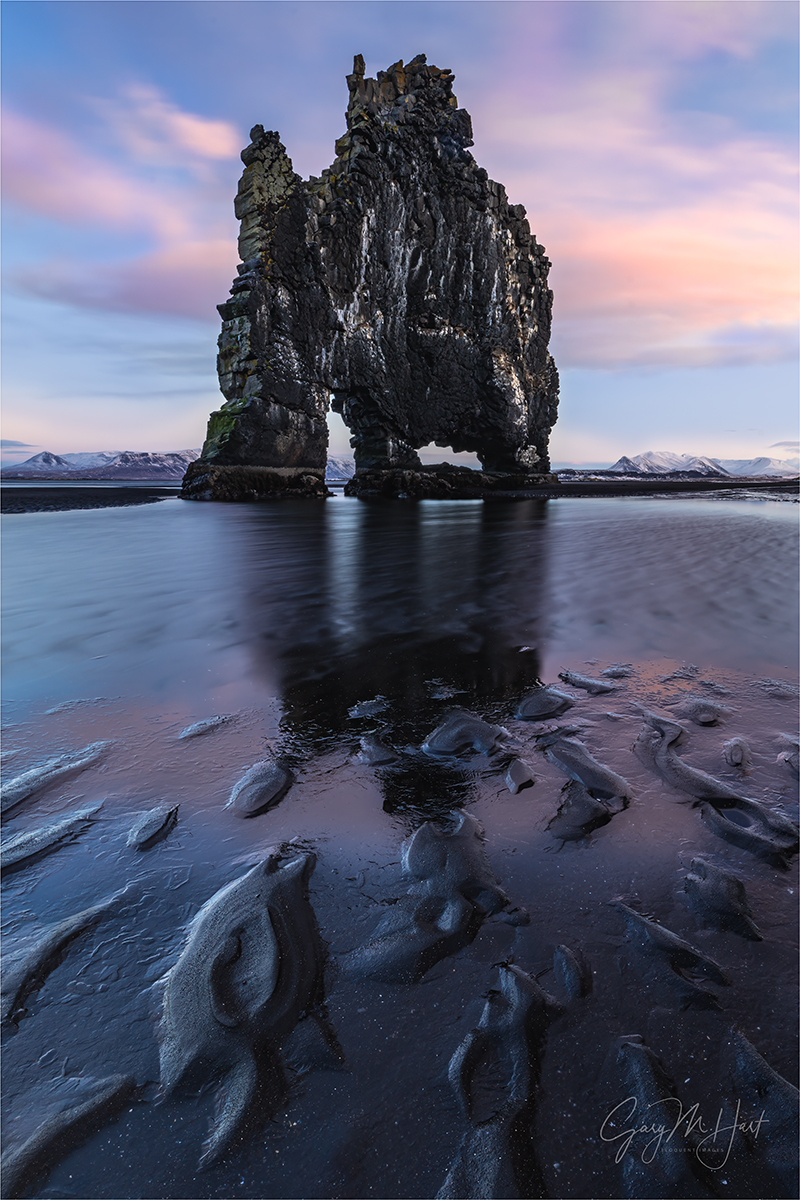
Hvítserkur Low Tide Reflection, Vatnsnes Peninsula, Iceland
Sony α1
Sony 16-35 GM II
30 seconds
F/20
ISO 50
I can think of no better way to see the world than to follow your camera to new, far-flung destinations. But since much of my photography travel is tied to my photo workshops, I don’t get to visit truly new places as much as I’d like. I’m not complaining—I love the intimate connection to locations that can only be developed by frequent, regular visits. But I also appreciate an opportunity to see something new.
Iceland, for example, where Don Smith and I have visited every (non-pandemic) winter since 2019. On each of those visits we’ve followed the same itinerary, first taking our workshop students north of Reykjavik to the Snaefellsnes Peninsula for a couple of days, then traveling down along the South Coast as far east as Vestrahorn. It’s a truly magical trip that hits many of Iceland’s most beautiful spots. (Not mention the potential for northern lights every night.)
But many is not all, and despite returning year after year, I’ve long known there are many beautiful Iceland locations I’d never laid eyes on. So this year Don and I switched things up, replacing the South Coast portion of our trip with the northern part of the island. (Since we’re in the care of a native Iceland photography guide, we feel comfortable taking our groups to new locations.)
As with prior workshops, this year’s trip started with Snaefellsnes favorites like Kirkjufell, Budir (the Black Church), Londrangar, and Arnarstapi. But then, instead of heading south after leaving Snaefellsnes, we pointed north and east toward parts unknown. Almost immediately, despite the fact that everything was new, the north part of Iceland gave me an eerie feeling of familiarity.
It’s no secret that a lot of Game of Thrones was filmed in Iceland, but until this year, I never felt the GoT vibes in Iceland as strongly as I feel the Lord of the Rings vibes when I’m in New Zealand. Heading north from Snaefellsnes this year, I finally got it—with every new view I couldn’t shake the feeling that I was somewhere north of the Wall. It wasn’t so much that I recognized specific settings from the show—in fact, we only saw a handful of actual GoT locations—it was more the striking features and exquisite starkness of the terrain at every turn.
Both New Zealand and Iceland are among the most beautiful locations I’ve ever visited, but they’re quite different. While New Zealand’s beauty is lush and opulent, Iceland in winter is stark and raw. The familiarity wasn’t limited to specific Game of Thrones locations—even locations that weren’t in the show conveyed that GoT feel. For me, Hvítserkur topped that list.
The Game of Thrones vibe at Hvítserkur was so strong, at first I first I thought that at the very least it had to have been in the background of some GoT scene. But researching GoT locations, I learned that, unlike a Milky Way location we used later in the workshop, Hvítserkur never appeared in the series. Even its nickname—”Drinking Dragon”—conjures thoughts of Game of Thrones.
Hvítserkur is a volcanic plug, the vestiges of an eruption more than 12 million years ago. When the erupting volcano finished delivering its payload, the lava remaining in its vent hardened in place. Over countess subsequent millennia, the softer surrounding material eroded, leaving only the hard basalt core standing 50 feet above what is now Húnaflói Bay.
Most of the Hvítserkur images I’ve seen show it reflecting in water completely surrounding its perimeter, but the tide was low when we arrived, leaving the rock protruding from a patchwork of small pools and mudflats. At first I was disappointed to be denied the reflection opportunity, but (as often happens) the longer I spent with the scene, the more excited I became about the possibilities to capture something a little less common at this heavily photographed location.
I started by identifying the outstanding qualities at that moment. Besides Hvítserkur itself, the most obvious feature was the braided patterns in the mud at my feet. I also saw great potential for sunset color in the mix of clouds, sky, and sunlight above distant snow-covered mountains. With the sun fast approaching the horizon, I moved around to find the best alignment of foreground patterns and background sky and mountains, all anchored by Hvítserkur.
To emphasize the mud patterns, I dropped my tripod to about a foot above the ground and dialed my 16-35 lens to 16mm. Though the large nearby pool would have created a perfect mirror on a still day, a fairly stiff breeze had whipped its surface and all but erased the reflection. So I added a Breakthrough 6-stop Dark Polarizer (basically, a 6-stop polarizing ND that doesn’t vignette) to enable a long shutter speed that would smooth the water enough to capture a reflection of the color in the sky, and a vague outline of the rock.
The result was this image that I think (hope?) balances with the bold majesty of Hvítserkur with the sublime beauty north of the Wall.
The Land of Ice and Snow
Click any image to scroll through the gallery LARGE (it’s better on a computer)


Good background for Aug. 11.
Awesome!!!
My bucket list just got longer.
this could be something out of a Star Wars movie.
Gary, the rock evokes so many stories in my head about what it could be in a fantasy world. And the composition is stunning with the compelling foreground moving my eye to the rock and gorgeous sky behind it. Wow! Thanks for continuing to write your blogs.