Eloquent Images by Gary Hart
Insight, information, and inspiration for the inquisitive nature photographer
Smart Luck
Posted on July 30, 2023

Milky Way and the Southern Alps, Mt. Cook / Aoraki National Park, New Zealand
Sony a7R V
Sony 14mm f/1.8 GM
ISO 12800
f/1.8
10 seconds
Once upon a time I posted a rainbow image on Facebook and someone commented that getting a shot like that is simply dumb luck. After having a good chuckle, I actually felt a little sad for the commenter. Since we all tend to make choices that validate our version of reality, imagine going through life with that philosophy.
No one can deny that photography has a significant luck component, but each of us chooses our relationship with the fickle whims of chance—I prefer to look for smart luck. Smart luck embraces Louis Pasteur’s conviction that chance favors the prepared mind. Ansel Adams was quite fond of repeating Pasteur’s quote, and later Galen Rowell as well as many other photographers have jumped on board. So while many may indeed feel lucky to have witnessed special moments in Nature, let’s not lose sight of our opportunities to create our own “luck.” Smart luck.
Some examples

Double Rainbow, Tunnel View, Yosemite
As nature photographers, we must acknowledge the tremendous role chance plays in the conditions that rule the scenes we photograph, then do our best to maximize our odds for witnessing whatever special something Mother Nature might toss in our direction. A rainbow over the Safeway parking lot or the sewage treatment plant is still beautiful, but a rainbow above Yosemite Valley can ascend to a lifelong memory (not to mention a beautiful photograph).
I’ll never forget the time, while driving to Yosemite to meet new clients to plan the next day’s tour over dinner, I saw conditions that told me a rainbow was possible. When I met the clients at the cafeteria, I “suggested” (pleaded?) that we forget dinner and take a shot at a rainbow instead. Despite no guarantee of success, we raced our empty stomachs across Yosemite Valley, scaled some rocks behind Tunnel View, and sat in a downpour for about twenty minutes. Our reward? A double rainbow arcing across Yosemite Valley. Were we lucky? Absolutely. But it was no fluke that my clients and I were the only “lucky” ones out there that evening.

Captive Crescent, El Capitan and Half Dome, Yosemite
Before sunrise on a chilly May morning in 2011, my workshop group and I had the good fortune photograph a crescent moon splitting El Capitan and Half Dome before sunrise. Was this luck? I’ll give you one guess.
I suppose we were lucky that our alarms went off, and that the clouds stayed away that morning. But I knew at least a year in advance that a crescent moon would be rising at this less heralded Yosemite vista on this very morning, scheduled my spring workshop to include the date, then spent hours obsessively making sure I hadn’t made any mistakes.

Rainbow Bridge, Colorado River, Grand Canyon
I’d love to say that I sensed the potential for a rainbow over the Grand Canyon when I scheduled my 2016 Grand Canyon raft trip, then hustled my group down the river for three days to be in this very position to witness the moment. Sadly, I’m not quite that prescient. On the other hand, I did anticipate the potential for a rainbow at least an hour earlier, scouted our campsite to determine the best locations to photograph it, then called the rainbow’s arrival far enough in advance that everyone was able to grab their gear and be set up before its arrival.
Anticipating these special moments in nature doesn’t require any real gifts—just a basic understanding of the natural phenomena you’d like to photograph, and a little effort to match your anticipated natural event (a rainbow, a moonrise, the Milky Way, or whatever) with your location of choice.
But to decide that photographing nature’s most special moments is mostly about luck is to pretty much limit your rainbows to the Safeways and sewage treatment plants of your everyday world. I’ve lost track of the number of times I’ve prepared for a special moment in nature, changed plans, lost sleep, driven many miles, skipped meals, and suffered in miserable conditions, all with nothing to show for my sacrifice. But just one success like a rainbow above Yosemite Valley or the Grand Canyon is more than enough compensation for a thousand miserable failures. And here’s another secret: no matter how miserable I am getting to and waiting for my goal event, whether it happens or not, I absolutely love the anticipation, the just sitting out there marinating in the thought that it might happen.
About this image

Milky Way and the Southern Alps, Mt. Cook / Aoraki National Park, New Zealand
Don Smith and I didn’t choose New Zealand in June by accident. And it was no fluke that we were at this spot beneath the Southern Alps on a moonless night. June is when the Milky Way’s core rises highest in the night sky, and we knew exactly where to be when it came out this night. Well, we thought we knew exactly where to be…
Our New Zealand workshop group had had such a great Milky Way experience on the workshop’s first night, everyone wanted to do it again. But this year’s trip encounter more fog than we ever have, which brought us some nice daytime conditions but wasn’t particularly conducive to night photography. We finally got another chance on the workshop’s penultimate night, when the sky cleared at one of my favorite places for night photography. After a nice sunset shoot, we went to dinner (at a spectacular buffet) while waiting for the sky to darken, then headed back out.
But when we arrived at our predetermined location, a bridge over the Hooker River, we discovered that workers doing grading (I assume) on the riverbank just upstream had left a spotlight on outside their little shed, perhaps by mistake, or maybe to discourage thieves. Whatever the reason, it was so bright that it washed out the bottom half of everyone’s frame. No problem—we were familiar enough with the location that we were able to drive up the road a mile or so until we found a nice view where the light wasn’t a factor.
This far into the workshop everyone was fairly comfortable with their cameras, but the utter darkness out there added another layer of complication. Spreading out along the shoulder, we had to take care not to bump into tripods and each other, but once everyone established their positions and started finding compositions that worked, there wasn’t really any need to move around. At that point the job for Don and I is mostly to be a resource—help people with their compositions and focus (mostly just checking to ensure that it’s okay)—and just stay out of the way.
Since most of my compositions at the prior Milky Way shoot had been vertical, this night I opted for horizontal frames that included more mountains. With nothing special in the immediate foreground, I minimized it in my frame. I further deemphasized (darkened) the foreground with a faster shutter speed that had the added benefit of reducing star motion.
After we’d been out their for a while and I was pretty sure everyone had been successful, I pointed out the Large and Small Magellanic Clouds, satellite galaxies of our Milky Way that aren’t visible in the Northern Hemisphere. They’re not in this frame—they’d be quite a bit to the right of the Milky Way with a very wide lens—but I’ve seen several images from others in the group that included them. Altogether a very special evening.
Join Don and Me in New Zealand Next June
More Smart Luck


Natural Synergy: Building Relationships In Nature
Posted on July 24, 2023
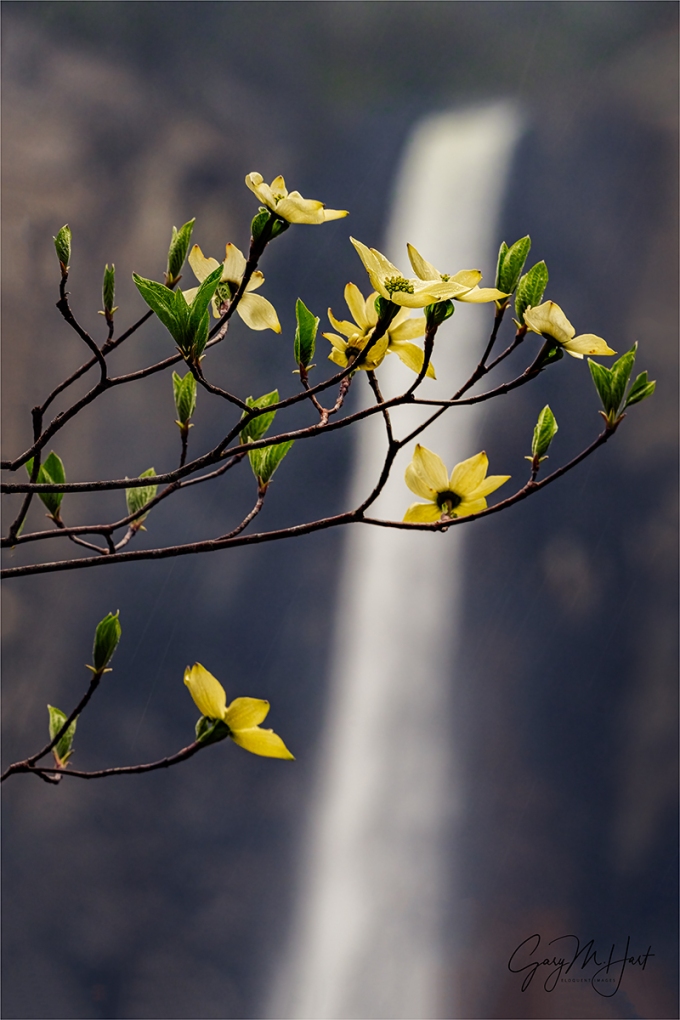
Spring Bloom, Dogwood and Bridalveil Fall, Yosemite
Sony a7R V
Sony 100-400 GM
2 extension tubes (26mm total)
ISO 1600
f/8
1/60 second
After several weeks working through my New Zealand images, I’m giving myself (and you) a break from the land Down Under and returning to Yosemite. Because I absolutely refuse to visit Yosemite in summer, I returned to images from my trip in early May to photograph the dogwood, two subjects on my short-list of favorites.
Looking at these Yosemite images, combined with my still fresh New Zealand memories, reminds me of the extreme good fortune of my life. When I decided to make photography my career nearly 18 years ago, I promised myself I’d only photograph what I love. Not because I believed that’s where I thought I’d have the most success (I wasn’t that calculating), but simply because the only good reason I could come up with for leaving an excellent job with a great company was to do something that gave me joy. Lucky me—today most of my time behind a camera is spent pursuing subjects that touch a special place in my heart, subjects I’m naturally drawn to, camera or not. (And the bills are still getting paid.)
The first emotional magnets that come to mind are the fixed locations, like Yosemite, Grand Canyon, and New Zealand (to name just three) that draw and never cease to inspire me. More transient favorites include things like lightning, rainbows, and reflections, and seasonal subjects like fall color, winter snow, and spring flowers. And of course pretty much anything celestial excites me.
Relationships
As much as I enjoy these subjects individually, I especially love the natural synergy that happens when I can combine two or more in an image. While the Grand Canyon, an erupting volcano, or Yosemite Valley, are special by any standard, pairing the Grand Canyon with a lightning bolt, Kilauea Caldera with the Milky Way, or Yosemite with blooming dogwood always feels better to me than the sum of those individual parts.
This juxtaposition of subjects is so essential to photography that we often do it without thinking. For example, when we happen upon a scene and see El Capitan reflecting in the Merced River—click. Or look at that vivid sunset over the Sierra Crest—click. Nice pictures, but most successful photographers are more strategic and tactical about Nature’s juxtapositions. We find a subject we want to photograph, then figure out other natural elements that might pair well with it. Sometimes that’s simply a matter of walking around until we find an alignment that works; other times it means researching and returning months or years later to photograph the relationship we seek (with no guarantee it will happen).
When planning these shots, it helps me to think in terms of static and dynamic juxtapositions: static being relationships between permanent landscape features (mountains, waterfalls, etc.); dynamic juxtapositions always include at least one ephemeral phenomenon that we can never count on (a rainbow or lightning bolt). I know the places where I can put El Capitan and Bridalveil Fall in the same frame, or Mt. Whitney framed by Mobius Arch (static juxtapositions), timing dynamic elements like Yosemite’s annual dogwood bloom or the full moon setting behind Mt. Whitney require planning and execution.
Visual Motion
But just because an object is static, doesn’t mean an image of it should be; and a dynamic doesn’t automatically translate to motion in a still image. It’s my job to create motion in my still images by encouraging my viewers’ eyes to move through the frame, providing a path for their eyes to follow and/or a place for them to land. Accomplishing this isn’t necessarily difficult, but it does usually require some foresight and physical effort.
Once I’ve arrived at a location and identified my primary subject, I challenge myself to find at least one other element on a different visual plane. Sometimes that’s easy, other times…, not so much. Nevertheless, when my prime subject is in the distance, I look for something closer to balance it; likewise, if my subject is nearby, I want something in the background to complement it.
Foreground or background, sometimes my secondary subject has almost as much visual appeal as the primary subject; other times it’s there simply to balance my frame. Regardless of its aesthetic appeal, my secondary subject’s placement, both relative to the scene’s other visual elements and to the frame’s boundary, can make or break an image. And don’t forget that (lacking explosives) pretty much the only way to change the relative position of two static objects in a photographic frame is conscious positioning of the camera (and the photographer behind it!)—in other words, move!
Visual motion happens in a still image when elements in the frame create actual or virtual lines for the eye to (subconsciously) follow. Tangible lines might be a horizontal horizon, vertical waterfall, or diagonal river. But often it’s up to me to create virtual lines—an implicit, connect-the-dots path between visual elements. Objects in a scene have what I call “visual weight”: some quality like mass, brightness, or color that pulls the eye. After identifying these elements, we can move around until their relative positions in the frame (again subconsciously) move the viewers’ eyes.
The last important relationship consideration is depth. Photography is a futile attempt to render a 3-dimensional world in a 2-dimensional world. Lacking actual depth, we can create the illusion of depth by ensuring that objects with visual weight exist throughout the front-to-back plane. As a general rule I avoid merging these essential visual elements to avoid conflating them on the same plane and defeating the illusion of depth that’s so essential in a two-dimensional image.
Of course every situation is different, so to paraphrase Hector Barbossa (Geoffrey Rush) in The Pirates of the Caribbean, my suggestions here are more guidelines than rules. But they should never be buried so deep in your memory that they’re not available to access and apply as situations arise.
About this image
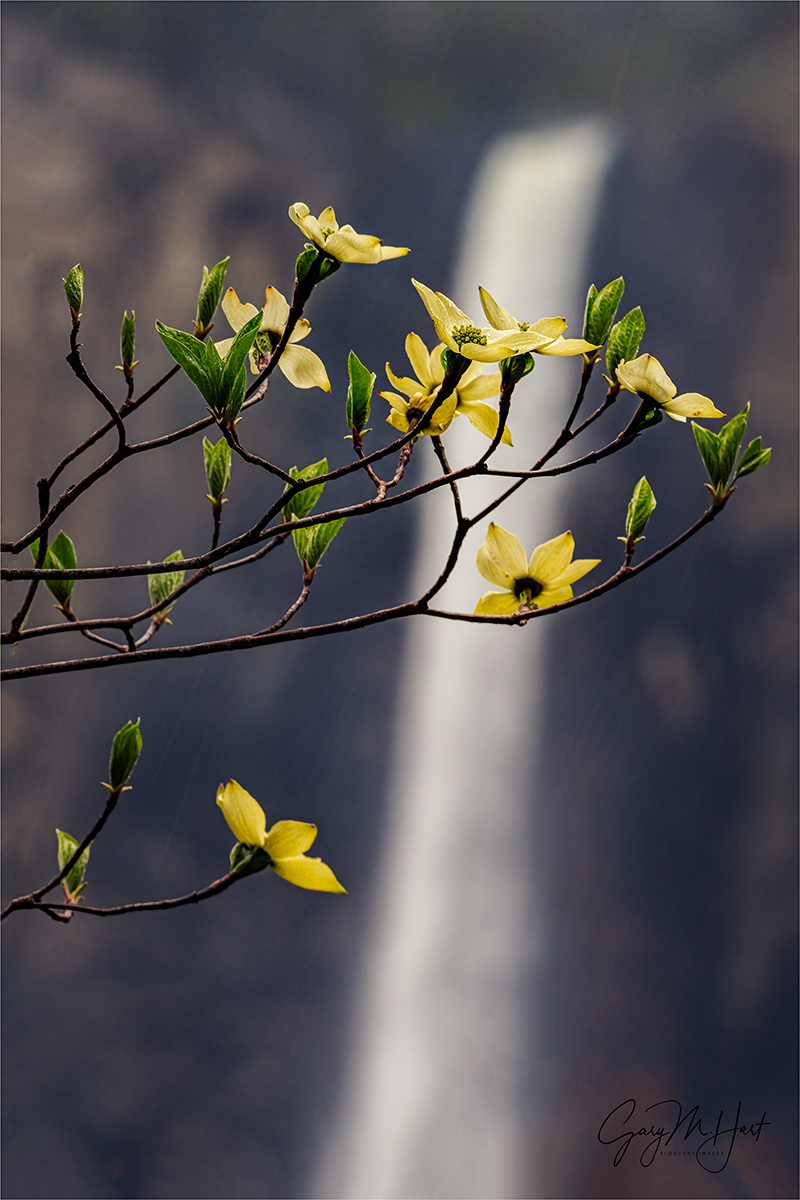
Spring Bloom, Dogwood and Bridalveil Fall, Yosemite
A week or so before capturing the dogwood image I’m sharing today, my brother Jay and I drove to Yosemite hoping to photograph the peaking dogwood bloom with Yosemite’s waterfalls at historic flows. There was indeed lots of water, but a cool spring had slowed the dogwood and they weren’t quite ready.
No problem—based on the dogwood’s premature state I observed in that first visit, I figured they needed another week or so to reach their full spring potential, so a week later Jay and I returned. Finding the dogwood in excellent shape, we spent pretty much the entire day photographing it.

Bridalveil Dogwood, Yosemite
With a light rain falling most of the day, one of the things in the back of my mind was attempting to reprise some version of a dogwood image I’d captured nearly 20 years earlier, one I consider a milestone in my aggressive relationship-seeking approach to photography. On the drive to Yosemite on that wet morning nearly 20 years ago, I decided I wanted to photograph a dogwood with a Yosemite icon in the background. That was the extent of my vision, but I pursued it relentlessly until I found a dogwood bloom I could pair with Bridalveil Fall. The rest, as they say, is history.
My goal on this year’s spring visit wasn’t to duplicate the old image, just my approach: blooming dogwood with Bridalveil Fall in the background. I returned to Valley View and found that original view of Bridalveil Fall blocked by other trees. So I traipsed about the forest looking for blooming dogwood with a clear sightline to Bridalveil Fall. That’s not as easy as you might think, but as you can see, I finally found a relationship that worked.
Instead of the close, wide angle shot I’d chosen all those years ago, this time I set up farther back, using a telephoto to enlarge Bridalveil and compress the distance between the two subjects. Because it was impossible for the dogwood and Bridalveil to be sharp (without focus-stacking, a personal no-no), I just embraced the softness in the fall, which helps the dogwood bracts stand out and makes it the primary subject.
It actually took about ten minutes before I was satisfied with the juxtaposition of dogwood and Bridalveil. Because there was a slight breeze, I bumped my ISO to 1600 for a faster shutter speed. I also played with different f-stops to find the right balance softness and clarity in Bridalveil. I think I like the old image better than the new one, but this one pleases me too, and it was a fun experience.
Natural Synergy
Click any image to scroll through the gallery LARGE


Right Place, Right Time
Posted on July 17, 2023
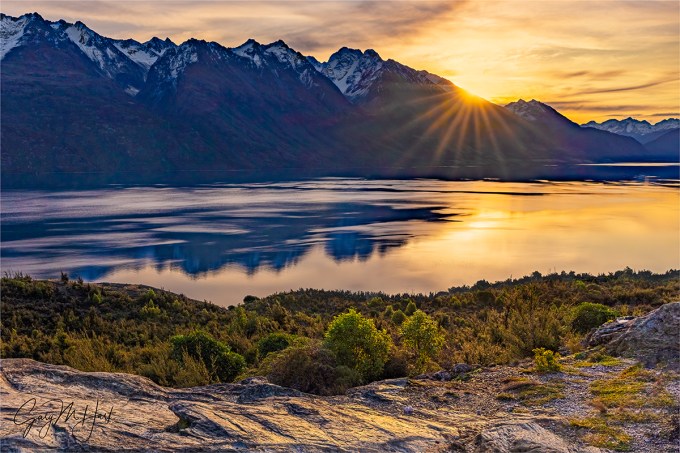
Golden Sunset, Lake Wakatipu, New Zealand
Sony α1
Sony 16-35 f/2.8 GM
ISO 100
f/18
1/125 second
A few years ago I listened to an NPR show about time and the arbitrary ways we Earthlings measure it. The guest’s thesis was that the hours, days, and years we measure and monitor so closely are an invention established (and measured with increasing precision) by science and technology to serve society’s specific needs. A question posed to listeners was, “What is the most significant measure of time in your life?”
Most callers responded with anecdotes about train schedules, school years, and work hours that revealed how conventional time measurement tools, the arbitrary units of clocks and calendars, rule our existence. Listening while on my morning run, I was unable to call in to share my own (significantly different) relationship with time, so you’re stuck with reading about it here instead.
Landscape photographers are governed by far more primitive time constructs than the bustling majority is. We’re more beholden to the fundamental laws of nature that inspired, and ultimately transcend, clocks and calendars: Earth’s daily rotation on its axis, Earth’s annual revolution about the sun, and the Moon’s motion relative to the Earth and Sun. Clocks and calendars, which have little to do with the picture taking aspect of my life, are useful to me only when I need to interact with the rest of the world on its terms (for example, to run my business).
While my photography days are inexorably tied to the sun’s and moon’s arrival, and my annual schedule is governed by the changing angle of the sun’s rays and the weather this change generates, I can’t help but long for a world where I could simply mark my calendar for the rainbow that arcs above Yosemite Valley at 4:29 p.m. every May 26, or the lightning bolt that strikes the Grand Canyon’s South Rim at 2:45 p.m. each August 18. But Nature, despite human attempts to measure and manipulate it, is its own boss. Even reliable celestial events are regularly thwarted by clouds. The best I can do is schedule workshops and personal photo trips to maximize my odds for these special phenomena, then show up and hope for the best.
The insignificance of clocks and calendars is never more clear than the first morning following a time change. On the second Sunday of March, when “normal” people moan about rising an hour earlier, the sun thumbs its nose at Daylight Saving Time and rises a mere minute (or so) earlier than it did the day before. So do I. And on the first Sunday of November, as others luxuriate in their extra hour of sleep, I get to sleep an entire minute or so longer. Yippee.
There’s irony in the immutability of the natural laws responsible for the (perceived) randomness of the very events we landscape photographers covet: Earth’s revolution and rotation, our orbiting moon, each predictable in microseconds, set in motion the atmospheric, ocean current, and tidal dynamics that are the catalysts for unpredictable seasons, weather, and waves we photograph. Ironic or not, I love nature’s mixture of precision and randomness. Though I try to maximize my odds for photographically special natural phenomena, understanding that “it” might not (probably won’t) happen only enhances the thrill when something special does happen.
This year Don Smith and I scheduled two Iceland workshops in January. There are many, many reasons to visit Iceland in January, but I think if you were to poll the members of both workshops, each would say their prime reason was the opportunity to photograph the northern lights. The first group hit the aurora jackpot, with back-to-back dazzling displays rivaling anything I’ve ever seen; the second group had a couple of shoots where, if we looked closely at the our LCD screens, we saw a little green on the horizon, but basically the aurora for that group was a swing-and-miss. That second group did enjoy some spectacular photography that the first group didn’t, but I think each of them would have changed places with the other group if given the opportunity.
Another example of Nature’s fickle inclinations is my Grand Canyon monsoon workshops, where (despite all the spectacular Grand Canyon beauty we photograph) the prime goal is lightning. I make it clear to all who sign up that I can’t promise lightning, and more than 2/3 of my groups do get good lightning, but that’s no consolation to the minority who don’t get it. Fortunately, nearly all photographers understand that I have no control over the weather (I can’t believe I need to qualify that with “nearly”).
I’m thinking about this because I’m often asked how I choose the dates for my workshops and photo trips. I avoid weekends because photography and crowds don’t mix; some trips are specifically scheduled for celestial events, like the Milky Way, northern lights, or a moonrise or moonset, while others target seasonal phenomena like fall color or spring flowers.
The bottom line is that, whether it’s a personal trip or photo workshop, (like many nature photographers) I am extremely strategic about my scheduling. Which is why Don and I end up choosing winter for our New Zealand workshops.
Of course I have no doubt that New Zealand is spectacularly beautiful any season. But with snow on the peaks and the Milky Way’s brilliant core visible all night, winter is a no-brainer for me. A winter bonus is that flights are cheaper, lodging is easier, and crowds are low. And it’s really not that cold, at least by most people’s winter expectations. We usually get lows in the low/mid 30s, and highs in the 40s and 50s. Rain and fog are possible (we’ve seen more fog than rain), and snow has been extremely rare (we visit a few places with snow on the ground, but I can’t remember it ever actually snowing on us).
The image I’m sharing today is from this year’s New Zealand workshop’s first day. The clouds were a tremendous addition to this already lovely view of Lake Wakatipu, the (nearby) Humboldt Mountains, and the (distant) Southern Alps. While snow on the peaks wasn’t as prominent as in previous years, it was certainly enough to enhance the scene.
My original plan was to not photograph at all this evening, but at the last minute I grabbed my camera bag—just in case an irresistible opportunity to photograph presented itself. I spent most of my time working with the group—pretty typical for a workshop’s first evening. But as I started making suggestions to others for ways to handle the scene—not just what was happening at that moment, but also anticipating what could be coming—I started envisioning some things I might like to try. And when it became clear everyone was done with me (it can reach a point where my input, no matter how well-intentioned, is a distraction), I went to my bag and pulled out my Sony a1 body, 16 – 35 GM lens, and tripod.
The main vantage point was already packed with our group, so rather than jam myself in, I wandered about 50 feet back down the hill to an elevated natural rock platform just off the trail. This was not an “official” vista, but I could tell by the well-worn path that I wasn’t wasn’t blazing any new trails.
As I scanned the beautiful scene, I thought to myself that these are just the conditions we hope for when we schedule the New Zealand winter workshop. But matching the right scene with the right conditions is only half my job—I still needed to build an image.
There were pros and cons to this new location: the pros were the way the hill dropped abruptly, making the foreground shrubs less of an obstacle than they are at the main view, as well as the nicely textured rock at my feet; the cons were the way the photographer-packed vista on the right obstructed much of the view up the lake toward the Southern Alps.
With the sun such a prominent component of this view, I decided to lean into it and make that a focal point of my image. More than a little concerned about the clouds cutting too much light to make a sunstar, I decided to go for it anyway and stopped down to f/18. The right side of my frame was determined by my desire to eliminate the viewing platform. With the sun’s strong visual presence as far from the right side as I could make it, I was concerned that going too wide on the left would throw the image off balance, so I went just wide enough to include all of the mountain reflection.
My frame’s left and right boundaries decided, I just had to pick the foreground/sky balance. When the sun popped out and warmed the nearby rocks, I decided to give the rocks and clouds equal billing. Turns out my concern about the clouds diminishing the sunstar were valid—I only got a handful of frames with any sunstar at all, and the one you see here, while mushier than I like, was about as good as it got.
Join Don Smith and me in New Zealand next year
Workshop Schedule || Purchase Prints || Instagram
Right Place, Right time
Click any image to scroll through the gallery LARGE


“Ordinary” Beauty
Posted on July 12, 2023
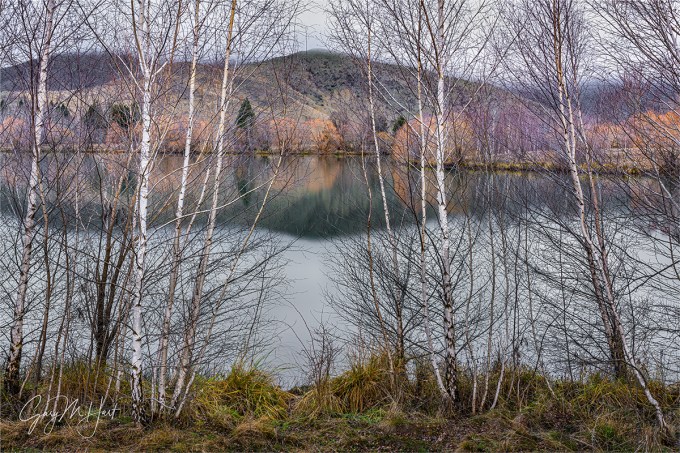
Trees and Reflection, Wairepo Arm, New Zealand
Sony a7R V
Sony 24-105 f/4 G
ISO 100
f/8
30 seconds
Many of the places I visit are known for their extraordinary beauty, striking features and eye-grabbing vistas that justifiably attract thousands of daily visitors and inspire millions of photographs. Stimulating scenes like these seem to be every nature photographer’s goal, but today I’d like to issue a shout-out to ordinary beauty—the simple scenes with the ability to soothe, by virtue of their subtle beauty, that we pass by every day.
Art of any form appeals on two seemingly contradictory planes: it must stimulate enough to attract, yet soothe enough to sustain. I call these art’s “oooh” and “ahhh” factors, and they’re often mutually exclusive. It saddens me that social media seems to have biased photographers toward the oooh images, compelling them to settle for the obvious beauty that encourages viewers to simply click Like and maybe comment “Stunning!” before moving on to the next image. Sadly, this phenomenon seems to have made social media Likes the ultimate arbiter of beauty for many, and I fear that we’re loosing sight of Nature’s ability to soothe.
Images that shout their beauty might get my attention, but they’re not usually the kind of images I’d mount on a wall to live with for an extended period. Music is a great analog that most people can relate to. When I’m running or need to work around the house, I love cranking up AC/DC, Foo Fighters, or The Afghan Whigs (I could go on) , but couldn’t live with it 24×7. On the other hand, while Pat Metheny, Michael Franks, or Azymuth (I could go on) might not stimulate me into an adrenalin frenzy, but I can have them playing in the background all day and my world’s a happier place.
Nature photography’s challenge is overcoming that urge to settle for the loudest beauty, or that impulse to drive right past any scene that doesn’t grab the eye instantly, and to instead take the time seek beauty hidden just beneath the surface. After doing this photography thing for many years, I realize that the scenes that at first glance appear “ordinary” are often the scenes where I find the soothing qualities that sustain an image for the long haul.
About this image

Trees and Reflection, Wairepo Arm, New Zealand
Living in the California puts me in relatively close proximity to some of the most diverse, spectacular natural beauty in the world. Rivaling (and arguably surpassing) California’s scenery, New Zealand offers its own vast assortment of extraordinary beauty. Festooned with snow-capped peaks, glacial lakes, plunging waterfalls, massive glaciers, lush rainforests, and dazzling fiords (the New Zealand spelling for fjord), New Zealand is a visual paradise by any standard.
In addition to this obvious beauty, one thing that strikes me on each visit to New Zealand’s breathtaking South Island is the ubiquity of the beauty present even in New Zealand’s “ordinary” (a relative term) landscapes. Unlike traveling between photo destinations in California, in New Zealand even the drives to and from gorgeous photo destinations are so beautiful that I enjoy the views along the way almost as much as I do the destinations themselves.
In the New Zealand workshops Don Smith and I do each June, one spot that has always grabbed my eye is a small, tree-lined lake near Twizel, the home of our hotel for the Aoraki / Mt. Cook National Park and Lake Tekapo portion of our workshop. Known as Wairepo Arm, it’s connected by a small culvert to larger (but still not large by New Zealand standards) Lake Ruataniwha, a manmade lake created for hydroelectric power purposes.

Fogbow, Wairepo Arm, New Zealand
The first thing I notice here is the orange trees reflecting atop the usually calm lake. Since we’re always here in June, right around the Southern Hemisphere’s winter solstice, my first assumption was that the orange color was just late fall foliage hanging on into early winter. I didn’t realize until one particularly frigid morning in 2019 when we found the trees glazed with hoarfrost, pretty much demanding that we stop and photograph, that (despite the icy frosting) there are no leaves on these trees and the color is entirely in the trees’ bare branches. It turns out these are (non-native) flame willow trees that sport their vivid orange (it’s not subtle) all winter long.
This year, after a long drive from Mirror Lakes near Milford Sound, we decided this might be a good time to give our group a chance to photograph this scene at Wairepo Arm that we usually drive right by. We crossed our fingers and were thrilled to find the color strong, the lake calm, and the reflection everything we’d hoped for. As an added bonus, the entire scene was capped by a low fog that bathed everything in soft, shadowless light.
I’d never paid much attention to the birches before this visit, but for some reason this time my eyes went straight to their parallel trunks and papery white bark. While everyone in the group walked through gaps in these trees to stand on the lakeshore for an unobstructed view of the reflection, as I scanned the scene it occurred to me that I might be able to include the birches and still capture the reflection.
I walked down the lakeshore a couple of hundred yards and found a combination of evenly spaced parallel birches spaced enough to reveal the colorful trees and their reflection. The composition I thought worked best emphasized the horizontal bands complemented by the perpendicular trunks. Since the sky itself was pretty bland, and the grassy foreground was pretty disorganized, I included just enough of each to add to the horizontal layering. When a few ripples disturbed the lake surface, I added my Breakthrough 6-stop Dark Polarizer to smooth them.
I have no illusions that this image will be a social media viral sensation, but its soft light and soothing stillness provide the staying power I crave in an image.
See for yourself when Don and I return to New Zealand next year
Workshop Schedule || Purchase Prints || Instagram
“Ordinary” Beauty
Click any image to scroll through the gallery LARGE


Dinner Can Wait
Posted on July 3, 2023

Glacial Twilight, Tasman Lake Reflection, New Zealand
Sony a7R V
Sony 24-105 f/4 G
ISO 100
f/16
13 seconds
Among the (many) highlights of the New Zealand workshop Don Smith and I do each year is the short but steep hike to the Tasman Lake vista. Somehow the people at Aoraki / Mt. Cook National Park have managed to cram the .4 mile trail (I measured) with 334 stairs (I counted), but once you’ve caught your breath at the top of the trail, the reward for your effort is a 270 degree view that includes 12,200 foot Mt. Cook (New Zealand’s tallest peak), Tasman Glacier (covered in black rock in this image), turquoise Tasman Lake dotted with icebergs, the Tasman Valley, and a host of snowcapped Southern Alps peaks.
Because free-soloing this Tasman view climb isn’t for everyone, Don and I have an alternate spot for those who don’t feel like mountain climbers. This year, after dropping me and my Tasman Lake crew at the trailhead, Don and our driver Steve took the (larger) remaining group to a nearby bridge across the Hooker River, where they could photograph many of the same peaks with the river in the foreground. The plan was for both groups to photograph sunset at our respective locations, then reconnect for dinner while waiting for the sky to darken enough for (another) Milky Way shoot.
Normally I’m not crazy about setting rigid meet-up times following a shoot because it’s always impossible predict what conditions we’ll have and exactly when the show will be over. In this case we had enough cell service at both locations to allow us to include a little “We’ll let you know if we need more time,” flexibility in the plans. That turned out to be a good thing.
I’ve probably been up to this view at least a dozen times now, and each time it’s different. And much like approaching Tunnel View in Yosemite, you have no idea what’s in store until the view is upon you. The typical variables are the clouds, the amount snow at lake level, the number of icebergs and their location on the lake, and the color of the lake (always some shade of glacial green/blue).
Also like the Tunnel View experience, the reaction of people seeing this view for the first time is a true personal treat. This year’s experience was no exception, especially since the view this evening was among the best I’ve ever seen here. It checked most variables mentioned above: thin clouds swirled beneath the peaks; there was more ice on the lake than I’ve ever seen, most of it floating in the best part of the scene; and the lake’s color was off the charts. The only thing missing was snow at lake level.
Though sunset was still 45 minutes away, the light on the swirling clouds kicked us into gear instantly. As I worked on compositions ranging from extremely wide to moderate telephoto, it seemed the departing sun was taking the clouds with it—by the time the last sunlight kissed the tips of the peaks, the only clouds remaining were distant cirrus.
At that point it seemed like the show was over and a couple in my group started to pack up their gear and head back down to wait for the van. But I suggested that since we were already up here, and there was potential for some nice post-sunset twilight light, we may as well hang out to see what happens. A couple of minutes later I got a text from the other group saying they were wrapping up, but I responded that we’d need at least 20 more minutes—10 to see what the sky does, and 10 to make it back down to the trailhead.
About that time I took my eyes off the sky to glance at the lake and did an actual double-take. In all the years I’ve come here, I’ve never seen the lake surface still enough for a true reflection, but that’s exactly what was forming. I pointed it out to the others and we all snapped back into action. By this time it was fairly dark—dark enough that while waiting for one exposure to complete I was able to fire off a text to Don and Steve saying that we need more time, to just go to dinner without us.
This composition is a version of one I’d settled on earlier, before the reflection started. I’d quickly realized that biggest problem with this otherwise perfect scene was that a wide shot would require including either too much fairly empty sky, or too much of the jumbled and very bland rock surrounding the lake (which is why I always hope for snow at lake level). It’s difficult to tell from this image, but the slope down to the lake is quite steep—not vertical, but steep enough that it would require a little skill and great care by anyone trying to pick their way down to lake level. But this steepness allowed me to step about 5 feet back from the edge and use nearby (much more interesting) boulders to block most of the ugly lakeside.
Since these foreground rocks were between 5 and 10 feet from my camera, I had to be careful about depth of field. But because nothing in my frame was moving, after stopping down to f/16 I didn’t need to make any ISO compromises to speed my shutter—I just kept my ISO at 100, focused on a spot about 10 feet away, and dialed in the shutter speed that gave me the exposure I wanted. In this case that was 13 seconds (which should give you an idea how dark it had become). This long shutter speed had the added benefit of smoothing very slight motion disturbing lake surface, helping the reflection stand out even better.
Another thing I didn’t fully appreciate until I compared this image to previous images from this view was how much more blue there was in this lake that normally tends toward green. I attribute the color to the fact that by this time there was no direct sunlight anywhere, so the only source of light was the deep blue sky, which was still reflecting from the lake.
We made it back down the hill in near darkness, arriving at the trailhead at about the same time Steve returned from dropping the rest of the group at the restaurant. That night’s buffet was a little pricey but almost as spectacular as the view we’d just photographed and worth every penny, especially given the appetites we’d worked up. We finished the night with a fantastic Milky Way shoot just up the road from where the rest of the group had photographed sunset, then slept quite well back at our hotel in Twizel.
Join Don and Me in New Zealand next year
Workshop Schedule || Purchase Prints || Instagram
Big Reflections


 Eloquent Images by Gary Hart