Blurred water: Fiction and facts
Posted on August 16, 2011
 Some people don’t like the silky water effect. While I agree that at times it verges on cliché, the truth is that fast water illuminated by anything less than full sunlight usually offers little choice. In those conditions the question isn’t whether to blur the water, it’s how much?
The argument against blurring moving water that always amuses me is the one that says blurred water “isn’t natural.” The reasoning here is that blurred-water images should be disqualified because we never see blurred water in nature. To these “purists” I ask, how many times have you seen the alternative: individual water droplets suspended in midair for permanent scrutiny? This just underscores a photographic truth I’ve been hammering on for years: The camera and eye record the world entirely differently. Discarding images simply because they aren’t “natural” would not only eliminate all black and white images, it would also eliminate every image that’s not, uh, three-dimensional. Hmmm. Now let’s count how many images that leaves us with….
On the other hand, embracing and leveraging your camera’s unique vision is empowering. It opens the doors to creative possibilities of which blurred water is just a scratch on the surface. While there’s no magic formula, blurred water isn’t hard once you learn to see the world as your camera does.
The prime determining factor in blurred water is the distance any individual water drop moves across your frame while the shutter is open: the more of the frame it spans, the greater the blur. The amount of blur you capture starts with the speed of the water, over which you have no control. But take heart, because there are several variables you can control:
- Focal length: The longer your focal length (more telephoto), the shorter the distance from one side the frame to the other (a wide angle vista can encompass many miles; a telephoto from the same vantage point can reduce the image’s width to a few hundred yards or less). Since the water moves at a fixed speed, an imaginary water droplet will span a greater percentage of the frame in a telephoto exposure.
- Subject distance: Moving closer achieves the same thing a telephoto lens does because the closer you are to the moving water, the shorter the distance our water droplet has to travel to span the frame.
- Shutter speed: The longer the shutter is open, the farther our droplet can travel during our exposure. You can keep the shutter open by reducing your ISO, shrinking your aperture, or cutting the amount of light with a polarizer or neutral density filter.
Because long shutter speeds increase the blur, blurring water is easier when you photograph in reduced light, either overcast or shade. In full sunlight it’s pretty much impossible to blur water without a neutral density filter to cut the light reaching the frame. And you’ll find that the more white the water, the more pronounced the blur. In other words, for any given combination of conditions and settings, while the amount of blur is the same for green water as it is for white water, the blur will be much more noticeable in the white water.
The above image was captured in the late afternoon shade along Mill Creek in Lundy Canyon, just west of Mono Lake. It’s a 1/4 second exposure at ISO 100. I could have gotten more blur if I’d have gone with a smaller aperture (to further reduce the light and allow a longer shutter speed), but I chose f5.6 because I wanted to soften the background make the paintbrush stand out more.
Cameras are stupid, Part deux
Posted on August 11, 2011

Sunset Reflection, North Lake, Eastern Sierra
Canon EOS-1Ds Mark III
Canon 17-40 f/4 L
10 seconds
F/11
ISO 200
Okay, let’s review.
Would you really allow your camera to choose the focus point for this composition? (Hint: No.) Like exposure, focus is not an absolute that can be determined by sterile, binary analysis; rather, focus is a creative choice that profoundly affects the result. That’s because creating the illusion of depth in two-dimensional image means composing elements at different distances throughout the frame.
Unfortunately, adding depth introduces another layer of complication: Where to place the focus point? Photographers afraid to trust their judgement (or their eyes), mistakenly assume their camera knows better. But resorting to autofocus leads to images that are sharp in the wrong place, or flat, two-dimensional compositional decisions.
Because every image has only one perfectly sharp plane of focus, finding the right point and depth of field is essential. Of the many techniques photographers apply to ensure proper focus, Hyperfocal focusing is the most reliable. Hyperfocal focusing determines the combination of focal length, f-stop, and focus point to ensure the ideal location and depth of the frame’s zone of “acceptable” sharpness. Because finding the precise hyperfocal point requires plugging variables into a chart or (my preference) iPhone app, many photographers mistakenly assume it’s not worth the effort. But like most things that start out difficult, just doing it regularly will quickly reveal the underlying simplicity–it wasn’t long before chart- and app-free, seat-of-the-pants hyperfocal focusing became second nature.
On most fall mornings, the photographers at North Lake (on Bishop Creek in the Eastern Sierra) outnumber the mosquitos, but evenings can be relatively peaceful. For this early October sunset, I immediately recognized the possibility of something special in the sky. And without the swarm of photographers I was accustomed to, I was free to roam the lakeshore in search of a composition that gave me the depth I wanted. I set up in front of this granite archipelago, dropping low and composing vertical and wide to allow the rocks to lead the eye to the spectacular aspen and peaks across the lake.
My general rule in scenes that require more depth of field than is possible, I favor the foreground and tolerate slight background softness. But left entirely to the camera, the foreground rocks in North Lake would have been soft. Instead, at 23mm and f11, manually focusing toward the back of the right-most rock gave me tack-sharp rocks while retaining acceptable background sharpness. A tripod allowed me to refine and lock-in my composition and focus point well in advance of the sunset, enabling me to sit back and simply appreciate the splendor. When the color arrived, all I needed to do was meter and click.
Workshop Schedule || Purchase Prints || Instagram
East of the Sierra


Cameras are stupid
Posted on August 7, 2011
 In a previous life I spent several years doing technical support. For me job-one was convincing people that, despite all error messages to the contrary, they are in fact smarter than their computers. Most errors occur because the computer just didn’t understand: If I misspell a wurd, you still know what I mean (rite?); not so with a computer. A computer can’t anticipate, reason, or create; it will blithely continue repeating a mistake, no matter how egregious, until it is instructed otherwise or it destroys itself. All this applies equally to cameras–no matter how advanced its technology, a camera just can’t compete with your brain. Really.
If I’d have allowed my camera to decide the exposure for this crescent moon rising above Yosemite Valley, I’d have ended up with a useless mess: The camera would have decided that the foreground trees and rocks were important and allowed enough light to reveal them, completely washing out the color in the sky in the process. But I thought the contents of the foreground shadows were a distraction and wanted to simplify the scene to include only the moon’s delicate shape and the silhouette of Half Dome and Sentinel Dome etched against the rich blue of the pre-dawn sky.
It’s scenes like this that cause me to never trust my camera’s decision making. In my thirty-five or so years of serious photography, I’ve never used anything but manual exposure. And since I try to have elements at different depths throughout my frame, focus is usually my decision and not my camera’s.
Today’s cameras are more technologically advanced than ever; the auto modes are quite good, good enough that nobody should feel they must switch to manual if they fear it will rob the pleasure they get from photography. But if you define photographic pleasure as getting the best possible results, try spending a little time mastering manual metering and exposure. In my workshops, where I teach (but never require) manual metering to anyone who’s interested, people frequently marvel at how easy it is to take control of their camera. Give yourself some credit and give it a try. And don’t let your camera intimidate you.
Reach for the sky
Posted on July 30, 2011
 I’d love to say that every picture I take is a personal synergy of preparation, inspiration, and execution, but I’m afraid it just isn’t so. Sometimes I just go out with no real plan, and no clue about what’s going to happen. Other times my plan is no more than to find out exactly what will happen.
Several years ago (let’s see, it was probably 2005) I was still relatively new to digital photography. After many, many years shooting 35mm transparencies (slides), I was excited enough about my digital SLR to retire my trusty OM-2 (R.I.P.), but still not completely sure what digital could do for me. Back then it seemed like every trip was two parts photography, one part education.
That fall brother Jay and I traveled to Lone Pine to photograph Mt. Whitney and the Alabama Hills. Frustrated by boring blue skies during the day, and aware that the moon would be full, on our last night we thought it might be fun to see how our cameras handled moonlight. So we headed up into the Alabama Hills, just west of Lone Pine.
Starting on the paved Whitney Portal Road, we experimented with exposure using Lone Pine Peak and Mt. Whitney as subjects. It only took a few seat-of-the-pants, trial-and-error frames to arrive at exposure settings that worked (and that I still use). Buoyed by the results barely visible on my postage stamp LCD, I suggested we venture deeper into the “hills” (more like a collection of stacked, weathered granite boulders) on the confusing network of dirt roads. Somewhat (but not hopelessly) lost, we ended up setting up at a rocky dead-end amidst a confusion of moon shadows.
This might be a good time to mention that, whether you know it or not, you’re probably more familiar with the Alabama Hills than you might realize. Its jumbled granite and meandering dirt trails have been home to countless cinema chases, gunfights, and ambushes since the halcyon days of John Wayne, Gary Cooper, and Roy Rogers. (And imagine my surprise while watching the first “Ironman” movie, to see see Mt. Whitney looming over the Afghan desert.) So it was particularly surreal to be alone in the moonlit night, in the shadow of boulders that very well may have launched John Wayne onto the back of an Indian pony, or from behind which Randolph Scott might have sprung to surprise a retreating train robber. But I digress.
Both Jay and I were concentrating on the Sierra crest, anchored by Lone Pine Peak and Mt. Whitney, beneath a ceiling of sparking stars. During one of my exposures I glanced toward the northern horizon and saw the Big Dipper suspended above a natural granite bridge. On a whim I rotated my tripod 90 degrees, composed a vertical frame wide enough to include the Big Dipper (I couldn’t see the stars in my fairly dim viewfinder), and guessed on the focus. I clicked two frames, then returned my attention to the mountains.
It wasn’t until I returned to the hotel and checked my images on my laptop that I realized I’d captured something that was (in my opinion) special. The other images from than night are accumulating digital dust on a hard disk, but this image of the Big Dipper has become one of my favorite (and most popular).
Even more significant than the image’s success is epiphany it inspired. I’ve always been drawn to the night sky, from the night when I was about 10 and when my best friend Rob and I peered through a telescope in his front yard and saw the rings of Saturn and the moons of Jupiter. After that, camping and backpack trips were always sans tent just so I’d have an unobstructed view of the pristine night sky, and I read every book on astronomy I could find. In college I even majored in astronomy, that is until the quantification of the cosmos sapped its elegance (not that there’s anything wrong with that). But this one night in the Alabama Hills revived that latent passion and showed me how easy it is to include the stars in my current life.
Discover your inner Magellan
Posted on July 27, 2011

Sometimes I wonder if humans’ inherent need for discovery has been dulled by the proliferation of artificial stimuli. Television, movies, the Internet, and video games are indeed pretty amazing, but if Magellan were alive today, do you think he’d be riveted to “The Discovery Channel” or hunched at his computer, probing Google Earth? If Magellan had a camera, would he be online mining GPS coordinates and posting forum queries requesting suggestions for photographing Delicate Arch, Half Dome, or Antelope Canyon? I suspect 21st century Magellan wouldn’t be satisfied with duplicating the feats of others; he’d be the one navigating uncharted territory no matter what his pursuit.
(As you may have figured out) there are many, many great photo spots in Yosemite. Each year I lead eight to ten photo workshops and classes, not to mention a number of private Yosemite tours. Many of my customers arrive with specific shots in mind, pictures they’ve long admired and wanted to add to their portfolios. I’d be negligent if I didn’t do everything possible to help them get their dream shots, but because I’d be equally remiss if I didn’t encourage them to discover their own beauty, I give them the same challenge that motivates me: Make the “iconic” scenes your starting point, not your objective. In other words, get the shot you came for, then look for ways to make the world uniquely your own.
That can mean exploring new territory, dropping to your hands and knees to look closer, or simply asking “What if?” and making the effort to find out. What’s pretty cool about pursuing discovery is that, for me at least, photography instantly becomes as much about the experience of the world as it is about the images that result. And, my photography benefits. Talk about synergy.
This location I found by simply meandering a trail that parallels the Merced River west of Yosemite Lodge. (I’m not claiming this was a heretofore an unknown spot, just that it hasn’t made the tourists’ radar yet.) I wasn’t looking for anything in particular, but the relative peace of these excursions are a welcome respite from Yosemite’s often frenetic energy. I have no idea what motivated Magellan, nor do I pretend to be making significant inroads into the body of world knowledge (yet), but I can sure appreciate his drive to uncover something new, a drive that I’m sure is buried somewhere in each of us.
It’s in the bag
Posted on July 22, 2011

Probably the question I am most asked is some variation on, “What lens should I use?” While I’m happy to answer questions, this one always makes me cringe because the implicit question is, “Which lenses can I leave behind?”
What many photographers fail to realize is that the “proper” lens is determined by the photographer, not by the scene. While there’s often a general consensus on the primary composition at a location, that pretty much just means the first composition everyone sees. But those are just the compositions I want to avoid, and you should too if your goal is to capture something unique (as I suggest it should be).
One of the things I emphasize in my photo workshops and lectures is the role of sacrifice in landscape photography. I’m not talking about risking your life, but I am talking about a willingness to experience a little discomfort and inconvenience to get a unique shot. That means venturing out in miserable weather, rising well before the sun, and (gulp) skipping dinner. And yes, it even means lugging a little heavier camera bag than you might prefer.
I pretty much carry everything with me when I shoot, regardless of the burden or inconvenience, because experience has taught me that best way to guarantee I’ll need a lens is to not pack it. On the other hand, I realize some people have physical limitations that sometimes requires equipment compromise, and many photographers aren’t as hardcore as I am (some are more hardcore). But the lens you choose is part of the creative process that defines you as a photographer; it’s a personal decision that I’m happy to assist, but reluctant to dictate.
So the next time you find yourself wondering what lenses to leave out, rather than asking someone else to make the lens choice for you, try researching and asking questions that will help you understand the location better, then pack your bag with that information in mind. Don’t get me wrong: I’m totally fine being asked for help deciding which lenses to leave behind, I just think the ultimate decision should be based on your creative instincts.
The above image is from a backpack trip in the Twenty Lakes Basin, just north and east of Yosemite. In addition to a backpack filled with food and gear, I also carried my 1DS body, my three primary lenses, and a tripod. I was a little cranky about shlepping all this gear up and down 11,000+ foot mountain passes, but not nearly as cranky as I’d have been if I hadn’t been able to make the compositional decisions I’m accustomed to. For this shot I rose before sunrise and trekked to this spot on an unnamed lake I’d scouted the previous afternoon. My original plan was to try some telephoto shots of the first light on North Peak, but when I saw the skimming light of the day’s first rays illuminating this patch of wildflowers, I quickly switched to a wide angle lens and dropped low to to fill the foreground with wildflowers.
Whenever I consider leaving something behind, I remember moments like this. I’m not suggesting that you lug Hermione’s purse to every shoot; just try to remember that the images will last far longer than the discomfort.
Happy Birthday, Dad
Posted on July 19, 2011
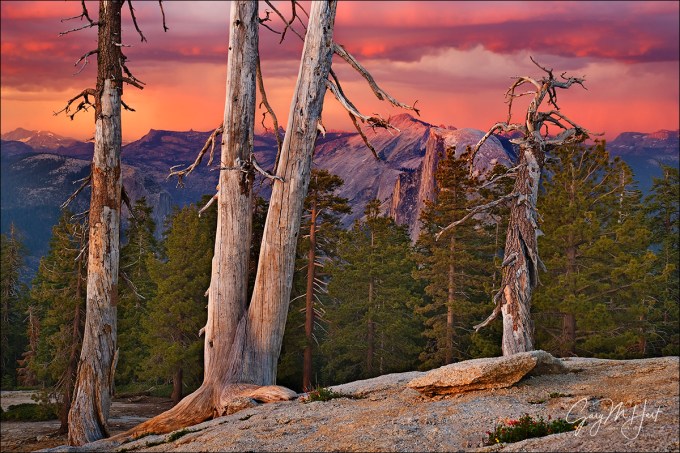
Sunset and Trees, Half Dome from Sentinel Dome, Yosemite (2006)
Canon EOS-1Ds Mark II
Canon 24-105 f/4 L
1 second
F/11
ISO 00
Today would have been my father’s 81st birthday. Dad was one of those people who did everything well, but I don’t think there was anything he enjoyed more than photography. His work kept him so busy that the only time he ever got to take pictures was when he was on vacation, but he made up for lost time then. I’ll be eternally grateful for his love of the outdoors that laid the foundation for my own passion for nature.
Because our family vacations were spent camping, hiking, and fishing, I grew up believing that a camera was a standard outdoor accessory. When I became old enough to pursue (and fund) my own interests, I purchased a camera of my own and pretty much never let go of it. But like Dad, personal imperatives (family, work, bills) kept photography in the hobby category for most of my adult life. And with our own conflicting, demanding schedules, we found little time to shoot together, though I think there was an implicit understanding that those days would come. Alzheimer’s disease was the last thing anyone expected.
Sentinel Dome is the site of my most vivid photographic memory of my dad, which I wrote about in my first WordPress blog. My brother, Jay, and I go shooting together quite a bit and we share the feeling that Dad is watching and maybe even pulling some strings for us, a feeling that’s never stronger than it is at Sentinel Dome.
The color of this Sentinel Dome sunset was off the charts. There’s really not much I can say to people who doubt the red in this image, except maybe to suggest that they should get out more. Color in nature far from subtle, and the color of this sunset, while not unprecedented, was at the most vibrant extreme of anything I’ve witnessed, one of the few times when it’s seemed that the air actually buzzes with crimson and the entire world assumes the color of the sky. I remember in the middle of it all looking down and seeing the hair on my arms literally standing on end, vibrating red.
These goose-bump moments are pure joy. I know Dad experienced them, and I can’t help thinking of him when they happen to me. While I’m sad Dad never got to see the product of his legacy, I know he’d be proud of my success, just as I’m proud of him.
Workshop Schedule || Purchase Prints || Instagram
Sentinel Dome
Click any image to scroll through the gallery LARGE


My very own Everest
Posted on July 13, 2011
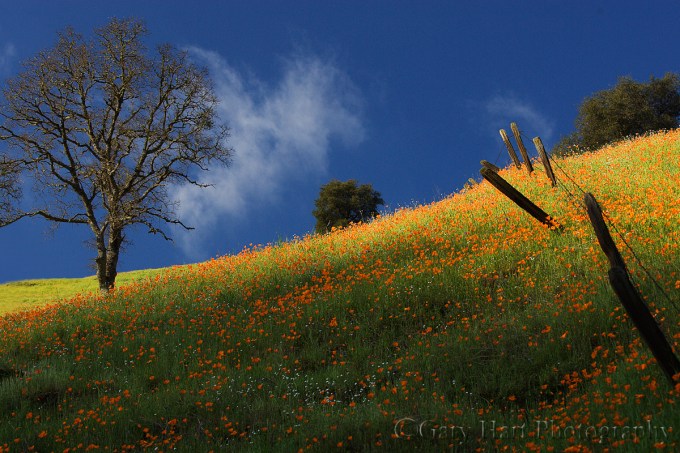
Poppy Hillside, Highway 49, California Gold Country
Canon EOS-1D Mark II
1/250 second
F/5.6
ISO 320
Canon 70-200 f/4
Highway 49 is a meandering, two-lane road connecting the historical dots in California’s Gold Country. Each spring the route is framed by countless scenes like this, scenes that seem to grab your steering wheel and force you to the side of the road for a closer look. Often it’s difficult to find a place to park safely, especially on weekends, when drivers’ attention is more on the scenery than the road. But at this location, a wide, dirt pullout allows gawkers to park well out of the path of harm and admire the view in peace.
The intensity of the wildflower bloom in California each year is a moving target that seems one part winter rainfall, one part spring warmth, and one part some other mysterious factor thats’s as elusive as the Higgs boson. Some years our hillsides explode like July 4th fireworks; other years expectations fizzle like a match in water. But we’re never completely shut-out, and my March drives along Highway 49 have become as much a rite of spring as baseball’s Opening Day.
Whatever the missing link is, in 2005 all the components converged to elevate California’s wildflower bloom to legend status. Most of the attention that year was on Death Valley, which had a bloom that painted the normally parched valley yellow, making network news and drawing visitors from around the world. But while most of the world’s attention was on Death Valley, the rest of California found itself similarly rewarded. Of course it didn’t take long for the word to get out among California photographers, and on the first available day I grabbed my camera and headed for the hills.
At this spot near the Mokelumne River I found a solid carpet of poppies that spread up a steep hill and disappeared over the crest. Unfortunately, I had no ladder to scale the (nearly vertical) fifteen foot escarpment separating me from this bucolic scene. A couple of other photographers poked around at highway level, using telephotos to capture their masterpieces while still safely rooted to terra firma, but I had higher aspirations.
Camera in one hand, tripod in the other, and camera bag on my back, I located a route I thought I could manage and went all Galen Rowell on the “cliff.” I’m in good shape, but conditioning wasn’t the limiting factor here…. Let’s just say that I have a healthy respect for heights. Sure enough, about halfway up, it became clear something had to go. Not wanting it to be me, I jettisoned the camera bag, bullseying a cushioning shrub about eight feet below, and continued upward. About five vertical feet higher, and maybe three feet from the top, the route steepened to 90 degrees. Hmmm. Using a protruding root as a hand-hold, I reluctantly said goodbye to my tripod, rationalizing as it plummeted toward base camp that I’d find something on top upon which to brace my camera. Finally, still one free hand short, I gently slung my camera into the weeds at the top. Sufficiently unencumbered, I took a deep breath and triumphantly “summited.” After a couple of seconds of self congratulation, I scrambled up the much more manageable but nonetheless deceptively steep slope toward the densest field of poppies.
In all seriousness (and because I’m afraid some people just don’t get my humor), scaling this cliff was a challenge, but it was neither death defying nor a monumental physical achievement. (A fall would have hurt, and perhaps even produced a bruise, sprain, and maybe even a little blood, but it wouldn’t have killed me.) On the other hand, I did feel a sense of achievement up there, that feeling you get when you push yourself beyond normal boundaries. And my effort did reward me with something nobody else has, an image that, it turns out, has outsold every other image in my portfolio.
I’m not used to working without a tripod, but I was able to brace the camera on a dilapidated fencepost for this shot. Not completely confident of the post’s stability, I bumped my ISO and aperture to achieve a fast enough shutter speed to ensure sharpness.
Sometimes I try to understand what it is about this image that draws people. In addition to the wall-to-wall poppies, a few unanticipated factors helped. The afternoon sun, which was about to disappear behind the hills to the west, created a perfect combination of light and shadow. Also, just about simultaneous with the best light, a series of cumulus clouds appeared, rising like smoke signals from behind the hill, adding just enough visual interest to a very blue but otherwise boring sky. And finally, the rotting fence, which I originally planned to compose out of my frame, turned out to have far more character than I could see from the highway.
While all these factors combine to make a nice image, I think what really sets it apart for people is the single skewed fencepost. My theory is that the fencepost is a flexible metaphor for whatever form individuality takes in the viewer’s life (even if he or she can’t consciously identify it): whether it’s solitude, independence, leadership, or whatever, I suspect most people find something in that maverick fence post that resonates personally. I can’t say that I was thinking any of this as I clicked my shutter (I wasn’t), or even that I consciously focused on the fencepost (I don’t remember), but I have grown quite fond of that little guy who will probably be the first to go when the fence is repaired.
And by the way, by widening my perspective enough to see beyond my immediate surroundings, I found a much easier way down the hill. There’s metaphor there, too. Sigh.
Workshop Schedule
Pushing the limit
(Images captured outside my mental or physical comfort zone)


Aloha!
Posted on July 10, 2011

Sunset, Any Beach, Hawaii
The last few years I’ve spent quite a bit in Hawaii, but I really can’t say which island I prefer. All have gorgeous around-the-clock weather, more waterfalls than you can count, dense and colorful rain forests, and spectacular volcanic beaches. More recently my photographic attention has been focused on the Big Island and Maui, but I feel like I’ve just scratched the surface. Both have lots of rain forests and waterfalls. The Big Island has Kilauea and is much less crowded (especially the more photogenic Hilo side); Maui has Haleakala and the breathtaking Road to Hana. But rather than leave you hanging, I’ll continue my extensive research on this question and will gladly keep you apprised of my findings.
I return to Hawaii’s Big Island for one or two workshops each September, and starting March 2013 I’ll offer a four-day Maui workshop that includes two nights in Hana. There are more places to photograph on Hawaii than there’s time to photograph, so my Hawaii workshop schedule is a bit problematic. We certainly squeeze in lots of photo time, both day and night, but the Islands’ slow pace is infectious–it’s simply impossible not to spend time hanging by the pool and strolling by the beach, so I need to factor in quality downtime for my participants. And then there are those Mai Tais….
Check out my website for more info on my Hawaii photography workshops.

Akaka Fall is the centerpiece of Akaka Falls State Park, a lush, tropical rainforest splashed with reds and yellows so vivid they almost hurt your eyes.

Hawaii isn’t just endless sand beaches. The Big Island and Maui in particular have miles and miles of volcanic beaches like this–short on sand, but long on drama.
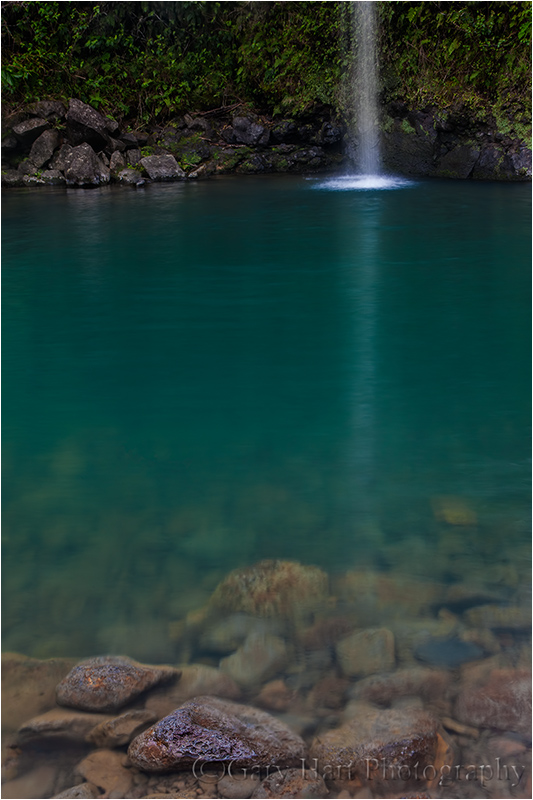
This is just one of what seems like hundreds of waterfalls on the Road to Hana, Maui—you’ll quickly realize that some waterfalls exhilarate, while others soothe.

This is the Kilauea Caldera on the Big Island. I can’t imagine anything more breathtaking than peering into an active volcano, unless maybe it’s peering into an active volcano at night.
Are we having fun yet?
Posted on July 5, 2011
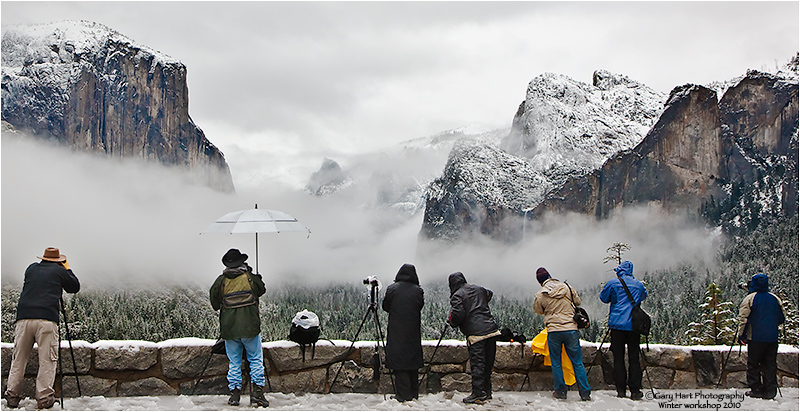
Every once in a while, when I’m really bored, I’ll surf over to one of the photography forum (discussion) sites, only to be instantly reminded why it’s been so long since I visited. The litany of complaints, insults, and one-upsmanship makes me wonder whether there are any photographers who truly enjoy their craft. Of course I know there are, because I meet them all the time: in my workshops, whenever I go out to shoot on my own, on my Facebook page, and right here on my blog. I don’t know whether the same photographers who seem so happy when they’re in the field do a Jekyll to Hyde transformation as soon as their butts hit the computer chair, or whether there are two types of photographers: those who actually take pictures, and those who simply prefer their computer to Mother Nature (no wonder they’re so unhappy).
Photography should be, first and foremost, a source of pleasure. How long has it been since you asked yourself why you enjoy photography? And how much photography time do you dedicate to the thing you most enjoy? This is a particular issue for pros, many of whom made photography their livelihood out of the shear joy of taking pictures, only to find the making money part of the business sapped the joy from their picture taking.
I was a serious (and happy!) amateur photographer for many years before I started doing it for a living. When I left my (very good) job to pursue photography full time, it was with a personal commitment to only photograph what I want to photograph: nature and landscapes. I (naively) created a business model that I believed would enable that, and see in hindsight how extremely fortunate I am that it has worked out.
But enough about me. How do you define photographic pleasure? Whether photography is simply an excuse to get out and enjoy nature, an essential medium for creative expression, or a passion that drives you to capture the “best” (however you define “best”) image without regard for personal comfort and convenience, make sure you don’t lose the zeal that moved you to pick up a camera at the start.
As I said earlier, a cornerstone of my own photography is the fervent conviction to photograph only landscapes—no weddings, portraits, candids, or even wildlife (in other words, nothing that moves). But the image above is an exception that makes me happy every time I look at it. To me it’s a perfect reminder of the passion that fuels me and so many other photographers. This was one of those magic moments in nature that transcend conventional standards of comfort (rest, warmth, and full stomachs) to deliver pure joy.
I’d gotten my workshop group up dark and early and assembled them at Yosemite’s Tunnel View in blizzard conditions. Despite the fact that visibility was zero and we were all hungry, sleep deprived, and cold, everyone persevered without complaint. Nobody suggested we return to the hotel or depart for breakfast. Not a word was uttered about diffraction, resolution, soft lenses, back-focus, dynamic range, high-ISO noise, or any of the countless other problems seem to haunt the computer photographers. In fact, for the entire time we waited (and long before the photography improved), the mood was unanimously festive.
As you can see here, conditions did in fact improve. But I’ve done this long enough to know that even if they hadn’t, everyone would have been happy at (our long overdue) breakfast. Indeed, I know they’d have been happy for the rest of the day, not because of anything I did, but simply because they were doing something they love.
Join the fun in a photo workshop
The rewards of misery
(Images that wouldn’t have happened without a little suffering)
Click an image for a closer look, and a slide show. Refresh the screen to reorder the display.


 Eloquent Images by Gary Hart