Happy Earth Day: Scenes from my Favorite Planet
Posted on April 22, 2025
The definition of “beauty” is subjective, but however you define it, natural beauty surrounds us. I became a photographer, and created this blog, to share the beauty that resonates with me. Not just visual beauty, but also the natural processes responsible for the things I find beautiful. Thanks for viewing, and Happy Earth Day to you!
Scenes From My Favorite Planet
Click any image to scroll through the gallery LARGE


No-Excuse Photography
Posted on April 17, 2025
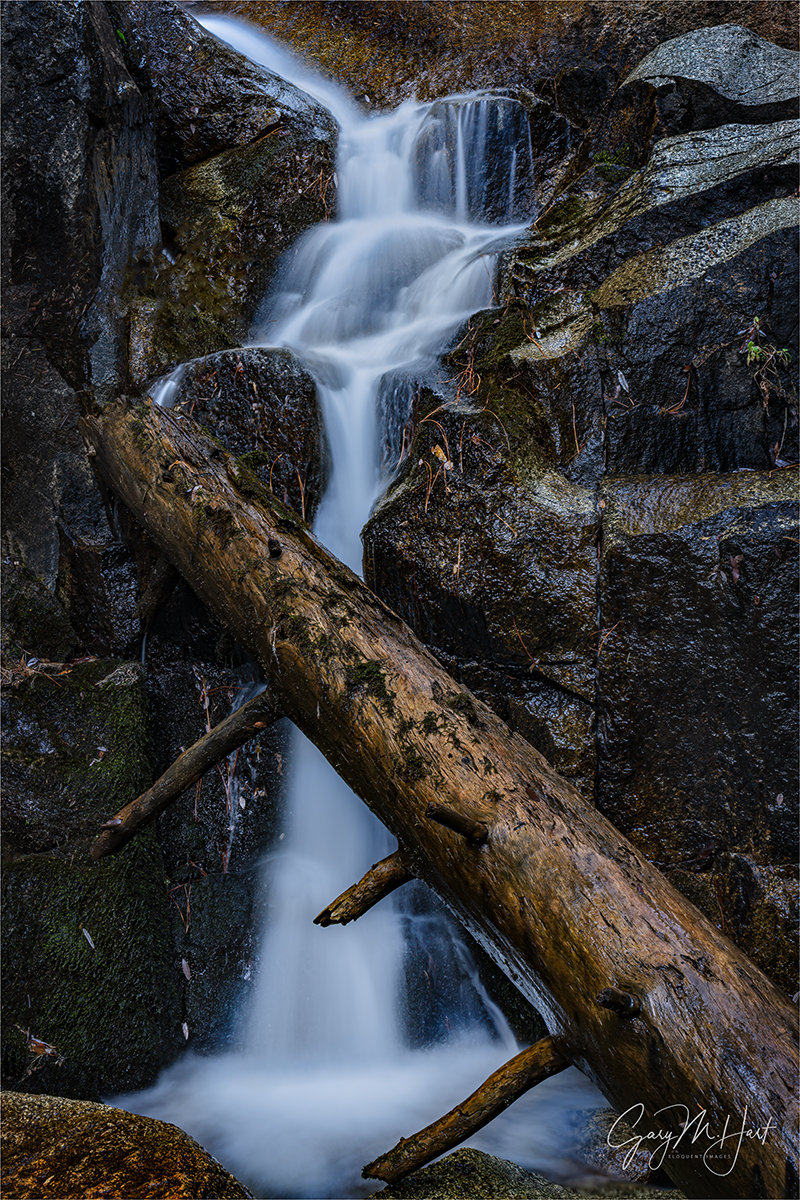
Wildcat Fall, Yosemite
Sony a7R V
Sony 24-105 f/4 G
ISO 100
f/16
5 seconds
“Many of us would probably be better fishermen if we did not spend so much time watching and waiting for the world to become perfect.”
― Norman Maclean, A River Runs Through It
I haven’t fished in years. But then, Norman Maclean’s words really aren’t about fishing anyway. I’m reminded of this quote every time I see photographers frozen by minutia, mired in the moment by small distractions that matter very little on the path to their grand objectives (better pictures), or who dig deep for excuses to stay home or to keep their camera holstered. Tell me if you’ve ever heard yourself proclaiming, mumbling, or simply thinking things like: “The light was better yesterday,” “The light will be better tomorrow,” “This lens is too soft,” “I don’t like that rock/tree/shrub/log/sky/foreground/background,” “I need a camera with more resolution/dynamic range/low light vision,” “It’s too hot/cold/wet/windy,” “I’m too exhausted/sleepy/hungry,” (I could go on, but I think you get the point) before settling down in the recliner, or doing an about face for home.
There’s nothing wrong with your camera (or mine)
Near the top of photographers’ list of self-imposed obstacles seems to be insecurity about their gear. Instead of doing what photographers do (photograph), many spend far too much time online reading reviews, scouring specifications, checking prices, and abusing the social media posts of other photographers. Whether these photographers’ are trying to validate the status of their current equipment, justify the purchase of the next life-changing camera, or maybe lament the expense a long coveted tripod, each of these easy rationalizations betrays an underlying need to define their worth by their equipment.
The most perplexing manifestation of photographic insecurity is the irrational obsession with the technology choices of other photographers: camera, computer, software, mobile phone, or whatever…. When I switched from film to digital in the early aughts, the biggest technology battles were Canon vs. Nikon and Apple vs. Microsoft. Later that decade we saw the first salvos in the iPhone vs. Android wars that persist to this day. Then in the teens came the mirrorless vs. DSLR skirmishes that flamed up for a few years before being settled in favor of team mirrorless. Sadly, the other battles persist to one degree or another.
But whatever side of whatever technology argument you find yourself on, let me reassure you that it’s very unlikely that anyone’s technical choices, yours or theirs, are a significant enabling or limiting factor. The best photographers make the best of whatever gear is available, because “lousy” gear doesn’t make you a lousy photographer, any more than great gear makes you a great photographer.
One way I try to convey to my workshop students (and anyone else who will listen) that inferior gear can still create superior images is by sharing my own images captured more than 20 years ago, with my 6 megapixel Canon 10D, using non-L (amateur) lenses. Not only does this equipment pale in every way when compared to today’s most basic camera systems, it wasn’t even considered pro-worthy at the time.
“Inferior” Images From My Canon 10D
-

- Bridalveil Dogwood, Yosemite
-

- Champagne Glass Poppies, Merced River Canyon, California
-
- Sunrise, Drake’s Bay, Point Reyes National Seashore
-
- Redbud, Merced River Canyon
-
- Poppy Lanterns, Merced River Canyon
-

- El Capitan Reflection, Yosemite
Still not convinced? Or perhaps you believe these images are the product of some Photoshop shenanigans. Then you should know that each was captured as a jpeg, then printed and sold long before I learned how to process raw files.
If I were shooting with that 10D today, I’d probably be crazy-frustrated with the camera’s 6 megapixel, 1.6 crop sensor, its postage-stamp size LCD, poor low-light performance, and limited dynamic range—but that doesn’t change the fact that I got great images from that now ancient beast, images that I’ve enlarged and sold as prints up to 24×36 to people who walked right up and scrutinized each pixel. In fact, a 24×36 print of the dogwood image hangs prominently in my office. In other words, if the images I got from that DSLR dinosaur and entry-level lenses are still usable, there’s no reason whatever “less-than” camera equipment you might own qualifies as a valid excuse to not do what photographers do—take pictures!
Rip off the bandaid
Even those photographers who haven’t succumbed to technology paralysis aren’t immune to other “not today” maladies. There are a million excuses not to go out and take pictures, usually based on some version of physical hardship. But the best photographers, the ones who always seem to somehow find Nature’s most spectacular moments, have adopted a rip off the bandaid approach that forces them out when the conditions are harshest.
I do this by reminding myself that the majority of my most memorable photography experiences—memorable both for the experience of being out there, and for the images that resulted—happened when the urge to stay inside was strongest, and my expectation of success was lowest. Part of that is the simple fact that the best conditions for photography are usually the worst times to be outside: wild weather, when the urge to stay warm and dry is almost irresistible; sunrise, when the tug of that warm, soft bed is strongest; sunset, when dinner beckons; and after dark, which can be cold, difficult to see, and (potentially) unsettling or even downright creepy.
But no less significant is the euphoria that ensues when seemingly impossible conditions give way to something truly special. It’s these times that whatever discomfort I might have been feeling magically melts away and I’m reminded why I do this photography thing. Even though success is never guaranteed, and I often return with no reward at all, the times when the magic does happen makes up for the failures many times over.
Glad I Didn’t Stay Home
-
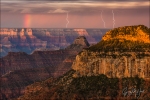
- Three Strikes, Lightning and Rainbow from Bright Angel Point, Grand Canyon North Rim
-

- Comet Tsuchinshan–ATLAS and Mt. Whitney, Alabama Hills, California
-

- Sunrise Mirror, Mono Lake
-
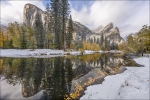
- Autumn Snow, El Capitan and Three Brothers Reflection, Yosemite
-
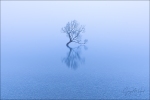
- Infinity, Lake Wanaka, New Zealand
-

- Double Rainbow, Tunnel View, Yosemite (2009)
Overcoming expectations
And finally, and perhaps most insidious, are the reasons not to photograph even after you’ve made it to the scene. These excuses tend to be conditions-based, usually because we arrived with preconceived expectations that weren’t met: a moonrise (or sunrise, or sunset, or…) blocked by clouds, a potential mirror reflection whipped by wind, a trickling waterfall, and so on….
These are the times to remember that photographic success is limited only by your creative vision, and just because you don’t see a shot, doesn’t mean one isn’t there if you cast your net a little wider. This simple fact is proven over and over in my workshop image review sessions, when everyone in my group shares an image from a location we all photographed together. Not only are my students surprised over and over by what someone else found at a location they photographed too, I often find myself envious of something someone else in my group saw that I missed.
Digging Deep
-

- Sunset, Hopi Point, Grand Canyon
-

- Lily Reflection, Hawaii Tropical Botanical Garden, Hawaii
-

- Frozen Sunset, Vatnajökull Glacier Ice Cave, Iceland
-

- Simple Elegance, California Poppy, Sierra Foothills
-

- Floating Leaves, Merced River, Yosemite
-

- Autumn Swirl, Half Dome, Yosemite
Landing the metaphor
Wildcat Fall is a small, ephemeral cataract tumbling down vertical granite just west of Yosemite Valley on Highway 140. Though it isn’t far from the road, you really can’t see it from your car as you drive by (a higher section is visible if you crane your neck at just the right time and know exactly where to look). The fall runs reliably only a few months each spring, but in wet winters, or after good rain, can spring to life for a few days or weeks. And while I doubt there’s much fishing here, the photography is pretty good.
Despite the quality of this photographic fishing hole, I must confess that I don’t make it to Wildcat Fall very often—there really isn’t enough room for even a moderate-size workshop group to work comfortably, and brilliant sunlight leaks through the leafy canopy for much of the day. (Yes, I know I’m in the midst of a blog post preaching about avoiding excuses such as lousy light, but its proximity to Yosemite Valley means there’s almost always something better to photograph nearby when the light at Wildcat is poor.)
When I arrived at Wildcat Fall on this gray January afternoon, I expected to find the scene I remembered from my previous visit many years earlier. What I found instead was an obstacle course of downed trees, a lot of brush interfering with my preferred photo position, and a huge log embedded the middle of the scene. Faced with all this, I had to decide whether to fish or cut bait—as tempting as it would have been to move to a more promising fishing spot, I decided to wet my line here for a while anyway.
The first thing I did was work my way back across the creek and over a large bolder near the small pool at the base of the fall. From here it became clear that there was really no way to eliminate the photobombing log, so I just leaned into it and made the log the foundation of my foreground. Then I shifted among the boulders until I found an angle that worked, eventually ending up directly in front of the fall. To minimize the (abundant) peripheral busyness, I chose a vertical orientation and framed it tight. I went with f/16 and focused near the middle of the log ensure front-to-back sharpness. And with every square inch of my scene wet and glazed by distracting glare, carefully dialing my polarizer was a significant improvement.
Given the dense overgrowth, late afternoon dimness, small aperture, and maximum polarization, I knew freezing the plummeting water would be impossible at any reasonable ISO. And since the motion blur difference with any shutter speed longer than 1/2 second was pretty much indiscernible, I just went with my camera’s native (best quality) 100 ISO and let the shutter speed fall where it may.
I’ll fully admit that this catch isn’t the grand eye-popper that will make me rich, but working hard to reel in something that pleases me is far more satisfying than any big one that might jump right into my boat.
Join me in Yosemite
More Intimate Waterfalls
Click any image to scroll through the gallery LARGE


Speaking of Highlights…
Posted on April 12, 2025
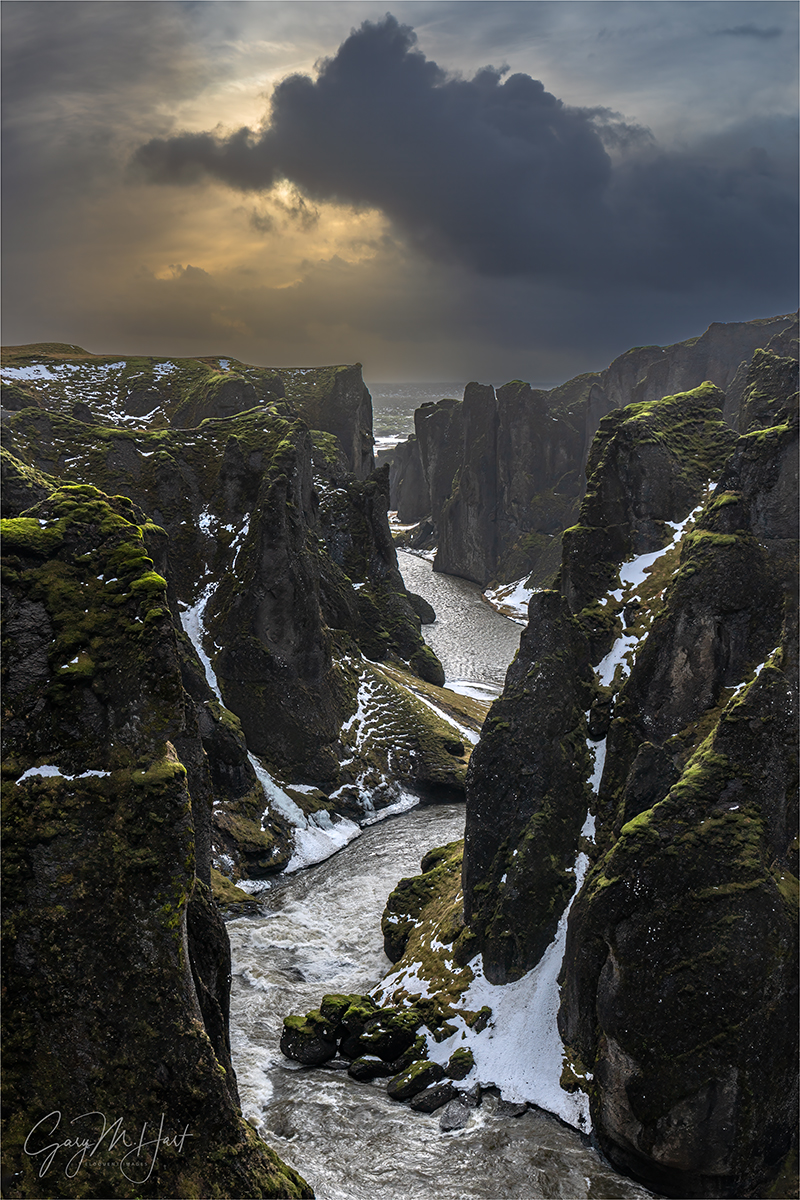
Frozen Canyon, Fjadrargljufur, Iceland
Sony a7R V
Sony 24-105 f/4 G
ISO 100
f/11
1/50 second
Fjadrargljufur, Iceland
In our annual Iceland photo workshop, Don Smith and I start with an assortment of must-see locations we’d be remiss to pass on: Kirkjufell, Glacier Lagoon, Diamond Beach, and Vestrahorn, to name a few. These Iceland highlights are well-known and photographed enough that they probably had much to do with the workshop students decision to sign-up for the workshop in the first place. But Iceland’s winter conditions, though not as cold as you might expect, can be quite harsh and unpredictable. So each, using the insights of our local guides, Don and I work to identify “new” (to us) highlights that enable us to pivot our original plan when conditions dictate. With several new waterfalls explored, this year had already been especially productive in the new options department when we explored Fjadrargljufur.
Fjadrargljufur is a short, narrow canyon carved into ancient lava flows by the Fjaðrá River. Just inland from Iceland’s rugged South Coast, access to Fjadrargljufur is via a steep (-ish), but well maintained, trail that offers several vantage points to catch your breath as you gaze up or down the canyon. After hiking a little less than a mile, you reach the trail’s end and are rewarded for your effort by two waterfalls and multiple vantage points from which to photograph them.
While not as well known as many Iceland natural icons, Fjadrargljufur is far from anonymous, so we weren’t the only ones there. But instead of the crowds that can clog some locations, the other visitors here were a complete non-factor. Last year, on our first visit to Fjadrargljufur, dense fog, snow flurries, and an icy trail prevented us from venturing far enough up the canyon to view the waterfalls. Nevertheless, we saw enough to know that this was a spot worth returning to and we were happy to make that happen this year.
On this visit we found a little snow and ice on the ground, but the trail was in much better condition. In locations like this, with well-defined trails and no forks to cause confusion (and especially when a lot physical exertion is required), we usually give everyone a be-back time and set them free to explore at their own pace. So, following a brief orientation, the group spread quickly—some didn’t venture beyond the closer (and less physically demanding) vistas, but about half of the group made it all the way to the waterfall reward at trail’s end.
I spent most of my time at Fjadrargljufur photographing the waterfalls, but as I started the walk back, I was stopped by the down-canyon view. The dense clouds that had been with us all morning had thinned, pouring sunlight into the canyon and illuminating rich green moss hugging the rocks. And the clouds that earlier had spread a homogenous, gray blanket overhead, were suddenly suffused with personality that shifted by the minute.
Surveying the scene for a composition, I knew that any camera would struggle to capture the extreme difference between the darkest shadows in the canyon and bright clouds. I also knew that my camera (Sony a7R V) would be up to the task, but only if I took extreme care with my exposure.
I digress…
In difficult exposure scenes, the single most important concern is sparing the highlights. First, since the human eye is always drawn to the brighter areas of an image (the brighter it is, the greater the attraction), blown highlights will be the first thing viewers see. If your subject is in shade surrounded by sunlight, you’re there at the wrong time. (Yes, I know that, like everything else in photography, there are exceptions, but they’re few and far between.) And second, dark shadows are usually easier to recover than bright highlights in post-processing.
This seems like a good time to mention the single biggest mistake I see workshop students make: Using the LCD preview image to make exposure decisions, instead of using the histogram. The LCD image is for composition; for exposure, you have to use the histogram. In fact, in a high dynamic range scene (a scene with dark shadows and bright highlights), if the image looks good on the back of your camera (the LCD image preview), you have almost certainly overexposed the highlights or underexposed the shadows beyond recovery.
Most common are already-bright sky scenes made impossibly bright by an inexperienced photographer exposing to make the shadows look good—the consequence is a completely white sky, or (at best) a sky with most of its color washed out. Another common rookie mistake is underexposing the sky to 0ver-saturate sunset color—the resulting sunset might look beautiful, but pulling up the shadows later will reveal mushy, detail-robbing noise.
In a properly exposed high dynamic range scene, on the camera the shadows will look a little too dark, and the highlights will look a little to bright, but neither will be too extreme to recover in post-processing (Lightroom/Photoshop for me). The best way to ensure the best possible exposure is to monitor and trust the histogram, regardless of what you see on your LCD. Want to learn more?
So anyway…

Fjadrargljufur Preview and Histogram: This is my original, unedited capture
As I always do in high dynamic range scenes like this, I started by working out my composition, taking extreme care to avoid cutting off the dark cloud that was soaring farther skyward by the second. Since motion and depth of field weren’t a factor in my composition, I just went with ISO 100 and f/11, and focused at infinity (somewhere down the canyon). That left my shutter speed to control my exposure.
With an eye on my live-view (pre-capture) histogram, I slowly lengthened the shutter time (slower shutter speed) until the histogram graph bumped up against the right side. My primary exposure concern was sparing the far more important, and more difficult to recover, highlights—even though the histogram showed my shadows were still slightly clipped, I knew my camera well enough to be confident that I could recover them later.
To illustrate why exposure decisions should never be based on the camera’s LCD preview image, I’ve shared the jpeg preview of the original raw file that appeared on my LCD, with the Lightroom version of the histogram. While the canyon looked quite dark, and the sky looked much too bright, my histogram told me everything was recoverable. Had I tried to make an image shadows or highlights that looked good, the other side of the exposure continuum would have been unusable.
Believe it or not, this file was extremely easy to process. With just two moves in Lightroom—pulling the Shadows slider to the right (+100), and the Highlights slider to the left (-100)—the scene instantly looked very close to finished result. After that, most of my processing work was minor refinements and some dodging and burning.
Speaking of Highlights…
When a workshop group spreads as far and wide as we did on this visit, it’s always fun to hear everyone’s report once we’re back on the bus. Even though people were photographing different things on our Fjadrargljufur visit, the enthusiasm seemed pretty unanimous. Of course we keep finding new locations (this year was especially productive), so it’s impossible to say we’ll be able to make it to all of the “keepers” every year, but given Iceland’s changeable and potentially extreme winter conditions, it’s always nice to be armed with more highlights than we can use.
Trusting My Histogram


Breaking My Own Rules
Posted on April 3, 2025

Follow the Lights, Snaefellsnes Peninsula, Iceland
Sony α1
Sony 14mm f/1.8 GM
ISO 3200
f/1.8
6 seconds
My goal is to create images that celebrate Nature, images that allow viewers to imagine a world untouched by humankind. So it makes sense that I avoid including anything manmade in my images. But I also rail against (most) camera clubs for their rule-bound creative constipation, and those strong feelings collided earlier this year on a chilly January night Iceland. I resolved the conflict by reminding myself that any time I’m following rules (even my own rules), I’m not being creative.
Earlier in my photographic life I was somewhat less discriminating with my subject choices. In fact, I’d actively seek any outdoor subject that I found beautiful, regardless of its origins. Though many of my bridge and skyline images from those days were on (or atop) my personal bestseller list ($$$), as my career evolved, I found myself resenting humankind’s intrusion on the natural world and became less inclined to validate that intrusion with a photograph. These subject choices eventually, and pretty organically (not consciously), evolved into my present style: photograph the world untouched by humans, which made the mere presence of a building, fence, path, or human being reason enough to put my camera down.
I don’t think it’s wrong to photograph manmade objects—in fact I enjoy others’ photos of a wide variety of subjects outside my wheelhouse—it’s just that I’m not personally drawn to photograph them. But since I am still a photographer at heart, it’s difficult to pass beauty of any sort. In recent years, I’ve scratched the itch to preserve “unnatural” beauty with my iPhone. Though I rarely do anything with these images spontaneous snaps, somehow knowing I’ve saved the scene makes me feel better.
Since becoming so hardcore about avoiding manmade objects, I have encountered a handful of scenes that tested my resolve. For example, there was that frigid night beneath the Milky Way atop Mauna Kea in Hawaii, when a giant telescope made too perfect a foreground to ignore. And the night, also beneath the Milky Way, at Cape Royal on the North Rim of the Grand Canyon, when a SpaceX Falcon 9 rocket photobombed my scene—that time I almost resisted photographing it, and am so glad I didn’t.


But whether it’s a streaking rocket, dilapidated fence, or photogenic bridge, some things are too beautiful not to preserve just because of some self-imposed rule. Most recently, on this January night in Iceland the northern lights outperformed our most unrealistic expectations, but for a little while the best display included a road and our hotel. (I already described that night in my recent Shock and Awe blog post, so I won’t bore you again with the story.)
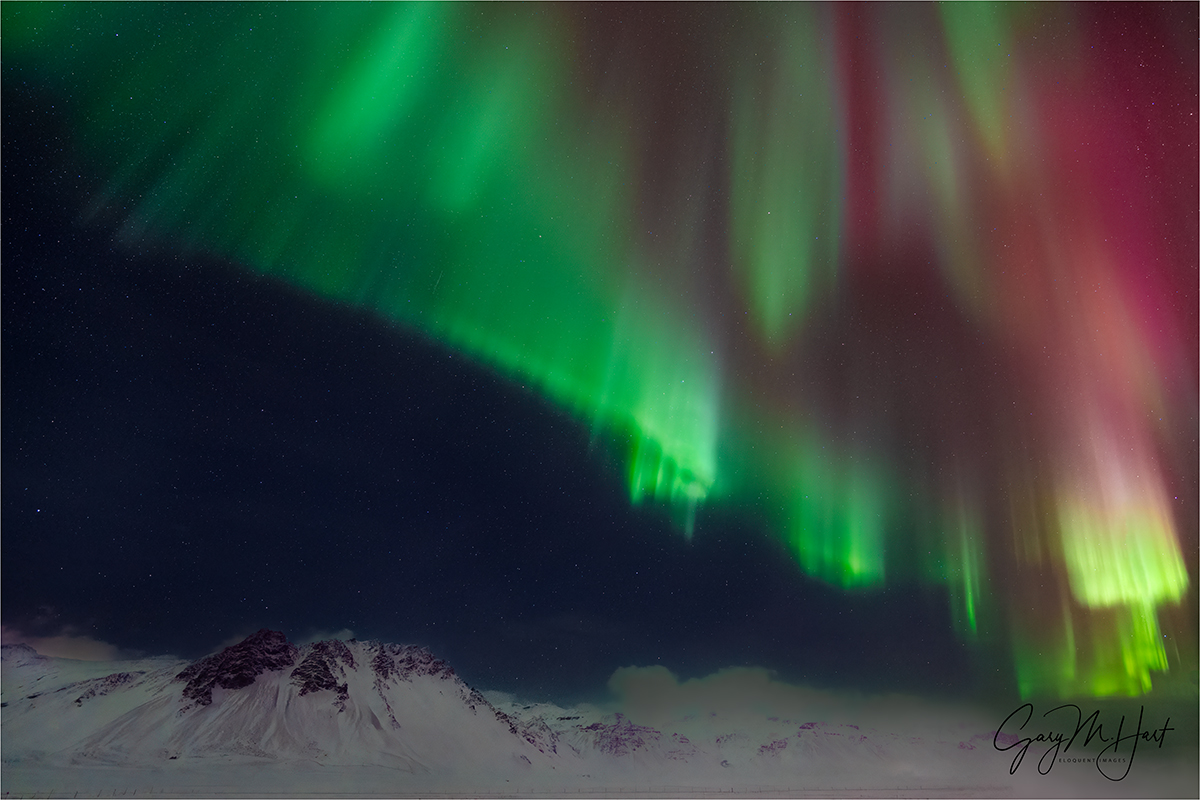
Night Lights, Snaefellsnes Peninsula, Iceland
For most this night’s kaleidoscope display, the aurora danced beautifully above snowy peaks and pristine snowfields—dark sky and no human intrusion involved. But as usually happens in the most intense aurora shows, the lights weren’t limited to the northern sky, and this evening they seemed to be especially drawn westward, where the “highway” (in the sense that it’s the main route encircling Snaefellsnes—we didn’t see a single car while we were out there) and the lights of our small hotel intruded on any scene I could imagine.
Nevertheless, I regularly checked-in on the rest of the sky and at one point just couldn’t ignore what was happening in the west. Grabbing my tripod/camera, I hustled to the road to look for any composition that might work. It was immediately obvious that the road would be unavoidable, but I saw that by moving farther west, I could at least eliminate the hotel and a few other minor distractions.
Given that the road was a non-negotiable condition of photographing in this direction, I just decided to lean into it and make the gently curving blacktop into an actual subject that guided the eye skyward. Orienting my camera vertically maximized the aurora and highway, and minimized potential distractions on the periphery. I only took a couple of frames in this direction, and it wasn’t until I saw the results on my camera that I realized how much I like this “unnatural,” rule-breaking image.
Don Smith and I just added a 2026 Iceland Northern Lights workshop
Workshop Schedule || Purchase Prints || Instagram
Human Interference
Click any image to scroll through the gallery LARGE


If You Can’t Join Them, Beat Them
Posted on March 27, 2025

Frozen Sunset, Vatnajökull Glacier Ice Cave, Iceland
Sony a7R V
Sony 12-24 GM
1/20 second
F/5.6
ISO 100
If you’ve ever photographed the slot canyons of Northern Arizona, you have some idea of the Iceland ice cave experience. Beautiful for sure, but mixing herds of gawking tourists with tripod wielding photographers, in a confined space, is also a recipe for frustration. While I’d say that Upper and Lower Antelope Canyons (the most popular of the Arizona slots) are probably more crowded than the Iceland ice caves I’ve visited (but not by a lot), slot canyons are rarely dark enough to compel visitors to don headlamps in the middle of the day. And as most photographers would agree, the only thing more frustrating than waiting for someone to douse their headlamp so you can start your exposure, is being in the middle of an exposure when someone activates their headlamp.
With larger “rooms” connected by twisting passages that can be small enough to require squeezing through or ducking your head (sometimes both), slot canyons and ice caves have much in common. While these similar features are a big part of the appeal that draws tens of thousands of visitors each year, the similarities don’t translate to the light. In a slot canyon, sunlight pouring through one narrow overhead opening creates bouncing light and dramatic contrast. Conversely, an ice cave is evenly illuminated by translucent ceilings and walls that steep its narrow confines in soft, shadowless light.
The big attraction at the slot canyons (though in my opinion, a little overrated), is the shafts of light that spotlight the red sandstone on sunny days. The fact that these shafts are only possible midday is no secret, which means photographers have to choose between battling nearly incomprehensible crowds, or missing the main event (while enduring simply moderate crowds).
That’s different from the ice cave experience, where consistent light spreads the crowds more evenly across the day. Early in our Iceland experience, Don Smith and I learned that the best way to avoid joining the ice cave crowds is to beat them—no, (tempting as it may be) not with a tripod, with the clock. Since most of the non-photography public has an aversion to going out before the sun (even, experience has shown, when sun doesn’t appear until 10 a.m.), departing for the ice cave early enough to arrive on the front-end of Iceland’s long, gray dawn can provide up to an hour of relative peace before the large vans start unloading. Of course this strategy means sacrificing a sunrise shoot (since we’ll be in the ice cave when the sun comes up), but the trade-off is usually worth it.
We learned this year that beating the crowd doesn’t necessarily mean getting out there before them—it can also mean outlasting them. Turns out another thing tourists hate is being late for dinner. So this year (as I wrote in last week’s blog), when extreme wind threatened our planned Vestrahorn sunset shoot, Don and I flipped our usual beat-the-crowd strategy upside-down and did the ice cave at the end of the day, hopeful for quality time in the ice cave after the tourists cleared out.
As soon as we arrived, we were jolted by all the frustrations inherent in mixing tourists and photographers in a confined space—each time we were lucky enough to encounter an empty space, before the group could set up and start shooting, the next herd of bobbing headlamps would approach from one direction or the other to shuffle through our scene like a slow moving freight.
While deep shadows and brilliant walls make dynamic range the greatest photographic challenge in a slot canyon, in the darkest parts of an ice cave (deep in the glacier, or smothered beneath several feet of snow on the surface), the biggest obstacle is having enough light to compose and focus, as well as the extreme ISO and long exposures an ice cave’s darkness requires. That’s why many photographers augment their ice cave images with artificial light, which of course leaks into each nearby photographer’s frame whether they want it or not. Fortunately, most ice caves have enough bright areas to satisfy those of us who only use natural light.
Much of this year’s ice cave (the location and layout can vary from year-to-year) was large enough, and bright enough, that, while waiting for the crowds to clear, I had no problem identifying lots of natural light scenes to photograph later. In the meantime, I turned my camera and 24-105 lens toward scallops and ridges etched in the cerulean ice overhead. As I worked, groups ambled by in both directions, but after a while I noticed that all of the intruders were moving toward the exit—a very good sign. Before long, we had the entire place to ourselves, with nearly an hour of useable light remaining.
Remembering similar experiences, both in slot canyons and previous ice caves, I relished another opportunity to worship in the cathedral surroundings. By this time, most everyone in the group had dispersed to their own happy places, and I felt free to explore on my own, or with one or two others. At one point I found myself in a large chamber illuminated by a battery powered LED installed by the guides. When I asked our guide to extinguish the light, the room instantly became so dark that even 30-second exposures at 12800 ISO barely registered on my LCD.
With the clock ticking, I quickly returned to the relative brightness of the cave’s main halls and chambers, spending the rest of my time working the scenes I’d identified earlier. Time flew—when the cave started to darken and I saw fewer and fewer people from the group, I started backtracking to the exit (which had also been the entrance).
On my way back, suspecting everyone (myself included!) had memory cards brimming with beautiful images, I started congratulating our decision to forego sunset in favor of the ice cave’s calm confines—who needs a sunset anyway? But when I turned the final corner and saw sunset-gold framed by blue ice, I stopped in my tracks—all this, plus a sunset? It hardly seemed fair.
With the light fading and most of the group already outside, I had to work fast. (I wanted as much time as possible, but it’s never a good look when the leader is the person everyone is waiting for.) So I set up quickly, opting for my 12-24 lens to include as much of the sculpted blue chamber as possible. I dropped as low I could, dialed the lens all the way out to 12mm, and angled up to emphasize the icy blue ceiling over the rocky brown floor (duh).
The exposure was quite tricky, because the light outside was so much brighter than inside the cave. Once my scene was composed and focused, I adjusted my shutter speed with an eye on the histogram, pushing the highlights all the way to the right border. The LCD preview showed a bright (but not blown) sky and nearly black ice cave, but my confidence in my Sony sensor was validated when I processed the image in Lightroom/Photoshop. (As with all my images, this was a single click—no blending exposures.) On my LCD, the only thing visible inside the cave was the sunset reflection on the ceiling, a bonus I hadn’t counted on.
I only had time for a half-dozen or so frames before I heard the approaching voices of the group’s final stragglers and quickly collapsed my tripod to beat them out of cave.
Join Don and Me in Iceland
Workshop Schedule || Purchase Prints || Instagram
Ice Caves and Slot Canyons


Making the Scene
Posted on March 18, 2025

Natural Window, Skutafoss, Iceland
Sony α1
Sony 16-35 GM
10 seconds
f/16
ISO 50
Every photographer loves creating unique images. Planning workshops more than a year in advance, I always try to maximize my groups’ chances for macro events might enable my group to capture something special—things like Horsetail Fall or a moonrise in Yosemite, lightning at Grand Canyon, the Milky Way in New Zealand or Grand Canyon, and the northern lights in Iceland. (I’m not complaining,) but this life puts me at the same locations year after year—if I’m not careful, after a few visits, even images featuring these spectacular macro phenomena risk looking the same.
Of course even the most rigorous advance planning can’t guarantee success. Ultimately, photographers are beholden to the ephemeral micro-conditions, the play of weather and light, to set our images apart. Whether it’s a workshop or a personal trip, whatever condition cards I’m dealt, my job is to read them and get the most out of every shoot. And I’ve come to realize that I enjoy the image building part of photography as much as I enjoy the scenes themselves.
Meanwhile, back in Iceland
Don Smith and I schedule our Iceland workshop for January or February for the long nights that maximize our northern lights odds, and also because in general we find Iceland’s winter photography so extraordinary. But winter in Iceland also means working within the constraints of potentially extreme conditions. As much as we try to avoid taking our groups to locations we’ve never visited, or even taking them to familiar locations at unfamiliar times, sometimes it’s unavoidable. And sometimes it just works out.
For example, Don and I have always had great success photographing Vestrahorn at sunset, so that’s always how our schedule is laid out when we start. Similarly, we like doing the Vatnajökull (glacier) ice cave before sunrise on the next morning after Vestrahorn because it allows us to get out there up to an hour before the crowds (think Antelope Canyon in blue). But when we saw extreme wind (extreme even for Iceland) forecast for our planned Vestrahorn afternoon, our guide, Siggi, suggested we flip the ice cave and Vestrahorn shoots—we’d take advantage of the shelter provided by the ice cave during the windiest part of the afternoon, then do Vestrahorn for sunrise the next morning. (This is why we always have a local guide.) Vestrahorn, Siggi pointed out that Vestrahorn can be just as nice at sunrise as it is at sunset, and to sweeten the pot, he told us the new plan would enable us to photograph Skutafoss, a little waterfall (that we’d never heard of) just up the road from Vestrahorn.
Since Skutafoss was just a last-minute bonus brought by our decision to move Vestrahorn to morning (rather than a featured location important enough to build our day around), I knew we couldn’t be strategic about our arrival time—we’d just have to take the conditions as we found them. But, regardless of the conditions, we rationalized that at the very least we’d be getting our eyes on a new location, and the group would have another waterfall to add to their Iceland portfolios. And our ice cave and Vestrahorn shoots were so successful, by the time we wrapped up at Vestrahorn, we knew anything else would be a bonus.
We found the sky at Skutafoss filled with fast-moving, saturated clouds that stood out against a translucent stratus layer. The overcast infused the entire scene with soft, low-contrast light, ideal for photographing flowing water. And it didn’t take long to appreciate that the darker clouds were interesting enough to be actual compositional elements by themselves.
Before pointing us to the short trail to the fall, Siggi pointed out that overnight rain had expanded the main cataract into three distinct falls, one more piece of good fortune. Heading upstream through sparse snow flurries, I made note of a couple of nearby peaks that might provide balancing elements for my foreground subjects. Despite no strategy going into the timing of our arrival at Skutafoss, things were starting to look promising. Nevertheless, my enthusiasm remained tempered until I rounded a corner and spotted a broad cave, about 20 feet deep, next to the fall’s primary stream. Instantly, I started mentally strategizing ways to position myself in the cave and using the walls to frame the scene.

Skutafoss, Iceland
Of course others in the group had similar thoughts (I started to point it out, but they’d already identified the opportunity), so when others beelined to the cave, I spent a few minutes photographing the fall from downstream. Fortunately, there was room for everyone in the cave, and by the time I made my way in, some had already moved on, giving the rest of us more room to roam and build visual relationships.
I started with a horizontal frame, positioning the only peak visible (from this perspective) a little left of center to balance the waterfall. Before clicking, I made sure to get just enough rock at the top to make a natural border (but not so much that it overpowered the rest of the scene), and took care not to cut off the pool lapping near my feet. I also dropped my camera low enough to prevent the ceiling from obscuring the scooting clouds. With my frame, position, exposure, and focus set, I used a polarizer to remove the sheen from the water and wet rocks. I adjusted my ISO to vary my shutter speed and achieve different motion effects.
After working the horizontal composition to death, I thought I’d try something vertical. For the horizontal compositions, I’d positioned myself so the peak was offset enough to balance the fall, but switching to vertical, I moved to the right to align the peak and fall—but not so far right that the big cascade occluded the two smaller beyond. For these vertical frames, putting about the same amount of rock at the top gave me plenty of room to avoid cutting off the pool below. But a narrower vertical frame did mean that I had take care that the left side didn’t cut off the whitewater beneath the fall.
After finishing in the cave, a short-but-steep trail up to the top of the fall revealed more great stuff. In fact, going through my images later, I was pretty pleased with my results from each of the three vantage points I tried: downstream, looking up at the fall with rocks and whitewater in the foreground; inside the cave; and above, where I found a different peak above the small canyon feeding the fall. I chose to start with the images inside the cave because I found them most unique, but I imagine (fingers crossed) I’ll eventually get to the others.
I know when I return to Skutafoss (and I will), the conditions will likely be different, and my process will probably be different as well. But for every location I visit and enjoy as much as this one, I find that reviewing the thumbnails of that shoot, then reverse engineering my scene-building process, keeps the scene fresh in my mind. Not only does this exercise benefit my next visit, it helps keep my scene building instincts fresh. (And it’s a lot of fun, too.)
More Waterfalls
Click any image to scroll through the gallery LARGE


Twin Peaks
Posted on March 7, 2025

Blue Hour Reflection, Vestrahorn, Iceland
Sony a7R V
Sony 12-24 GM
1/6 second
F/10
ISO 125
In the canon of iconic Iceland mountains, Vestrahorn is rivaled only by Kirkjufell, the much-photographed wizard-hat on Snaefellsnes Peninsula. While Kirkjufell’s acclaim is much deserved, as a photographer, one thing in particular that distinguishes Vestrahorn from Kirkjufell for me is its variety of compositional options.

Winter Chill, Kirkjufell and Kirkjufellsfoss, Iceland
Kirkjufell is arguably Iceland’s most visually striking mountain, but the vantage points from which to photograph its distinctive outline are for the most part limited to the trail that starts at the parking lot, climbs briefly to a small bridge, then circles down a short but steep slope. I’ve never been there in summer, but in winter it’s pretty difficult to venture anywhere off this trail.
I can’t discount the fact that Kirkjufell also comes with its very own foreground waterfall, but Vestrahorn (despite lacking a waterfall of its own) has acres and acres of diverse terrain for a creative (and mobile) photographer to explore. So expansive and varied is the surrounding terrain, I’ve been coming here since 2019 and am still finding completely new foregrounds to add to my Vestrahorn images.
Exploring for new foregrounds is probably my favorite part of photographing popular subjects. The first two or three years I visited Vestrahorn, I’d do most of my photography at the beach, where the barely sloping sand stretches far into the distant surf, and the area separating the beach from open ocean is (I estimate) at least a half mile—distant enough that the swells (finally) break on the sand as the smallest, least aggressive waves imaginable.

Vestrahorn Reflection, Stokksnes Beach, Iceland
Once reaching the beach, what these waves lack in height, they more than make up for in length, gently washing up a hundred yards or more onto the black sand, before running out of gas and slowly sweeping back. In their wake is an ephemeral mirror that, when timed right (before the water percolates into the sand, or is overrun by the next wave), paints the bottom half of any image with an inverted duplicate of Vestrahorn and its surroundings. And because these waves are so low and slow, it’s possible to safely stand in the approaching surf wearing mid-calf waterproof boots, and keep your socks completely dry.
But the experience at the beach isn’t all about reflections. Each wave deposits, or repositions, an assortment of shells and smooth stones. After tiring of photographing reflections, I’ll often switch to these transient elements for my foreground. Other times, I’ll make my foreground all about the waves themselves, capturing the intersecting lines and arcs of waves arriving at different times and angles, or playing with long exposures to blur the leading or trailing edges advancing or receding water. And depending on how I time these shots, it’s also possible to create single frames that include reflection, shells/stones, and wave effects.
As much as I enjoy playing with all the visual elements at the beach, a couple of years ago I decided I should spend more time in the dunes. I’ve photographed the dunes of Death Valley and White Sands quite a bit, but these dunes are completely different. For starters, they’re black. They’re also much smaller, and capped with patches of grass like blonde toupees. But their small size, easy navigability, and distinctive curves are ideal for strategic juxtaposition, allowing me, with careful positioning, to assemble them into strong foreground elements that guide the eye elegantly to the mountain and sky beyond.
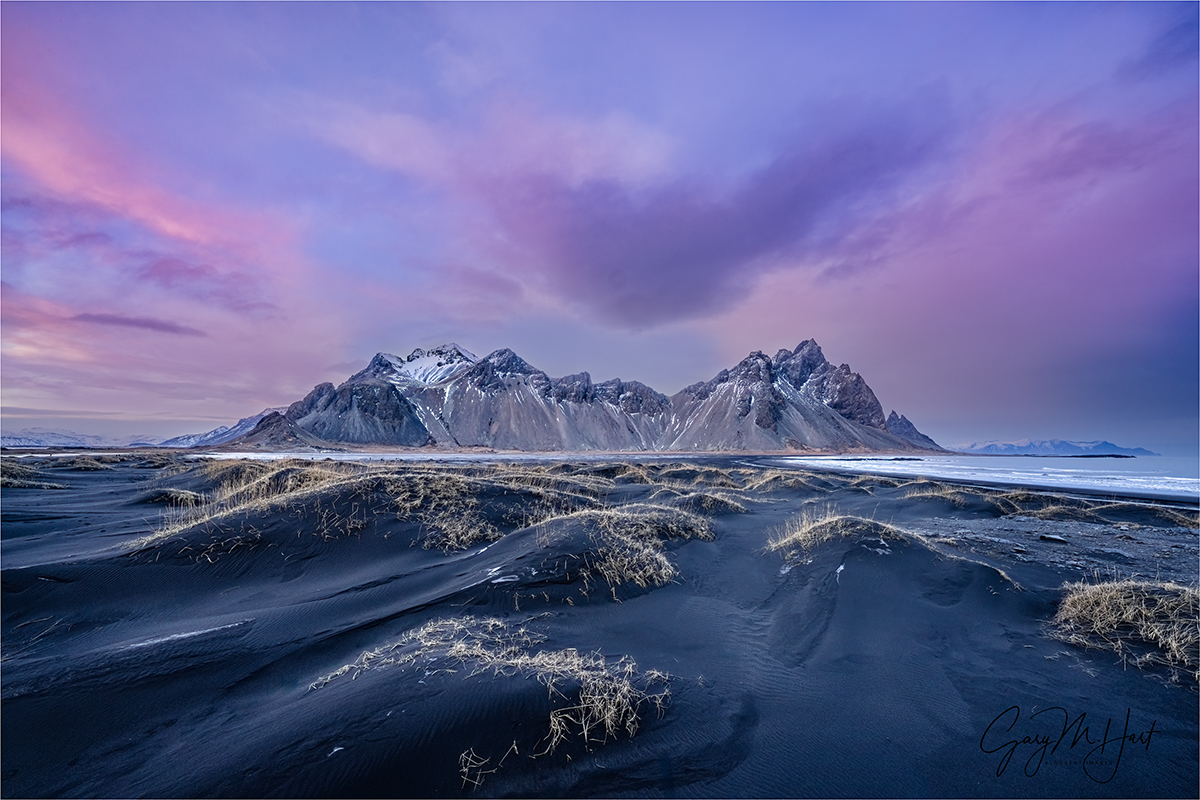
Winter Twilight, Vestrahorn and Dunes, Iceland
And then there are the components that vary with each Vestrahorn visit: clouds, light, snow, and ice. On last year’s visit, we didn’t have a lot of snow and ice, but the sunset light was off the charts, allowing me to capture one of my favorite Vestrahorn images that used an ultra-wide lens to fill my frame with the nearby dunes and colorful clouds, while shrinking the massive mountain to a small, distantive centerpiece.
Don Smith and I have been bringing our Iceland photo workshop groups to Vestrahorn for as long as we’ve been visiting Iceland. It’s always been a sunset spot, but one thing we’ve learned after many years photographing Iceland in winter is the need to constantly monitor the weather and stay flexible. Which is why we rely heavily on our Icelandic guides, and almost always follow their experience-based advice. This year’s Vestrahorn visit was a perfect example.
Our original plan was Vestrahorn for sunset, and the ice cave for the next morning. But this year the threat of extreme wind on our Vestrahorn afternoon caused us to flip-flop our sunset/sunrise locations so we’d be in the sheltered ice cave when the wind was strongest. This ice cave worked out great, and the next morning we traveled to Vestrahorn for our first-ever sunrise here.
Our group arrived in the blue hour and scattered almost instantly. Though Vestrahorn gets nice light at both sunrise and sunset, this time it wasn’t sunrise light or color that excited them, but rather, the spectacular clouds swirling about the peak, As I made my way around to check on everyone in the chilly twilight, I soon found myself beyond the dunes to an area of shallow pools I knew of, but had never photographed. Usually these pools are frozen, creating intricate patterns that make excellent foregrounds themselves, but this year, instead of ice we got blue-gray reflections of the mountain and clouds, framed by frozen sand.
Blue Hour Reflection, Vestrahorn, Iceland
Walking the perimeter of the largest pool while helping one of my workshop students identify a suitable foreground, I pointed out a mini-cove that seemed to cradle Vestrahorn. After my student finished with his shot, I stepped in to try a composition of my own. After working the scene for a couple of minutes, I was so excited by what I saw on the back of my camera, I walked around herding as many in my group as I could find over to this spot. Unfortunately, not everyone made it before the clouds descended and obscured much of the peak, but by that time it seemed that most of the group had found something that pleased them before the mountain went away.
My point is not that Vestrahorn is “better” than Kirkjufell (or vice-versa). But based on the photos shared by others, it does seem that Kirkjufell gets more attention than Vestrahorn. And I will say that if the joy you get from photography is found in creating unique images rather than collecting icons (not that there’s anything wrong with that), you might just be happier at Vestrahorn.
Join Don Smith and me in Iceland
Workshop Schedule || Purchase Prints || Instagram
Twin Peaks
Click any image to scroll through the gallery LARGE


Shock and Awe
Posted on February 27, 2025
Night Lights, Snaefellsnes Peninsula, Iceland
Sony α1
Sony 14mm f/1.8 GM
ISO 3200
f/1.8
5 seconds
That night at dinner, one person in the workshop group asked if there was a chance we’d see the northern lights, or if he could safely have another beer. I laughed and told him, while I can’t predict the future, I’d be shocked if the northern lights happened this night and to just go ahead and have that beer. I’ve never been happier to be wrong (and that my advice didn’t ruin his evening).
Each winter Don Smith and I do a winter workshop in Iceland. There are many reasons to visit Iceland in winter, but for most of our workshop students, at the top of the list is the northern lights. Because northern lights success doesn’t just happen, each day Don and I powwow with our Iceland guide to assess our odds for aurora success that night, and to plan our strategy to be there when it happens. We base these decisions on forecast aurora activity, expected cloud coverage, dark sky (no light pollution) views of the northern sky, and the experience we’ve gained from prior northern lights shoots.
Our second night on Snaefellsnes Peninsula (the workshop’s third night), the expected KP-index (the universally accepted 0 to 9 scale of aurora activity) was a very disappointing 1—about as low as we ever see in Iceland. Worse still, an incoming storm had already started to spread clouds, further reducing the night’s aurora expectations.
But regardless of the target (aurora, lightning, Milky Way, and so on), past surprises have taught us to never not have a plan in the event of the unexpected, so at dinner this evening we laid out the bad news to the group, but promised to keep an eye on the sky and notify them if anything changes. Though the incoming storm meant we wouldn’t be able to drive to another location if the aurora surprised us, we told the group that just across the road from our remote hotel was an unobstructed, dark-sky view of the northern sky above snowy peaks—perfect for the northern lights.
With a plan in place, everyone retreated to their rooms for the night with the lowest of expectations. At about 9:30 I was still up, answering e-mails and doing other boring business stuff, when I glanced at my phone and saw at least a dozen notifications from the WhatsAp Iceland group thread. Well that’s interesting…
It seems that Siggi, our exceptional Icelandic guide, had gone outside at around 9:15 and discovered clear skies and aurora. Without bothering to read all the other exclamations from the group, I bundled up, grabbed my gear, and rushed out as fast as I could. I expected something similar to the aurora display we had over Kirkjufell the prior night—enough to show up in the camera, but not bright enough for our eyes to register—but as soon as I stepped out into the cold and looked up, I spotted a soaring shaft of light that told me tonight would be different. Much different.
I hurried to the outline of photographers assembled across the road and quickly trudged through two feet of snow to set up at barbed wire fence. Out here, away from the hotel’s lights, it was even more apparent that something special was underway.
Don, Siggi, and I had prepared the group for photographing the northern lights, but with any type of night photography, there’s no substitute for experience. Since this was the first aurora experience for many in the group, I spent my first few minutes out there moving around, helping get people up to speed. While focus is always tricky at night, aurora focus is no different than any other night scene. The greatest challenge for aurora first timers, even those with lots of night experience, is the need to constantly monitor the rapidly changing exposure. An exposure bright enough to reveal foreground detail and aurora color one minute, might completely blow out the aurora the next. And a 15 second exposure might be fine when the aurora is changing slowly, but it blurs intricate detail when the aurora’s activity ramps up. Fortunately, it didn’t take long for everyone to settle in, and soon my instructions were down to occasional shouts reminding everyone that the brightness had changed, or to point out a different area of the sky that had ramped up.
The WhatsAp notice had gone out to everyone, but I soon realized it had only been a fluke that I’d noticed, so after a few minutes I decided to take attendance. Easier said than done in the extreme darkness, especially since there were a few people out there who weren’t in our group, and everyone was bundled head-to-toe. But I did determine that Don wasn’t out there, and one other person in the group (turns out there was a second person missing, but we didn’t realize it until the next morning). I called the missing workshop participant first, but that call went straight to voicemail—then another person in the group said she’d called him and he’d decided to pass (apparently he’d been asleep and regrettably wasn’t thinking rationally when he got that call). Don, on the other hand, was especially grateful for the call and made it out in record time.
An aurora show is special anytime, but it wouldn’t be an understatement to say this one truly shocked me by its unexpected splendor that ranks right up there with the very best I’ve seen in my half dozen years of photographing Iceland in winter. It was very bright, covered most of the sky, and was infused with lots of red, but what stood out most for me this evening was the dancing waves and shafts that twisted and fold right before our awestruck eyes.
Join Don and me for a very special Iceland photo workshop in 2026
Iceland Aurora Collection, 2019 – 2025
Click any image to scroll through the gallery LARGE


2025 Horsetail Fall: Success—and a Surprise
Posted on February 23, 2025

Molten Stripe, Horsetail Fall, Yosemite (5:43 p.m., February 20, 2025)
Sony a7R V
Sony 100-400 GM
ISO 100
f/10
1/6 second
I just returned from Yosemite, where I basked in another year of Horsetail Fall mayhem. But before I get into this year’s experience, let me just sing the praises of the Horsetail Fall experience in general. Horsetail Fall (don’t call it the Firefall) is a narrow, unassuming waterfall that, for a couple of weeks each February, gets thrust into the spotlight when a fortuitous confluence of location and light sets it ablaze with sunset color.
So what’s going on? With no clouds blocking the sun’s rays, in mid-afternoon a vertical shadow appears on El Capitan’s south-facing wall and commences an eastward march across the sheer granite. As this shadow marches eastward with the descending sun, the sunlit section of El Capitan shrinks and its light warms. Though the sun is no longer visible from the valley floor, towering El Capitan remains lit past sunset—when the unseen (to Horsetail gawkers) sun reaches the horizon, the only part of El Capitan not in shadow is the narrow strip of granite that includes Horsetail Fall. For a few glorious minutes, this normally anonymous waterfall is bathed in orange that resembles flowing lava, framed by dark shadow. Occasionally, when all the stars align, this thin stripe of orange turns a seemingly impossible shade of red that rivals the best sunset color you’ve ever seen.
I know it’s fashionable for some photographers to look down on any subject so popular and heavily photographed, and Horsetail Fall seems to be the poster child for these feelings. But I believe that, first and foremost, true nature photographers pursue their craft as much to marvel at, and honor, Nature’s gifts as they do for the images they capture. Camera or not, the Horsetail Fall spectacle should be experienced by all who find joy in natural beauty (which should be ALL nature photographers).
I’ve been photographing Horsetail Fall long enough to remember the days when I could arrive 30 minutes before sunset and join a small handful of other photographers in on the secret. But the photography renaissance spurred by digital capture, combined with social media saturation, has made the phenomenon a must-see (and must-photograph) event for the masses. I used to lament the crowds, but since the National Park Service implemented management and control measures that (slightly) limits the crowds, and (more importantly) the viewing locations, I’ve come to enjoy the tailgate-party atmosphere the phenomenon engenders.
Having witnessed the range of Horsetail Fall’s annual display at least 50 times, from disappointing flops (no water of sunset light) to absolute euphoric splendor, today it’s the vicarious thrill I pull from the crowds that keeps me coming back. Last week was no different, and I’ll be back next year.
Success
The amount of water in Horsetail varies from year to year, ranging from bone dry, to wet stain, to rainfall run-off infused gush. And while I wouldn’t say it was gushing this year, the flow was at least average, and definitely photographable.
The Horsetail crowds this year, at least for the four sunsets I was in Yosemite (February 18-21), were by far the most I’ve ever encountered. Since I usually do my Horsetail Fall workshop a week earlier, largely to avoid the crowds of February’s third week (because that’s when the light has been labeled “best”), it’s hard to know how much this year’s crowds were just a function of my timing, or whether there really were more people than previous years. I suspect it was some of both.
Consensus says that the best Horsetail Fall light, when it’s most tightly focused on the fall, comes 2 or 3 days either side of February 20 (where we are in the leap year cycle matters too). The reason I usually schedule my Horsetail Fall workshop for weekdays a week earlier is that contenting with significantly fewer people more than makes up for any minor difference in the perceived quality of the light. In fact, some of my best Horsetail Fall experiences have come around February 10. But this year, knowing I’d have just returned from Iceland, I pushed the Horsetail Fall workshop back a week.
I also wonder if this year’s extra people were a byproduct of the new NPS reservation system that’s designed to keep weekend crowds more manageable. It’s possible that those who would ordinarily go on a weekend but couldn’t score a reservation, or maybe they just decided not to hassle with the reservation system, just took advantage of the unrestricted entrance weekdays offer.
Whatever the reason, the crowds are only a problem where parking is concerned—once you park and get yourself to the viewing area, there’s plenty of room for everyone. Back when Southside Drive was in play (closed now due to riverbank damage and unruly photographers), people who opted for that (arguably much better) vantage point had to contend with an order of magnitude more photographers than there was space to accommodate them—not to mention all the tension (and hostility) that comes with that. Not only are there many more viewing sites on NPS-approved and mediated Northside Drive, the view there (being closer to El Capitan) is more up and over the heads of the throngs of gawkers. Since it’s primarily a telephoto shot, even when stacked multiple people deep, no one is in anyone’s way. The result is a genuine tailgate party vibe that I’ve grown to love: frisbees, barbecues, and actual socialization among friends and strangers alike.
After monitoring last week’s weather forecast, I decided to pass on Horsetail for my workshop’s first two days, targeting Thursday, with Friday as a backup. And though Wednesday turned out to be an absolutely epic Horsetail Fall event for all who stuck it out through the clouds that delivered rain right up until sunset (we weren’t in the Horsetail Fall viewing area, but did have a good view of the fall), my group got something better Wednesday evening (if you like rainbows), and still experienced the coveted Horsetail Fall red light the next evening. Win-win! The rainbow is a story for a different day, but waiting until Thursday freed us to take advantage of all my other favorite Yosemite locations in relative peace (because most of the photographers were congregated beneath Horsetail Fall) the rest of the week.
And even though we photographed Horsetail Fall just once, we did drive through the viewing area each evening, sometimes multiple times, which gave us a firsthand view of the bedlam. How crowded was it? I have no idea when the Yosemite Valley Lodge parking area—the closest dedicated Horsetail parking, an easy 1 1/2 mile walk—filled each evening, but I know we saw it barricaded with “Full” signs as early as 2:30 p.m. Not only that, all of the ADA parking within the viewing area was full and closed as well. This concerned me because I’ve never seen ADA parking fill so early, and I had a participant with an ADA placard, plus a couple of others who weren’t crazy about a 2 or 3 mile roundtrip walk.
I have a few parking tricks up my sleeve, so on Thursday evening we were able to deposit limited carload just slightly more than 1/2 mile from the viewing area (less than ideal but manageable), while the rest of us found parking about 1 1/4 mile away. By 4:30—more than an hour before the 5:43 sunset—we were all set up beneath El Capitan with fingers crossed, ready for the show.
The morning had been cloudless, but by mid-afternoon patches of thin clouds had drifted in, never completely extinguishing the direct sunlight, but intermittently dulling it significantly as the sun dropped. Every time the sunlit granite brightened, I advised my group to start clicking, because we never know when the light will disappear for good.
The light teased us like this all the way up until go-time, about 5 minutes before sunset. Then, as if a magic hand was keeping the clouds at bay, the sun brightened and held steady all the way until sunset (the picture at the top of this post). When the light started to fade slightly, we heard applause and cheering in the distance as other groups of viewers assumed the show was over, but I told my group (and, it turns out, a number of other people eavesdropping nearby), that we’re not leaving until at least 5 minutes after sunset because the fading we were seeing now was caused by clouds, not the sun dropping below the horizon. Turns out, the show had just begun….

Last Light, Horsetail Fall, Yosemite (5:48 p.m., February 20, 2025)
Sony a7R V
Sony 100-400 GM
ISO 100
f/10
1/5 second
A minute or so later, Nature dialed its rheostat back up and the light returned—but this time it was red. As the red intensified, a shadow crept up from the bottom of the fall, extinguishing the lowest light. The image below was captured 5 minutes after sunset, and you can see the bottom third of the fall isn’t lit. Shortly after this, the light faded uniformly and the show was over. The red we got this evening was as red, and as brilliant, as I’ve ever seen on Horsetail Fall. I’ve seen it get this red a handful of other times, but never any redder than this.
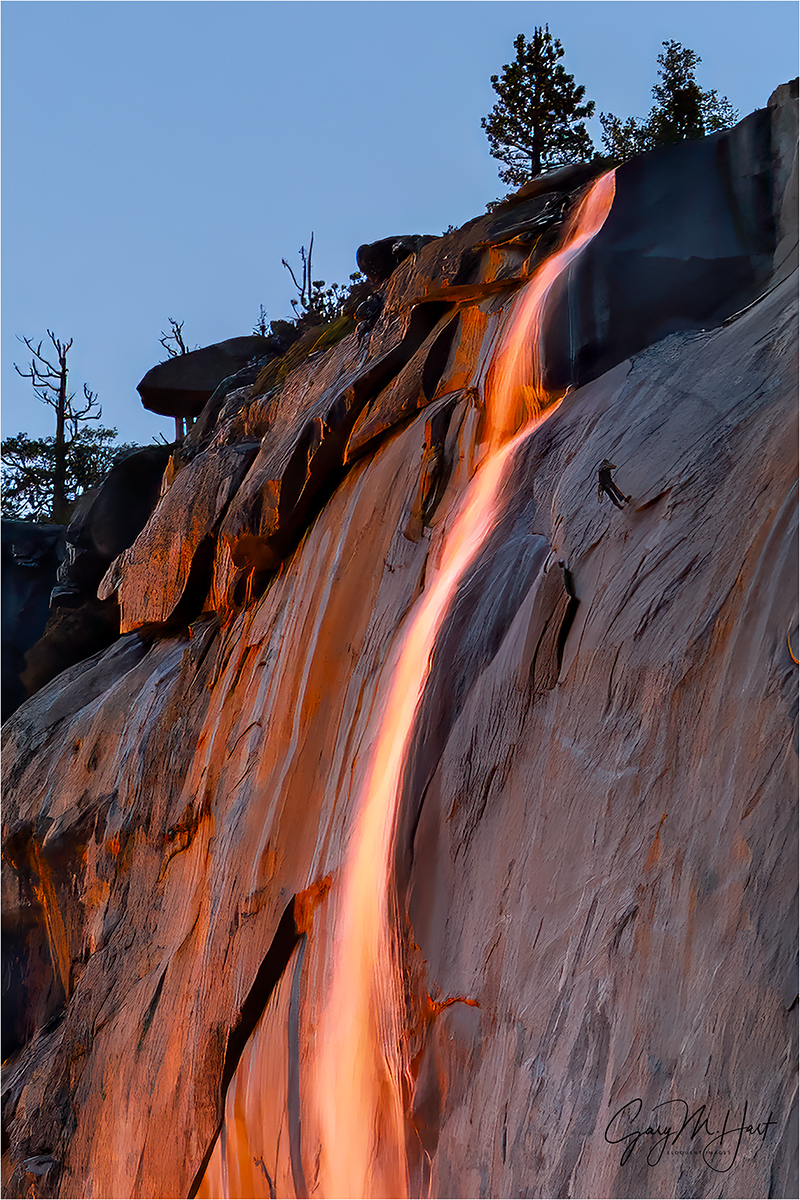
Horsetail Fall Climber, El Capitan, Yosemite (February 20, 2025)
Surprise
The evening’s biggest surprise wasn’t pointed out to me until our image review session the next day. Apparently, unbeknownst to us at the time, we’d been photobombed by 3 climbers on El Capitan, including one dangling right next to the fall. You can see him (or her?) in both of the top-to-bottom fall images above, but immediately above is a tighter crop of the first image, showing the climber more clearly.
Here’s my article on getting the most from the Horsetail Fall experience
Join me in a Yosemite Photo workshop
Workshop Schedule || Purchase Prints || Instagram
Horsetail Fall Through the Years
Click any image to scroll through the gallery LARGE


Iceland, Weather or Not
Posted on February 14, 2025

The Green Night, Aurora Above Kirkjufell, Iceland
Sony α1
Sony 16-35 GM
10 seconds
f/2.8
ISO 3200
As I’ve probably said a million times before, and likely will say a million more times, the best weather for photography is the worst weather to be outside. I mean, why else would Don Smith and I schedule a workshop for Iceland in January?
Of course our number one reason for an Iceland winter trip is the northern lights, which means winter clouds aren’t always our friend. But when I’m not waiting for the aurora to fire up, I love the way Iceland’s storm clouds are illuminated (all day) by beautiful low-angle sunlight (the sun never rises above 10 degrees during our visits). There are Iceland’s 2-hour winter sunrises and sunsets, its storm-churned surf, and ocean to mountaintop snow-covered landscape. And a surprising truth I’ve come to appreciate over the years is that, while Iceland in January is indeed quite cold, it really isn’t as cold as most people expect. (I swear.)
In this year’s workshop, that “not as cold as you expect” claim was challenged on our very first day of shooting, when we piled out of the bus at our first stop into 5°F air. Fortunately, that’s the coldest we experienced all workshop, and great photography creates an inexplicable warming factor that seems to make even the harshest conditions more tolerable. And regardless of the quality of the photography, even temperatures as low as 5°, (especially without wind) are quite tolerable with the right clothing.
My first year I attacked Iceland’s cold with copious layers of conventional California cold-weather gear. That worked well enough, but following each subsequent visit, I refined my non-California winter-wear (warmest) to the point where I’m now armed with an entire Iceland ensemble that rarely comes out for my domestic trips.
For example, a few years ago I decided that I was tired of having to layer a rain-shell on top of my (extremely warm but not waterproof) puffy down jacket, not to mention having to deal with a chronically cold butt exposed by a jacket that barely hung below my belt (yes, I was still wearing pants). So I sprung for LL Bean’s warmest waterproof down parka that covers me all the way down to mid-thigh. I still travel to Iceland with a lightweight, waterproof down jacket that’s compact enough to stuff in my camera bag and is ideal for milder days and short jaunts from the bus to a restaurant or hotel.
This two-way system—one heavy-duty option for the coldest, windiest conditions; another that’s lightweight but still warm enough for normal daily activity—works really well for me in Iceland. In addition to two jackets, I also have a couple of hats, pairs of gloves, and boots, that I can choose between, depending on the conditions. And, unlike many in this year’s group, I managd to pack everything into one (large) suitcase that I (barely) keep below Icelandair’s 23 kg (50-ish pounds) weight limit.
This year’s difference-maker upgrade was my new warm boots. I’m a cold feet (and fingers) kind of person, cursed with digits that never seem to be warm enough. Where my boots are concerned, it’s not so much the walking that’s a problem, but photography requires a lot of standing around in frigid cold (especially at night, when the aurora is dancing). In previous years I’ve gone more conventional, trying an assortment of insulated hiking boots and thick wool socks, upgrading to something warmer after almost every trip, vowing that next year will be better. The result has been persistently cold toes, and a boot-graveyard in my garage that rivals Imelda Marcos’ closet.
This year I tried something different, switching to super-warm, waterproof, lined Sorel work boots. But that was just the start. In New Zealand last July, I stocked up on (wait for it) possum fur socks. Possum fur (it’s actually a possum/merino blend) is absolutely the warmest material I’ve ever worn (also soft and lightweight), and it’s everywhere in New Zealand. But before you start visualizing acres of bred possums, caged and awaiting slaughter, and imagine that I’m supporting the heartless New Zealand possum-breeding industry, you need to know New Zealand’s possums (which are quite different from American possums) are a non-native scourge that’s decimating the country’s native bird population (among other things). A massive effort is underway throughout the country to eliminate possums by 2050—the only possum fur apparel I purchase in New Zealand is a byproduct of possums trapped for eradication (they were doomed anyway). But anyway…
And as if new boots and socks weren’t enough, I also sprung for a few thin merino wool liner socks from REI, to wear under my possum socks (no, possum don’t wear socks—you know what I mean). After returning last week following nearly two weeks in Iceland’s winter cold. After that first morning, I exited the 5° chill confident that my popsicle toes days were behind me.
Though the temperature warmed slightly throughout the day, by afternoon the wind had picked up and we started to see a few clouds heralding the approach of the storm that would batter us the following day. Nevertheless, after dinner we drove out to Kirkjufell hoping for some northern lights because in Iceland in winter, you always have a northern lights plan.
Seeing clouds from the Kirkjufell parking area, it would have been easy to pack it in and return to our warm hotel. But a few breaks were enough to give us pause, and when quick test snaps revealed green sky behind the broken clouds, we decided to stay and shoot for a while. We shot from the parking area, using our bus as a windbreak.
What started as a low expectation, “What the heck, we’re here anyway” shoot, turned into a very productive evening of photography, and a harbinger of the great stuff in store. It also gave us an opportunity to get the group up to speed with night photography—some had never done it before, while others were pretty rusty.
It’s especially fun when a group gets to witnesses something exciting. Many in this group had never seen an aurora, and though the color wasn’t bright enough to see with our eyes, everyone was pretty thrilled to capture images that featured Iceland’s most iconic mountain. But the real star this evening was the clouds, which built and raced behind Kirkjufell, but never completely filled in the window to the sky and aurora behind the peak.
After we’d finished, Don and I talked about the relief we felt getting at least enough aurora to please people, but agreed that more would be better, because those who’d never seen a good display didn’t really understand what they were missing. It turns out we didn’t need to wait long, but I’ll get to that in a future post.
Join Don Smith and Me in Iceland
Weather or Not
Click any image to scroll through the gallery LARGE


 Eloquent Images by Gary Hart