Eloquent Images by Gary Hart
Insight, information, and inspiration for the inquisitive nature photographer
Yosemite and me
Posted on January 19, 2016

Double Rainbow, Yosemite Valley
Canon EOS-1Ds Mark III
1/5 second
F/16.0
ISO 100
38 mm
My relationship with Yosemite doesn’t have a beginning or end. Rather, it’s a collection of asynchronous memories that are still forming. In fact, some of my Yosemite experience actually predates my memory. The earliest memories, like following bobbing flashlights to Camp Curry to watch the Firefall spring from Glacier Point, or warm evenings in lawn chairs at the garbage dump, waiting for the bears to come to dinner, are part of the glue that bonds my family.
My father was a serious amateur photographer who shared his own relationship with Yosemite. One of my most vivid Yosemite memories is (foolishly) standing atop Sentinel Dome in an electrical storm, extending an umbrella to shield his camera while he tried to photograph lightning.

Lecturing my first workshop group on the virtues of tripod use
As I grew older, I started creating my own memories. While exploring Yosemite’s backcountry I reclined beside gem-like lakes cradled in granite basins, sipped from streams that started the day as snow, and slept beneath an infinite canopy of stars—all to a continuous soundtrack of wind and water.
Given this history, it’s no surprise that I became a nature photographer, using my camera to try to convey the essence of this magic world. In the last 35 years my camera and I have returned more times than I can count, sometimes leaving home in the morning and returning that night, eight hours of driving for a six hour fix. Other trips span multiple days, each one starting before sunrise and lasting through sunset, and sometimes well into the night. But despite the fact this is my livelihood, it’s never work.
About ten years ago I started guiding photographers through Yosemite. Now I get to live vicariously through others’ excitement as they experience firsthand the beauty they’ve previously seen only in pictures. Many of these people return many times themselves, sometimes in other workshops, sometimes on their own. Either way, I’m proud to be a catalyst for their nascent relationship with this special place, and know that they’ll spread the love to others in their lives.
Of course I’ve seen lots of change while accumulating my Yosemite memories. Gridlock is a summer staple, the bears have been separated (with moderate success), the Firefall has been extinguished, and backpacking requires permits, water purifiers, and bear canisters. And now there are rumblings that some of the park’s cherished names—The Ahwahnee, Curry Village, the Wawona Hotel, Yosemite Lodge—will be lost to corporate greed. But despite human interference, Yosemite’s soaring granite and plummeting waterfalls are magnificent constants, a vertical canvas for Nature’s infinite cycle of season, weather, and light.
(An earlier version of this essay appears on my website)
Join me in Yosemite
My Yosemite
Click an image for a closer look, and a slide show. Refresh the screen to reorder the display.


Chased by rainbows
Posted on March 16, 2015

Rainbow and Surf, Wai’anapanapa Black Sand Beach, Maui
Sony a7R
Sony/Zeiss 16-35
1/5 second
F/11
ISO 50
Okay, you might guess that as a nature photographer I spend a lot of time chasing rainbows. True, but I swear that in Hawaii it feels like rainbows are chasing me. Hawaii is the only place I’ve ever been where rainbows just appear with no warning, where I can be standing in full sun beneath a handful of puffy clouds, glance toward the horizon, and do a double-take—where’d that come from?
Because of Hawaiian rainbow’s seemingly spontaneous inclinations, the first thing do after landing at a photo site on the Islands is run through my rainbow checklist:
- What’s the elevation of the sun? If the sun is lower than 42 degrees above the horizon, a rainbow is possible—the lower the sun, the higher and more complete (greater arc) the rainbow will be. If the sun’s near the horizon, a towering, nearly half-circle rainbow is possible; if the sun is higher, closer to 42 degrees, only a horizon-hugging, flatter rainbow is possible.
- What’s the direction of the sun? A rainbow always appears directly opposite the sun—the best way to determine where it will appear is to find your shadow, which will point directly toward the rainbow’s center (and its apex).
- If a rainbow does appear, where do I want to be? Armed with the answers from the first two questions, I know whether a rainbow is possible and exactly where it will appear. Now all I need is a composition for it. Pre-planning my rainbow composition prevents the Keystone Cops panic that typically ensues when a photographer looks skyward and spots a rainbow, but has nothing to put with it.
- (Notice there’s no mention of rain here—I realize a rainbow requires rain, but in Hawaii the randomness of rainbows is a function of the rain’s fickle nature. Rain can be far enough away to be invisible, or it can sneak up on you with no warning. In other words, if I used the presence of rain as a criterion, I’d be defeating the entire purpose of the checklist.)
This simple exercise served me well a couple of weeks ago on Maui when, while photographing a wave-swept rock on the Wai’anapanapa Black Sand Beach near Hana, a vivid rainbow segment materialized above the eastern horizon. There had been no hint of rain, so I was pretty focused on my subject and not really thinking about rainbows. But since I’d run through my routine rainbow checklist earlier, I knew exactly where I wanted to be and what I wanted to do. In this case it was a simple matter of shifting to the other side of the rock I’d already been photographing and back up the beach a little bit.
A horizontal composition allowed me to balance the rainbow with “my” rock while including enough of the lush, palm tree studded peninsula to infuse a tropical feel. The next (easily forgotten) step was to ensure that my polarizer was properly oriented (a mis-oriented polarizer will erase a rainbow). Finally, timing my click before the waves swept too far ashore allowed the black sand beach play a prominent role in the bottom third of my frame.
Want to learn the how, when, and where of rainbow photography? My Rainbows Demystified article in my photo tips section is a good place to start.
Join me on Maui in 2016

A Gallery of Rainbows
Click an image for a closer look, and a slide show. Refresh the screen to reorder the display.


Release the brocken!
Posted on August 14, 2014

Solar Glory, Lipan Point, Grand Canyon
Canon EOS-5D Mark III
100 mm
1/30 second
F/16
ISO 200
So how cool is this? The shadow is me. It’s called a brocken (named for a mountain in Germany), and the rainbow is a solar glory. This extremely rare phenomenon requires the perfect alignment of sunlight, moisture, and observer, and I just happened to find myself at the fortunate convergence of these conditions.
Yesterday evening Don Smith and I photographed the vestiges of a summer storm at Lipan Point on the Grand Canyon’s South Rim. We were there because Zeus had washed out the overnight trip to Toroweap that Don and I had been planning for many months.
Toroweap is a many-thousand foot vertical drop to the Colorado River on the Grand Canyon’s North Rim, at the end of a 60-mile unpaved road. We’d rented a 4-wheel-drive Jeep for the adventure, but after talking to several Grand Canyon rangers who strongly advised against going out there in the rain. So we jettisoned Plan A and quickly improvised Plan B: leave the relative peace and quiet of the North Rim and jet back to the South Rim (where our next workshop is scheduled to start Friday).
The storm broke during our four-plus hour drive from the North Rim to the South Rim, and we were greeted with the kind of river-hugging, monolith-draping clouds I’m accustomed to seeing after a Yosemite storm. Our first stop was Navajo Point, but after some great shooting there we saw that the cloud making machine was working overtime below Lipan Point, just a short drive down the road.
Arriving at Lipan Point about an hour before sunset, we grabbed our gear and scrambled out to the point beneath the railed (tourist) vista, a rocky, knife-like ridge jutting into the canyon with sheer drops on both sides. I was happily photographing a scene up-canyon when Don called out, “Hey, do you see that?!” I looked up and saw a cloud drifting up from the chasm on our ridge’s east side, no more than 100 feet from us. The cloud was fully lit by the low sun, and right in the middle was my shadow encircled by a full rainbow. I know enough about rainbows to understand what’s going on: a rainbow makes a full circle around the anti-solar point, but terrestrial viewers usually find the bottom half interrupted by the horizon. But understanding a phenomenon doesn’t make me any less awestruck by its manifestation. I’d seen this once before, on a plane taking off through a rainstorm—I looked out the window and saw a rainbow encircling the plane’s shadow, but by the time I retrieved my iPhone the plane banked and I lost it.
But this time I had my camera ready for action—I shifted a few feet up the ridge to juxtapose the rainbow against a snag and clicked away. For my first few frames I stood off to the side and the shadow my camera captured was of my camera on the tripod, so I moved behind my camera and squared my shoulders. Those frames included my outline, but it wasn’t until I spread my arms and legs that I got the shadow you see here.
Read more about rainbows in my Rainbows article in the Photo Tips section.
It’s Greek to me
Posted on March 3, 2014

Double Rainbow, Tunnel View, Yosemite
Canon EOS-1Ds Mark III
1/5 second
F/16.0
ISO 100
38 mm
Photograph: “Photo” comes from phos, the Greek word for light; “graph” is from graphos, the Greek word for write. And that’s pretty much what we photographers do: Write with light.
Because we have no control over the sun, nature photographers spend a lot of time hoping for “good” light and cursing “bad” light. There’s no universal definition of good and bad light; it’s usually more a function of whatever it is we want to do at the moment. Just as portrait photographers have complete understanding of the artificial light they use to illuminate their subjects, nature photographers should understand the sunlight they photograph: what it is, what it does, and why it does it.
It’s this understanding of light that allows me to be in the right place for vivid sunrises and sunset, to know the best time and location for blurring water, and that helped me anticipate this amazing rainbow. To learn more about light, read the Light article in my Photo Tips section.
About this image
May 26, 2009
On my drive to Yosemite the sky above the San Joaquin Valley was clear, but I was encouraged to see dark cumulus clouds billowing above the Sierra to my east. Sierra thunderstorms in May are rare, but not unprecedented. At the very least I knew the clouds would make for interesting photography. As I entered the park via Big Oak Flat Road, a few large drops dotted my windshield. The afternoon sun was now obscured by clouds, but the sky to the west remained virtually cloudless, a good sign, but nothing I hadn’t seen before.
By the time I reached Yosemite Valley the rain had increased enough to require me to engage my wipers and get my mental wheels turning. I was in the park for a one day, private photo tour with a couple from Dallas. The arrangement was to meet at Yosemite Lodge for dinner to plan the next day’s activities, then to go shoot sunset. As I continued toward my appointment I allowed myself to consider the possibility of a rainbow. Going for it would require rushing to meet my customers, delaying dinner, and possibly sitting in the rain with no guarantee of success.
Still undecided but with about 20 minutes to spare, I dashed up to Tunnel View to survey Yosemite Valley. I liked the way things were shaping up; if I’d have been by myself I’d have skipped dinner. Leaving Tunnel View I continued surveying the sky—by the time I reached the lodge I knew I could be sued for malpractice if I didn’t at least suggest the possibility of a rainbow.
We completed our introductions in front of the cafeteria, but before entering I suggested that maybe we should forget dinner for now. Robert and Kristy were as excited about the conditions as I was (phew) but had just completed a long hike and were famished, so we rushed in and grabbed pre-made pizzas to eat on the road.
Twenty minutes later we were sitting on my favorite granite slope above Tunnel View. We were immediately greeted by a flash of lightning, followed not too many seconds later by a blast of thunder. As a lifelong Californian, I’m not particularly experienced with lightning, so I deferred to the Texans and found comfort in their lack of concern (knowing what I know now, I probably should have been more concerned).
Rainbow photography is equal parts preparation and providence. The preparation comes from understanding the optics of a rainbow, knowing the conditions necessary, where to look, then putting yourself in the best position to capture it; the providence is a gift from the heavens, when all the conditions align exactly as you envisioned. Robert, Kristy, and I had been admiring the view and photographing intermittently in a light, warm rain for about thirty minutes when a rainbow appeared. It started slowly, as a faint band in front of El Capitan, and quickly developed into a vivid stripe of color. For the next seven minutes we shot like crazy people—I varied my compositions with almost every shot and called to them to do the same. When it ended we were giddy with excitement—never let it be said that a professional nature photographer can’t get excited about his subjects—and even though the rainbow never quite achieved a complete arc across the valley, it had been everything I dared hope for.
Little did we know that this first rainbow was just a prelude—less than ten minutes later a second rainbow appeared, becoming more vivid than the first, growing into a full double rainbow that arced all the way across Yosemite Valley, from the Merced River to Silver Strand Fall. It lasted over twenty minutes, long enough for me to set up a second camera and do multiple lens changes on each. We actually reached the point where we simply ran out of compositions and could only laugh as we continued clicking anyway.
One more thing: This is the third time I’ve processed this image. I’ve never been completely happy with some of the color tones and overly bright highlights, so I decided to give it one more shot. Using Lightroom 5 and Photoshop CS 6, I was finally able to come up with something that more accurately represents the experience of this unforgettable moment.
Workshop Schedule
A Gallery of Rainbows


Some assembly required
Posted on February 10, 2014

Double Rainbow, Lipan Point, Grand Canyon
California Sunset, Sierra Foothills
Canon EOS 5D Mark III
1/5 second
32 mm
ISO 100
F14
Putting together material for the Grand Canyon Monsoon workshop that Don Smith and I do each August, I came across this image from the first shoot of our first workshop. With so many pictures in the two weeks we were there (for two workshops), and given the incredible events that followed, it’s amazing to me how well I remember the specifics of this early shoot (especially given how poorly I remember so many other things).
When Don and I pulled the group into Lipan Point that afternoon, a handful of puffy clouds floated overhead. But, as if on cue, within minutes of our arrival the clouds organized into a seething, dark gray tower; five minutes after that, a few drops fell—marble-size projectiles that landed with an audible splat at one- or two-second intervals. We ignored the rain and kept shooting, but when a lightning bolt struck a quarter mile away, we couldn’t get out of there quickly enough, retreating to the cars just as all hell broke loose. For the next we were assaulted with a pounding rain that obliterated the view and required shouting to be heard. As suddenly as it started, the rain stopped and the Canyon reappeared, bathed in sunlight. And with the sunlight came a full double rainbow. I mean, what could be more perfect, the Grand Canyon plus a rainbow? Unfortunately, from our vantage point on the rim, the rainbow beautifully framed nothing but sagebrush south of the canyon.
Understanding the physics of rainbows, I knew that there’s nothing random about their position—to get the rainbow above the canyon, I simply had to be on the other rim. With a choice between A: A four hour drive, and B: A twenty mile hike, I chose C: Get as far out into the canyon as the nearby terrain allows and hope for the best.
The “Point” part of Lipan Point refers to a rock protuberance that juts into the canyon. Scrambling onto the rock, I was able to change my angle of view enough to put the north-most end of the rainbow in the canyon before I ran out of point. Not the complete, rim-to-rim view I’d have liked, but at least something to work with. With the Grand Canyon as my background, a rainbow for the middle-ground, all I lacked was a foreground.
Scanning my surroundings, my eyes fell immediately on a group of shrubs side-lit by pristine, warm, late afternoon light. A horizontal composition would have given me too much foreground and too little rainbow, so I went vertical. At a focal length of 32mm, my depth of field app told me I could achieve the 8-foot hyperfocal distance I needed at f14. Spot metering on the brightest shrub, I dialed my shutter speed until the shrub was +2, and clicked.
Looking back at 2013, and ahead to 2014
Posted on January 1, 2014
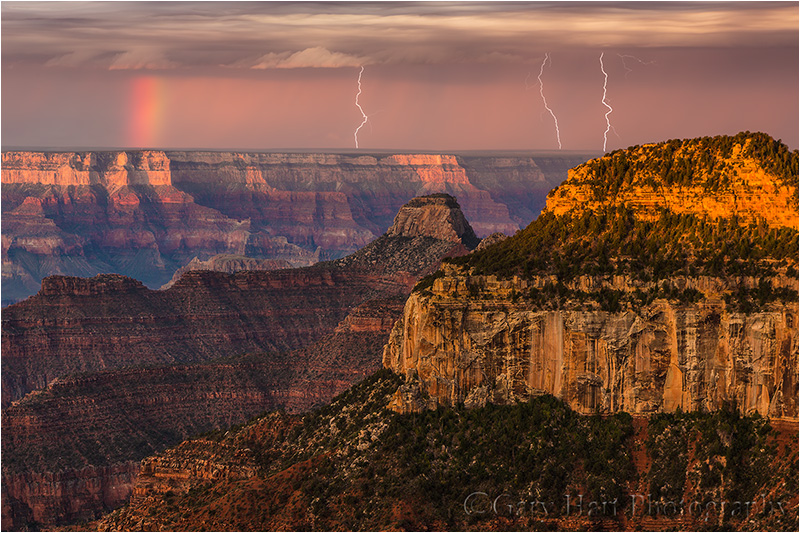
Three Strikes, Bright Angel Point, North Rim, Grand Canyon
This is a single, 1/3 second click that managed capture three simultaneous lightning strikes. Set up on a tripod, I’d composed to balance the frame between the rainbow and the area receiving the most strikes. Rather than try to manually react when I saw a lighting flash, I let my Lightning Trigger detect the lightning and click for me. I got many one and two bolt frames, but this is the only frame that captured three.
Canon EOS 5D Mark III
1/3 second
F/11
ISO 100
24-105 f4L lens
While I’ve been taking a little Holiday break from my blog, I have spent some of my non-family time reviewing my 2013 images. Given the number of trips I take, and images I click, it always amazes me how well I remember every detail of my favorites—who I was with and what the circumstances were, not to mention composition and exposure decisions that are still as clear in my memory as the day I took the picture. I’m guessing it’s that way for other photographers too, because I’m convinced that our best photography comes when we concentrate on those things that move us emotionally. For example, since I’ve always been something of a weather geek, it stands to reason that several of my favorites feature active weather. And another lifetime passion is astronomy, and while I didn’t consciously bias this year’s selections toward the celestial, that sure seems to be how it worked out.
I have lots of great stuff planned for 2014: my regular annual workshops in Death Valley, Yosemite, Hawaii, the Eastern Sierra; my second annual Grand Canyon monsoon workshop with Don Smith; a raft trip down the Grand Canyon in May (bucket list item). And on any photo trip, whether it’s a workshop or a personal trip, I research and plan to make sure the odds for something special are as high as they can be, but it’s usually the unexpected moments that thrill me most—those times when I set out with one intention and found something else, or was disappointed when weather or other conditions beyond my control derailed the original plan.
Case in point: I scheduled an entire workshop around Comet ISON, and while ISON fizzled, if I hadn’t been in Yosemite to photograph it, I never would have witnessed Valley View, decked out in ice, glistening in the light of a full moon. Or the Maui workshop, scheduled before I had any idea of Comet PanSTARRS, that just happened to coincide with the comet’s post-perihelion conjunction with the new moon. But the one that thrill me most was the above sunrise at the Grand Canyon, the final morning of our second workshop—Don and I were going to start the thirteen hour drive home later that morning, and others in the group had flights to rush off to. Given the bland weather forecast, it would have been easy to blow off the shoot and let everyone sleep in. But we got up in the cold and dark, all of us, and were treated to a two hour electric show that started in blackness and culminated with a rainbow as the sun peeked above the canyon’s east rim.
So, without further adieu, and in no particular order, here are my current 2013 favorites (click a thumbnail for a larger version with more info, and to start the slide show):
-
- Crescent Moon and Oaks at Dusk, Sierra Foothills, California
-

- Comet PanSTARRS and New Moon, Haleakala, Maui
-

- Leaf, Bridalveil Creek, Yosemite
-
- Milky Way and Halemaʻumaʻu Crater, Kilauea, Hawaii
-
- Incoming Storm, Mesquite Flat Dunes, Death Valley
-
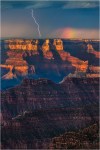
- Color and Light, Bright Angel Point, Grand Canyon
-

- Poppy Pastel, Sierra Foothills, California
-
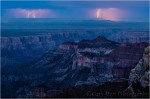
- Night Lightning, Roosevelt Point, Grand Canyon North Rim
-
- White-Out, Cook’s Meadow, Yosemite
-

- Night and Day, Crescent Moon Rising Above Mono Lake
-
- Facing West, Molokai from West Maui, Hawaii
-

- Before Sunrise, South Tufa, Mono Lake
-
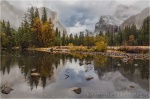
- Autumn Snow, Valley View, Yosemite
-
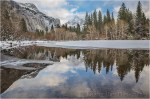
- Winter Reflection, Half Dome and the Merced River, Yosemite
-

- Moonlight Cathedral, Valley View, Yosemite
-

- Three Strikes, Bright Angel Point, Grand Canyon
Shocking truths about lightning
Posted on October 23, 2013

Color and Light, Bright Angel Point, North Rim, Grand Canyon
Canon EOS 5D Mark III
1/3 second
F/11
ISO 100
24-105 f4L lens
While working on an upcoming “Outdoor Photographer” magazine article on photographing lightning at the Grand Canyon, I’ve been revisiting the images from my August workshop with Don Smith. While I still feel like I’ve only scratched the surface with the trip’s lighting images, it’s clear that at least half of my captures came on that amazing final morning, when we witness two hours of virtually nonstop lightning punctuated by a vivid section of rainbow balanced atop Powell Point. The first image I posted from that morning included the rainbow sharing the rim a trio of simultaneous, parallel strikes. The difficulty I’m having now is choosing which of the other pretty spectacular images to feature (FYI, this is a great problem to have).
Fortunately, I varied my compositions enough that many of my favorite captures are different from each other. Here, a single strike lands just east of the rainbow, close enough that they somehow seem related. This image is an example of why I’m constantly preaching to my workshop participants to switch between horizontal and vertical, even (especially) when one orientation seems more obvious than the other. Fortunately, I practiced what I preached (not always a sure thing) throughout the morning—instead of having one great capture of lighting with that morning’s rainbow, I now have two (and counting) that are different enough from each other to share.
Another byproduct of my magazine article is the research I’ve been doing on lightning. I’ve always been something of a weather geek, but it seems each time I revisit a topic, I learn something new. So, while I doubt you’ll find this stuff quite as fascinating as I do, here are some cool lightning facts I just can’t resist sharing:
- Earth is struck by lightning eight million times each day.
- While lightning is still not completely understood, scientists know that the rapid upward and downward motion of raindrops in a thunderstorm creates extreme electrical polarity—a negative/positive imbalance within a cloud, between clouds, or between a cloud and the ground. Nature abhors any imbalance and will remedy the problem as efficiently as possible: Lightning.
- The visible portion of a lightning strike originates on the ground and travels up to the cloud.
- In a lifespan measured milliseconds, a lightning bolt can release 200 million volts and heat the surrounding air to 50,000 degrees. More than enough to fry a photographer.
- Most of us know that lightning and thunder occur simultaneously. What many don’t know is that you can’t have one without the other—it’s the lightning that causes the thunder, and if you see lightning but hear no thunder, you’re just too far away. This even applies to what is often called “heat lightning,” which still generates thunder you’d hear if you were close enough.
- The fact that lightning and thunder occur simultaneously, but light travels much faster than sound, allows us to roughly establish the distance of the lightning. For all intents and purposes, we see the lightning the instant it happens, while the thunder pokes along at the speed of sound, a pedestrian 1,100 feet per second. That works out to about five seconds to travel one mile. So, if you start counting as soon as you see lightning (one-thousand-one, one-thousand-two, …), dividing by five the number you’re at when the thunder arrives gives you the approximate distance in miles.
- Let’s say you get all the way to fifty before the thunder arrives—that would be ten miles. You’re safe, right? Wrong. Lightning bolts exceeding one hundred miles in length have been documented, as have bolts with no rain and even with blue skies overhead. That’s why we’re warned to stay inside whenever you can see lightning or hear thunder. (It’s also why I say do as I say, not as I do.)
- A car is not a magic lightning sanctuary, and the safety a car does offer is because of its metal frame, not its rubber tires. (Don’t believe me? Go stand on a couple of rubber tires in the next lightning storm and have your next of kin report back to me.) Even when you’re inside a car, you need to keep the windows up and don’t touch anything metal. And stay away from convertibles.
Here are a couple of lightning safety websites:
Are you interested in risking your life to photograph lightning? Join me in a Grand Canyon photo workshop.
A Lightning Gallery
Click an image for a closer look and slide show. Refresh the window to reorder the display.


The reason I do this
Posted on August 27, 2013

Three Strikes, Bright Angel Point, North Rim, Grand Canyon
Canon EOS 5D Mark III
1/3 second
24-105L
ISO 100
F11
August 2013
Nature photographers plan, and plan, and plan some more, but no amount of planning can overcome the fickle whims of Mother Nature. Few things are more disappointing than a long anticipated and perfectly executed shoot washed out by conditions beyond my control. But when all of nature’s variables click into place, the world becomes a happy place indeed. And when nature ups the ante by adding something unexpected, euphoria ensues.
Don Smith and I just returned from two weeks photographing the Grand Canyon. We did a little of our own photography on the trip, but the prime focus was our two four-plus day photo workshops, split evenly between the Grand Canyon’s North and South Rims. These workshops were scheduled to give our groups the opportunity to photograph the Grand Canyon, day and night, under the influence of the annual Southwest monsoon: billowing clouds, vivid rainbows, and (especially) lightning. But any workshop requiring specific weather conditions is fraught with uncertainty and anxiety—we were fairly certain the photography would be great (after all, it is the Grand Canyon), but few natural phenomena are more fickle than lightning.
When plotting a workshop schedule (or any landscape photo shoot), the best a photographer can do is maximize the odds: We try to schedule all the non-photography requirements (meals, sleep, travel, training) for the times least likely to conflict with the best photography. For example, we know that because the monsoon thunderstorms usually don’t develop before midday, Grand Canyon summer sunrises often lack the clouds and pristine air necessary for the vivid color photographer’s covet. Therefore our photography emphasis for this workshop is on getting our groups out from mid-morning through (and sometimes after) sunset. That doesn’t mean we blow off sunrise, it just means that the sunrises are generally better for exhausted, sleep-deprived photographers to skip than the sunsets are.
Nevertheless, we rallied the troops at 5 a.m. Friday for our second workshop’s final shoot, a ten minute walk from our rim-side cabins to Bright Angel Point. The forecast was for clear skies, but the workshop had already had so many wonderful shoots, I considered this final one just a little bonus, the cherry atop an already delicious sundae.
My mind was already on the long drive home—in fact, as Don and I exited our cabin in the pre-dawn darkness, I predicted that I wouldn’t even take my camera out of my bag that morning. My words as I turned the doorknob were, “But if I leave my bag here, we’ll probably get lightning and a rainbow.” Little did I know how grateful I’d be to have brought my gear….
What followed was what Don and I later agreed was probably the single most memorable workshop shoot either of us had ever experienced. Gathering in the lobby of Grand Canyon Lodge, we saw lightning flashes across the canyon, but it was impossible to tell in the darkness how far away it was. Hiking to the vista, we saw several distinct bolts stab the rim, and by the time our gear was set up, the show had intensified, delivering numerous violent strikes in multiple directions that illuminated the canyon several times per minute.
The morning’s pyrotechnics continued for over two hours, awing us first in the dark, then through twilight, and finally into and beyond a magenta sunrise. And as if that wasn’t enough, as the sun crested the horizon behind us, a small but vivid fragment of rainbow materialized on the canyon’s rim, hanging there like a target for the lightning to take potshots at it.
This was more than just good photography, this was a once-in-a-lifetime convergence of weather, location, and light that more than made up for the many times nature has disappointed. Rather than bore you with more words, here are a few images from that morning:

Lightning Before Dawn, Bright Angel Point, North Rim, Grand Canyon
Arriving on the rim about 45 minutes before sunrise, we found the South Rim under full attack. This 30 second exposure captured a pair of strikes near Mojave Point.
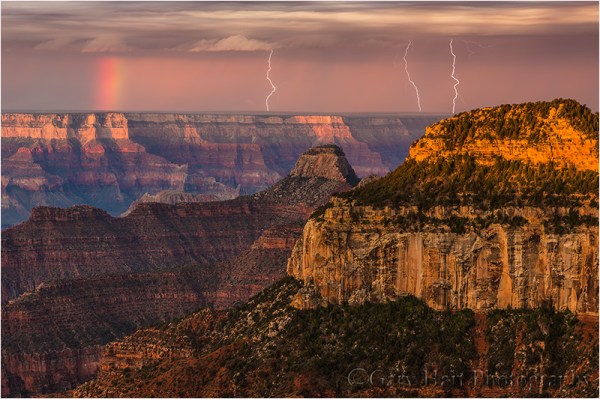
Three Strikes, Bright Angel Point, Grand Canyon
As the sun neared the eastern horizon, I couldn’t help sneaking an occasional peek behind me. Seeing clear skies in the rising sun’s direction, I crossed my fingers for the clouds to hold off long enough to allow the sunlight to illuminate the lightning show before us. As the sun topped the horizon, its rays caught the rain falling along the rim, balancing a nearly vertical section of rainbow atop Powell Point. In this single, 1/3 second exposure, I managed to capture the rainbow briefly sharing the rim with three simultaneous lighting strikes.

Color and Light, Bright Angel Point, North Rim, Grand Canyon
The rainbow persisted as the lightning continued. Confident that I’d captured enough horizontal frames, I switched to a vertical composition in time to catch one more strike with the rainbow.

Storm’s Approach, Bright Angel Point, North Rim, Grand Canyon
As the sun rose, the rocks reddened and the storm edged closer. Ridges visible earlier were slowly overtaken by the advancing rain, and long, rolling waves of thunder echoed overhead. Preceding the rain were billowing clouds; here I went with an extreme wide (17mm) vertical composition to capture the incoming storm skewering the rim with by a single bolt. I had to retreat to shelter shortly thereafter.
Grand Canyon Photo Workshops
Read about photographing lightning
A Lightning Gallery


Nature is only as random as our ability to understand it
Posted on June 11, 2013

Double Rainbow, Tunnel View, Yosemite Valley
Canon EOS-1Ds Mark III
1/5 second
F/16.0
ISO 100
17 mm
Louis Pasteur said that chance favors the prepared mind. It was one of Ansel Adams’ favorite quotes. But, as appropriate as the quote is, I’m sure Adams cited Pasteur only after enduring countless “Wow, you were so lucky to be there for that” reactions.
To the casual observer, nature’s wonders do indeed feel random. Who doesn’t feel lucky when a full moon pops over the mountains just as the monotonous highway bends east, or when dirty snow and bare trees are suddenly glazed in white by an unexpected snowstorm? (Or when Yosemite Valley is suddenly framed by an arcing double rainbow?) But there’s nothing random about any of these phenomena. Some natural phenomena can be predicted with absolute precision—for example, it’s easy to pinpoint the position and phase of the moon for any location and time, past or future. And while weather can sometimes (usually?) appear random, every weather condition, from temperature to the most violent storms and purest blue skies, is a precise function of atmospheric conditions, ocean currents, and terrain; we perceive weather as random only because its complexity overwhelms our current capabilities.
Nature photographers should feel blessed by these natural wonders over which we have no control, but our good fortune is not random. By taking the time to understand our subjects and study our environment, we do our best to anticipate image-worthy events. While we can never guarantee that the sky will be clear enough to reveal the rising moon we counted on, or that the predicted convergence of moisture, temperature, and barometric pressure will manifest to transform our world from crusty brown to pristine white (or that the setting sun will find the perfect path to the falling rain), we can put ourselves in position to be there when it happens.
None of this stuff makes me unique—though we all approach our photography in our own way, most successful nature photographers do everything they can to minimize the randomness in our efforts, to maximize the chance for “special.” My own path was fairly organic. My entire life, beginning long before my first camera, I’ve been drawn to science, to the how and why of nature. As a child I devoured books by Herbert S. Zim and Isaac Azimov (he wasn’t just a science fiction writer). In school I took every possible astronomy, geology, meteorology class. I even started college as an astronomy major, then geology, before the (necessary) quantification of the concepts I loved so much threatened to sap my passion (that is, I couldn’t handle the math beyond calculus). Fortunately my passion survived and I’ve been able to find a career that rewards me for understanding and anticipating natural phenomena. (It hardly seems like work.)
About this image
Which brings me to today’s Yosemite Valley rainbow image, an incredible stroke of good fortune that I (proudly) take credit for anticipating. This was a May evening a few years ago. May is usually the beginning of California’s interminable blue sky summer, but this year a persistent low pressure system that had set up camp off the coast pumped daily impulses of moisture into Northern California. I was in Yosemite to meet a private workshop customer and his girlfriend for dinner so we could plan the following day’s photo tour of the park. That afternoon’s drive from home had been a mixture of sun and showers; I entered Yosemite Valley in the midst of a steady rain that had been splashing my windshield for at least thirty minutes. But despite clinging rainclouds that obscured the surrounding granite walls, I knew the broken sky I’d recently driven through was headed this way and would probably arrive before sunset, about two hours away—and with that clearing would come the potential for openings that could allow sunlight to reach the still falling rain. With the sun already low and dropping, and its angle pointing any Tunnel View shadow in the direction of Yosemite Valley, I had the potential for all the rainbow recipe ingredients.
But of course I had dinner plans, and no phone number to reach my customers. So I beelined to Yosemite Lodge to meet them as planned, plotting my sales pitch the entire way. I was pleased to find them waiting when I arrived—while in my mind I was jumping up and down, pointing and shouting (“Rainbow! Soon! Hurry!”), I maintained the illusion of calmness through our introductions, then explained as cooly as possible that there was a chance for a rainbow, if they were interested. Fortunately they were open to the change of plans and I wasn’t forced to resort to begging.
On the twenty minute drive back to Tunnel View I’d calmed enough to remind myself that we could very well be chasing wild geese and did my best to moderate their expectations, explaining that a rainbow is far from a sure thing, and that what we’re doing is merely putting ourselves in position in the event that does happen.
At Tunnel View the rain was still falling, but I could see signs of clearing to the west. So far, so good. I guided my customers to my favorite Tunnel View vantage point, above the parking lot and away from the crowds, where we sat on the granite in the rain and waited. Despite their positive attitude, as the cold and wet began to seep in, it dawned on me that convincing new customers to skip dinner to sit in the rain isn’t the most sound business strategy.
The view of had opened considerably from what it had been when I first pulled into the valley, so I encouraged them to go ahead and shoot, rainbow or not. I really can’t remember how long we waited—long enough to get pretty soaked—before a shaft of sunlight broke through to illuminate the rain falling along the north rim of the valley, for about five minutes painting a vivid partial double rainbow in front of El Capitan and disappearing into the clouds above Half Dome. Yay! While this wasn’t a complete rainbow (only one pot of gold), it was definitely the nicest rainbow I’d ever seen at Tunnel View and we clicked without a break until the rain stopped and the rainbow faded.
When the show was over we just sat and marveled at the view, giddy about our good fortune, completely oblivious to the dark cloud approaching from behind. As quickly as the rain had stopped a few minutes earlier, it returned, this time with a vengeance, coming down in diagonal sheets (visible across the top of the frame above). Behind us and out of sight the sun had almost completed its journey to the horizon and, rather than being blocked by clouds as it had been earlier, was able to slide its final rays beneath them to completely illuminate the rain falling across the valley’s breadth. The rainbow appeared almost immediately, intensifying to quickly become a double bow connecting Yosemite Valley’s north and south walls. It lasted so long that I actually started running out of compositions.
We had a great day the next day, but nice as it was, the photography was a bit anticlimactic. Much like starting the Fourth of July fireworks show with the “grand finale” extravaganza, I realized that it would have been nice to have arranged for the rainbow to appear at the end of our session. Back to the drawing board.
The Road to the Racetrack, Part Deux
Posted on January 31, 2013

Last Light, The Racetrack, Death Valley
* * * *
Previously on “The Road to the Racetrack”
Racetrack Road approaches from the north and skirts the west side of Racetrack Playa in the shadow of Ubehebe (yuba-he’-be) Peak. We crested the saddle above the playa’s north perimeter and dropped out of the gray soup that had confined our world for about two hours. Before us spread the entire Racetrack Playa, its surrounding mountains draped in clouds that cascaded down their slopes like slow motion waterfalls. The light rain that had barely required windshield wipers stopped completely. Descending the saddle’s south side into the basin, our view was monopolized by the Grandstand—a cruise ship size chunk of adamellite (a dark, igneous intrusive rock similar to granite) jutting from the paper-flat playa. This is what the submerged portion of an island looks like. As we rolled past I couldn’t help thinking that the Grandstand would be a far more sought-after subject were it not for the moving rocks that take top bill here.
As much as I’d loved to have stopped to photograph the Grandstand, it was late afternoon and I was anxious to locate the main attraction before the good light came and went. The drive to the south side of the Racetrack is just one mile, but the road’s extreme washboard surface is a natural speed inhibitor; every time my speedometer nudged toward fifteen miles per hour our SUV started bouncing like an off-balance washing machine and I had to back off. Doug, Jay, and I had chuckled when the Stovepipe Wells grocery clerk told us that the rocks had mysteriously disappeared from the Racetrack, but I’ll admit to taking advantage of our slow speed to (anxiously) scrutinize the playa as we skirted its perimeter—what if it was true? Vibrating along, I saw a couple of grapefruit-size rocks trailing short tracks just west of the Grandstand, but nothing like the rocks we’d come for.
We finally stopped at the playa’s extreme south end where a couple of photographers were photographing a handful small rocks just a couple of hundred feet from the road. These rocks just didn’t seem natural to me—partly because of the nearby tire tracks marring the playa’s surface (the selfish ignorance of humans in nature never fails to disappoint me) and partly because they were so far from any rock source (these things don’t just drop from the sky). Standing there on the playa’s southwest edge, it was clear that the rocks we sought could only originate from the base of the steep mountain abutting the southeast corner. And indeed, looking more closely in that direction, we could just make out a large accumulation of black dots that could only be rocks. The playa’s utter flatness can be disorienting, but given that the Racetrack stretches one mile on its long, north-south axis, I estimated that the east side was about a half mile away. So off we set.
The playa’s color and chalky dust reminded me of a flour tortilla; its surface is a jigsaw of round polygons about three inches in diameter, separated by shallow cracks that have been filled in by the fine dust. When dry like this (there was no noticeable accumulation of the nearby rain) it’s an easy surface to walk. After ten minutes we arrived at the first rocks, toaster- to microwave-size, each with its own straight, curved, or zig-zag track. Eureka! We immediately spread out, claimed a specimen of our own, and went to work. Initially the best light was on the southwest horizon, where a hole in the clouds, obscured by Ubehebe Peak, passed enough sun to illuminate the low overcast (see the image in my previous post).
Soon our attention was drawn to the playa’s north end, toward the Grandstand, where a shaft of golden light had started skimming the dark hills and firing up the clouds there. I quickly circled the rock I was working on to swing my camera in that direction. As the shaft warmed it stretched further, eventually extending from edge to edge. As the light seemed to reach a crescendo Doug, who was set up about a hundred feet away, called out, “That almost looks like a rainbow.” I looked closer and sure enough, there was indeed a (quite faint) prism of color splashed above the sunlit hills bounding the playa’s northeast edge.
The one frame with my polarizer properly oriented for the rainbow that I managed to get off is at the top of the post. You have to look closely to see the rainbow (it’s there, I swear); careful examination reveals that the rainbow moves from green on the outside (left) to red on the inside (the shorter wavelength colors that would be left of green aren’t visible), meaning that our angle of view only gave us the fainter, outer band of a double rainbow. By the time I’d set up my next composition the light faded and with it the rainbow. Visions of a full rainbow arcing above the Racetrack dashed, we nevertheless couldn’t help feel that we’d been granted a very rare treat in this land of interminable blue sky.
The rest of our trip, though not without its moments, was anticlimax. After sunset we walked back to the car and ate dinner (soggy sandwiches for Jay and me, ramen noodles for Doug-the-chef), then went back out in the dark for a moonlight shoot without stars. By then the clouds had thickened and dropped, making it difficult to get anything that really looked like night. After a very restless night (one hour awake for every hour asleep for me), we rose for “sunrise” (or more accurately, “fogdrop”). While not quite spectacular, the low clouds swirling above the playa, spilling down the mountains in the thin light no doubt gave us unique images (that I haven’t had time to get to). And on the drive back we were able to see the terrain that had been completely obscured by clouds on our inbound trip, the highlight of which was several miles of joshua tree forest we’d been completely oblivious to earlier. In fact, despite my extreme need to be back in Furnace Creek in time for my workshop (that started at 1:00 that afternoon), at one point we encountered a scene with nearby joshua trees juxtaposed against distant, fog-wrapped mountains that we couldn’t help stopping to shoot for fifteen minutes or so.
After depositing Jay at his car in Stovepipe Wells, Doug and I made it back to Furnace Creek by 11:45 and managed to clean up, have lunch, and set up for orientation with time to spare. Piece of cake.

 Eloquent Images by Gary Hart