Eloquent Images by Gary Hart
Insight, information, and inspiration for the inquisitive nature photographer
Navigating the Path to Exceptional
Posted on May 20, 2025
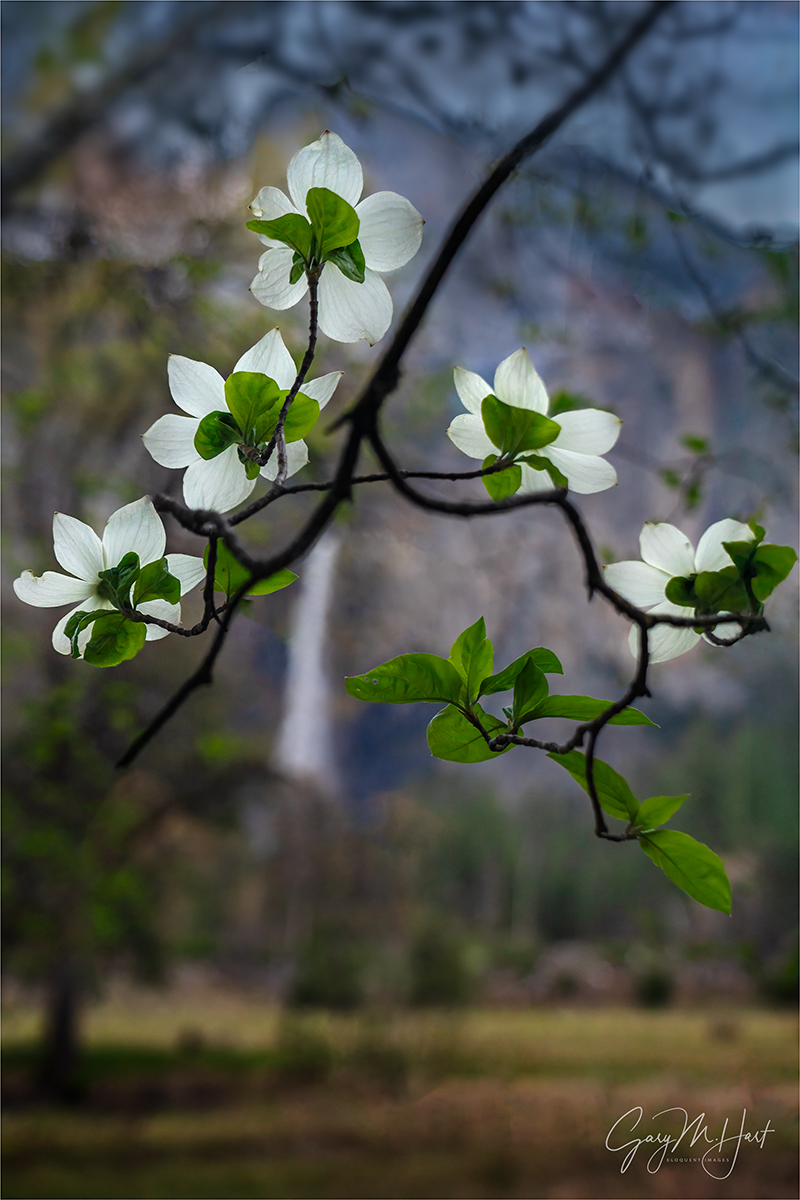
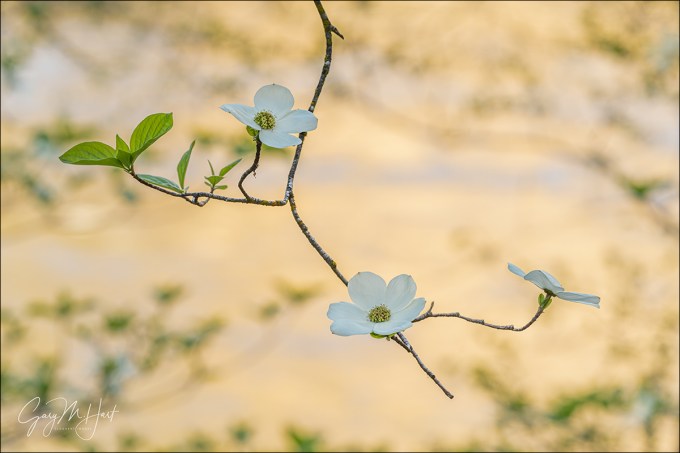
Bridalveil Fall and Dogwood, Valley View, Yosemite
Sony a7R V
Sony 24-105 f/4 G
ISO 800
f/4
1/250 second
Who doesn’t love being exceptional? Exceptional among your friends, or in your camera club, among your peers, or even in the world. Though I suspect the happiest photographers are simply content with being the best possible photographer they can be without measuring themselves against others, what fun is that?
Once upon a time, capturing exceptional images required little more than being at the most beautiful spots during the most spectacular conditions, and having a general sense for composition and metering. Today? Not so much. While there’s nothing wrong with chasing beautiful locations and conditions, these days when you work hard to get someplace special at just the right time, there’s a pretty good chance you won’t be the only one there. (But that doesn’t mean you should stop chasing beauty for beauty’s sake.)
In a world where pretty much everyone carries a camera 24/7, universal access to information makes “expert” guidance just a click away, and there’s virtually no such thing as a “secret” location, I’m afraid the “exceptional” bar just keeps rising. So, instead of settling for beautiful scenes in beautiful conditions (not that there’s anything wrong with that), how can we create images that truly stand out?
Laying the foundation
The key to capturing images that are more creative than cliché starts with understanding the vast difference between your camera’s view of the world and your own. Rather than forcing your camera to see the world as you do, lean into those differences and reveal the world in ways the eye can’t.
Fortunately, the biggest differences between camera and human vision have a corresponding exposure variable to manage them: for depth there’s aperture (f-stop); for motion we have shutter-speed; and ISO gives us control over light sensitivity. Even though you can get a perfect exposure with many combinations of these three exposure variables, there’s often only one combination where all the tumblers fall into place for the perfect combination of depth, motion, and light.
For example, photographing a crashing wave at the beach, (depending on the decisions I make with my exposure variables) the water in a perfectly exposed image could range from individual water droplets frozen in midair, to a homogenous froth of hazy white—or any degree of blur in between. Or, when I photograph a poppy that stands out in a field of wildflowers, my perfectly exposed image could range from every flower sharply defined, to only my subject-poppy sharp and the rest of the flowers some degree of soft—so soft, some are simply shapeless blobs of color.
One more factor to consider before making your depth of field choice, is the difference between humans’ naturally stereoscopic, 3-dimensional view of the world, and the camera’s single lens, 2-dimensional perspective. Even though our cameras can’t render our 3-dimensional world in their 2-dimensional medium, our perspective choices are essential to creating the illusion of depth that elevate an image.
Putting it all together
All of these factors should inform the decisions you make in the field. Instead of settling for the obvious, the path to “exceptional” requires conscious awareness of front-to-back relationships in your frame, and careful, deliberate exposure variable choices to manage the scene’s depth, motion, and light.
Which brings me to this image from last month’s Yosemite Waterfalls and Dogwood photo workshop. For good reason, Valley View (aka, Gates of the Valley for Yosemite purists) is almost certainly second only to Tunnel View on the list of most popular Yosemite photo spots. Which of course is somewhat problematic for those of us seeking to be exceptional.
Pulling into the parking lot here, before you’re even out of the car your eyes are slammed with a view of El Capitan, Cathedral Rocks, and Bridalveil Fall, with the Merced River in the very near foreground. And because the most obvious beauty is very first thing you see at Valley View, many photographers head straight down to the river to claim their version of this classic shot without first considering the other great options here.
For starters, there are three primary places to photograph Valley View: the first, and most obvious, is the view directly in front of the parking area that I just described; next, is the view slightly downstream where, instead of photographing across the river, you can photograph upstream and make El Capitan your prime subject with more foreground options; finally, there’s the view of Bridalveil Fall and its reflection, found just upstream from the parking area.
Each time I arrive at Valley View, I survey the conditions before deciding where to set up. Sometimes the whole scene is fantastic and I stay in front of the parking lot for my version of the shot that’s been taken a million times. But when El Capitan is getting the best light, I usually head strait downstream and try to build a foreground from the rocks, rapids, logs, and grass mounds. And when I want to feature Bridalveil Fall and Cathedral Rocks, I go (just a little) upstream for reflections and maybe a few protruding or submerged rocks. Regardless of my choice, I’m rarely more than 100 feet from my car, but my results are completely different.
Wherever I am, every time I compose a scene, I try to find a foreground that complements my background, or vice versa. At Valley View, my primary subject is almost always in the background (some combination of El Capitan, Cathedral Rocks, and Bridalveil Fall), so I’m usually trying to find a complementary foreground. Looking at the gallery below, you can see that sometimes I succeed, and sometimes I simply settle for a beautiful scene.
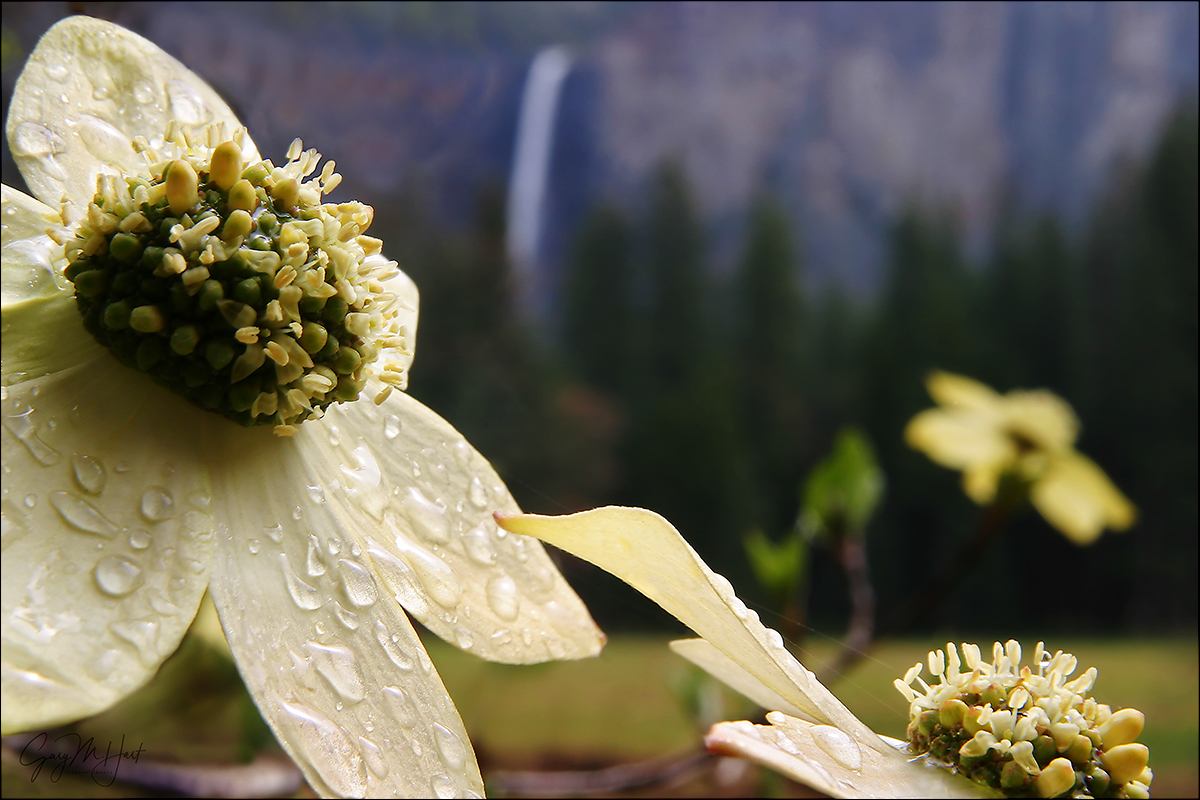
Bridalveil Dogwood, Yosemite
What sets today’s image apart in my mind is that my primary subject is in the foreground. I have the dogwood to thank for that. In fact, even though the results are entirely different, this is the very same tree I used for one of my oldest (and still favorite) images.
When I took my original Bridalveil Dogwood image, I visualized the concept (close dogwood subject, soft Yosemite icon background) on my drive to the park, then spent the day driving around until I found this scene.
Since then, that experience has made me very aware of the relationship between this dogwood tree and Bridalveil Fall, and I can’t help checking it out when the dogwood are in bloom. But, aside from the fact that I wasn’t interested in repeating myself, I couldn’t have duplicated that image even if I wanted to, because so much has changed in the last 20+ years.
First, the conditions were completely different. In the original scene, I benefited from clouds that provided softbox light, and a gentle rain and sprinkled water droplets everywhere. This time I was working with a mostly clear sky that, while less than ideal in many ways, made the backlit flowers (technically bracts, but I’m sticking with flower) and leaves light up as if illuminated from within.
The other significant difference was the tree itself, which had grown so much that my once clear line of sight from the flowers to Bridalveil was now clogged with branches, leaves, and other flowers. So instead of getting super-close to one flower, I identified an inverted v-shaped branch sporting a collection of backlit flowers.
Moving back, I shifted until Bridalveil Fall was framed by the flowers. Then I zoomed my 24-105 lens tight and open the aperture wide for maximum background softness. The flowers swaying in a slight breeze, I bumped my ISO to 800 to ensure a fast enough shutter speed. I took a half-dozen or so image, each with micro-adjustments to the composition, until I was satisfied.
Disclaimer
Is this picture “exceptional”? I have no idea. That really isn’t even my call. In fact, many of my images that feel exceptional to me barely register a reaction from others; then I’ll share an image that feels pretty ordinary to me, and people will rave about it. So who knows? But since chasing other people’s definition of exceptional can make you crazy, I just think I’ll call any image that makes me happy exceptional (in my own personal Universe) and leave it at that.
Lots of Yosemite Photo Workshops Here
Valley View: Variations on a Scene
Click any image to scroll through the gallery LARGE


The Battle of the Brains
Posted on May 3, 2024

Intimate Dogwood, Yosemite Valley
Sony a7RV
Sony 200-600 G
ISO 1600
f/10
1/125 second
Two photographers approach a dense forest festooned with blooming dogwood: One is drawn to a lovely bloom and can clearly visualize a uniquely beautiful image, but he has no idea how to manage his exposure variables to achieve it; the other photographer is so intent on minimizing diffraction while identifying the shutter speed that will freeze the gently swaying bracts without compromising the ISO, that to her, the scene is nothing more than a disorganized assortment of white splashes.
While most photographers don’t fall at these extremes of the creative/analytical continuum, the vast majority do approach their craft with a dominant intuitive or analytical bias, a right-brain versus left-brain struggle with one side or the other significantly stronger than the other. Compounding the problem, rather than simply getting out of the way and letting the strong side do its work, much like an irritating little brother, the less developed (notice I didn’t say “weaker”) side often seems committed to distracting its dominant counterpart.
But every once in a while I run into a photographer who seems to have negotiated a synergistic truce between her conflicting mental camps. She’s able to efficiently analyze and execute the plan-and-setup stage of a shoot, then check-in with her aesthetic counterpart for creative inspiration. As the time to click the shutter approaches, she seamlessly switches between the two camps: the right brain knows how much to soften the background and blur the water, while her left brain knows exactly how to make this happen. The result is images that consistently amaze with their creative inspiration and technical execution.
My job as a photo workshop leader (among other things) is to identify where each photographer falls on this analytical/intuitive spectrum so I can honor and refine the dominant side, and encourage and nurture the less developed side. And after more than 18 years leading photo workshops, I’ve learned that what most photographers perceive as a terminal shortcoming in their creative or analytical aptitude can usually be resolved once it’s untangled from the dominant side.
When I hear, “I have a good eye for composition…,” I know before the “but” exits the photographer’s lips that I’ll need to prove that he’s smarter than his camera (he is). Our time in the field will be spent working on jettisoning the camera’s automatic modes because as smart as it might seem, your camera is not creative. I try to demystify and simplify metering, exposure, and depth management until they become second nature, comforting allies rather than distracting antagonists. Fortunately, despite the fact that much of the available photography education seems designed to intimidate Einstein, laying a foundation for mastering photography’s technical side is ridiculously simple.
On the other hand, before the sentence that starts, “I know my camera inside and out…,” is finished, I know I’ll need to foster this photographer’s curiosity, encourage experimentation, and help her disengage the rules that constrain her creativity. We’ll think in terms of whether the scene feels right, and work on what-if camera games (“What happens if I do this”) that break rules. Success won’t require a brain transplant, she’ll just learn to value and trust her instincts.
Intuition is the key to breaking the rules that inhibit creativity, while simplification and repetition create technical confidence. Alone, these qualities are incomplete; in conflict, they’re mutually exclusive anchors that prevent movement; in concert, their synergy is the foundation of photographic success.
For example
Coincidentally, just this week I happed to find myself in a dense forest festooned with blooming dogwood. Go figure. A few minutes earlier I’d set my workshop group free just upstream from Valley View, and after making sure everyone was content, I grabbed my camera, tripod, and 200-600 lens and went dogwood hunting.
I started by switching on my creative brain and wandering slowly, scanning the surroundings for a dogwood flower (yes, I know they’re technically not flowers, they’re bracts) to isolate from its surroundings. Eventually I made my way across the road, and soon my eyes landed on a single bloom swaying gently in full shade. Its slightly green tint and pristine center (this is where the actual dogwood flowers reside) told me this specimen was young—exactly what I was looking for.
Instead of framing my subject up and clicking, I scanned the background and found a branch with more young flowers a couple of feet away. Positioning myself to align my target flower with the background flowers, I framed up a vertical composition. Briefly engaging my analytical brain, I opened my aperture wide for the absolute softest background, increased my ISO to mitigate the effects of the breeze, and focused on the dogwood’s center. Then I dial my shutter speed until the histogram looked right, checking to be sure my chosen speed could freeze the flower”s gentle bobbing.
My favorite moment when doing these creative selective focus shots is the instant my subject snaps into focus. Suddenly, the world in my viewfinder is completely different from the one outside my camera. In addition to the pillowy background flowers, I liked the way a few rays of sunlight had penetrated the dense branches overhead to illuminate a couple of green leaves in my frame.
My creative brain really liked the framing I’d found, but thought the background could use just a little more definition. So back to my analytical brain I went, stopping down to f/10—just enough to distinguish individual flowers in the soft background. But stopping down also reduced my exposure—since I couldn’t increase my shutter speed to add light, instead I increased my ISO knowing that whatever noise the higher ISO introduced would easily clean up in processing. Click.
Of course this creative/emotional switching doesn’t really happen consciously anymore, but there was a time when I was far more deliberate about the distinction. Like most things in life, the longer I do this, the more unconscious and seamless this switching becomes, and the better my two sides play together.
Workshop Schedule || Purchase Prints || Instagram
More Dogwood!
Click any image to scroll through the gallery LARGE


Natural Synergy: Building Relationships In Nature
Posted on July 24, 2023
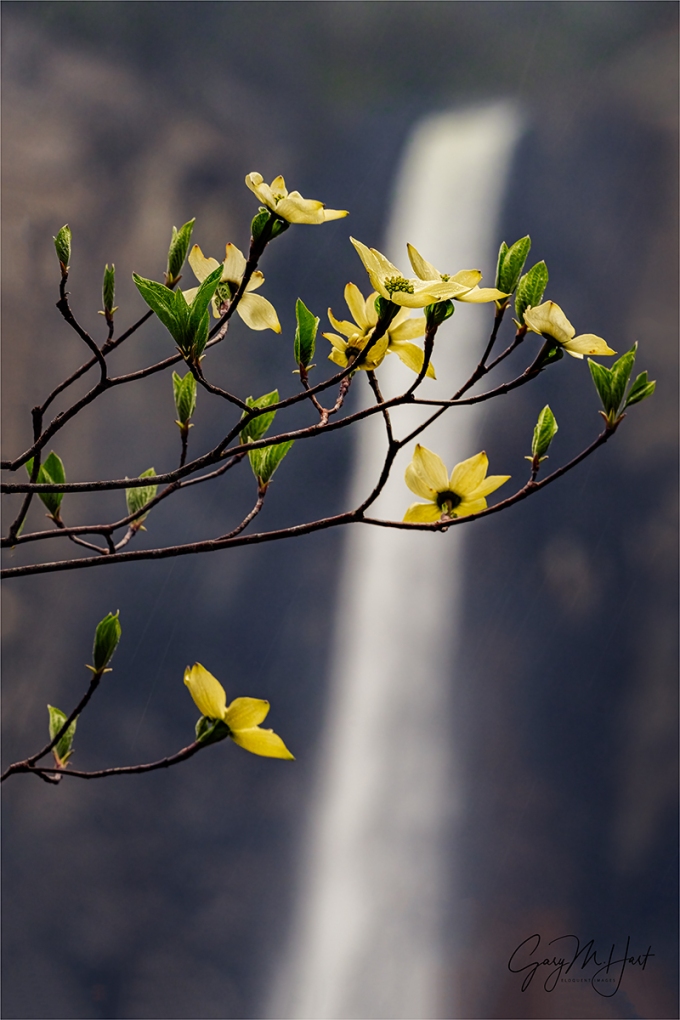
Spring Bloom, Dogwood and Bridalveil Fall, Yosemite
Sony a7R V
Sony 100-400 GM
2 extension tubes (26mm total)
ISO 1600
f/8
1/60 second
After several weeks working through my New Zealand images, I’m giving myself (and you) a break from the land Down Under and returning to Yosemite. Because I absolutely refuse to visit Yosemite in summer, I returned to images from my trip in early May to photograph the dogwood, two subjects on my short-list of favorites.
Looking at these Yosemite images, combined with my still fresh New Zealand memories, reminds me of the extreme good fortune of my life. When I decided to make photography my career nearly 18 years ago, I promised myself I’d only photograph what I love. Not because I believed that’s where I thought I’d have the most success (I wasn’t that calculating), but simply because the only good reason I could come up with for leaving an excellent job with a great company was to do something that gave me joy. Lucky me—today most of my time behind a camera is spent pursuing subjects that touch a special place in my heart, subjects I’m naturally drawn to, camera or not. (And the bills are still getting paid.)
The first emotional magnets that come to mind are the fixed locations, like Yosemite, Grand Canyon, and New Zealand (to name just three) that draw and never cease to inspire me. More transient favorites include things like lightning, rainbows, and reflections, and seasonal subjects like fall color, winter snow, and spring flowers. And of course pretty much anything celestial excites me.
Relationships
As much as I enjoy these subjects individually, I especially love the natural synergy that happens when I can combine two or more in an image. While the Grand Canyon, an erupting volcano, or Yosemite Valley, are special by any standard, pairing the Grand Canyon with a lightning bolt, Kilauea Caldera with the Milky Way, or Yosemite with blooming dogwood always feels better to me than the sum of those individual parts.
This juxtaposition of subjects is so essential to photography that we often do it without thinking. For example, when we happen upon a scene and see El Capitan reflecting in the Merced River—click. Or look at that vivid sunset over the Sierra Crest—click. Nice pictures, but most successful photographers are more strategic and tactical about Nature’s juxtapositions. We find a subject we want to photograph, then figure out other natural elements that might pair well with it. Sometimes that’s simply a matter of walking around until we find an alignment that works; other times it means researching and returning months or years later to photograph the relationship we seek (with no guarantee it will happen).
When planning these shots, it helps me to think in terms of static and dynamic juxtapositions: static being relationships between permanent landscape features (mountains, waterfalls, etc.); dynamic juxtapositions always include at least one ephemeral phenomenon that we can never count on (a rainbow or lightning bolt). I know the places where I can put El Capitan and Bridalveil Fall in the same frame, or Mt. Whitney framed by Mobius Arch (static juxtapositions), timing dynamic elements like Yosemite’s annual dogwood bloom or the full moon setting behind Mt. Whitney require planning and execution.
Visual Motion
But just because an object is static, doesn’t mean an image of it should be; and a dynamic doesn’t automatically translate to motion in a still image. It’s my job to create motion in my still images by encouraging my viewers’ eyes to move through the frame, providing a path for their eyes to follow and/or a place for them to land. Accomplishing this isn’t necessarily difficult, but it does usually require some foresight and physical effort.
Once I’ve arrived at a location and identified my primary subject, I challenge myself to find at least one other element on a different visual plane. Sometimes that’s easy, other times…, not so much. Nevertheless, when my prime subject is in the distance, I look for something closer to balance it; likewise, if my subject is nearby, I want something in the background to complement it.
Foreground or background, sometimes my secondary subject has almost as much visual appeal as the primary subject; other times it’s there simply to balance my frame. Regardless of its aesthetic appeal, my secondary subject’s placement, both relative to the scene’s other visual elements and to the frame’s boundary, can make or break an image. And don’t forget that (lacking explosives) pretty much the only way to change the relative position of two static objects in a photographic frame is conscious positioning of the camera (and the photographer behind it!)—in other words, move!
Visual motion happens in a still image when elements in the frame create actual or virtual lines for the eye to (subconsciously) follow. Tangible lines might be a horizontal horizon, vertical waterfall, or diagonal river. But often it’s up to me to create virtual lines—an implicit, connect-the-dots path between visual elements. Objects in a scene have what I call “visual weight”: some quality like mass, brightness, or color that pulls the eye. After identifying these elements, we can move around until their relative positions in the frame (again subconsciously) move the viewers’ eyes.
The last important relationship consideration is depth. Photography is a futile attempt to render a 3-dimensional world in a 2-dimensional world. Lacking actual depth, we can create the illusion of depth by ensuring that objects with visual weight exist throughout the front-to-back plane. As a general rule I avoid merging these essential visual elements to avoid conflating them on the same plane and defeating the illusion of depth that’s so essential in a two-dimensional image.
Of course every situation is different, so to paraphrase Hector Barbossa (Geoffrey Rush) in The Pirates of the Caribbean, my suggestions here are more guidelines than rules. But they should never be buried so deep in your memory that they’re not available to access and apply as situations arise.
About this image
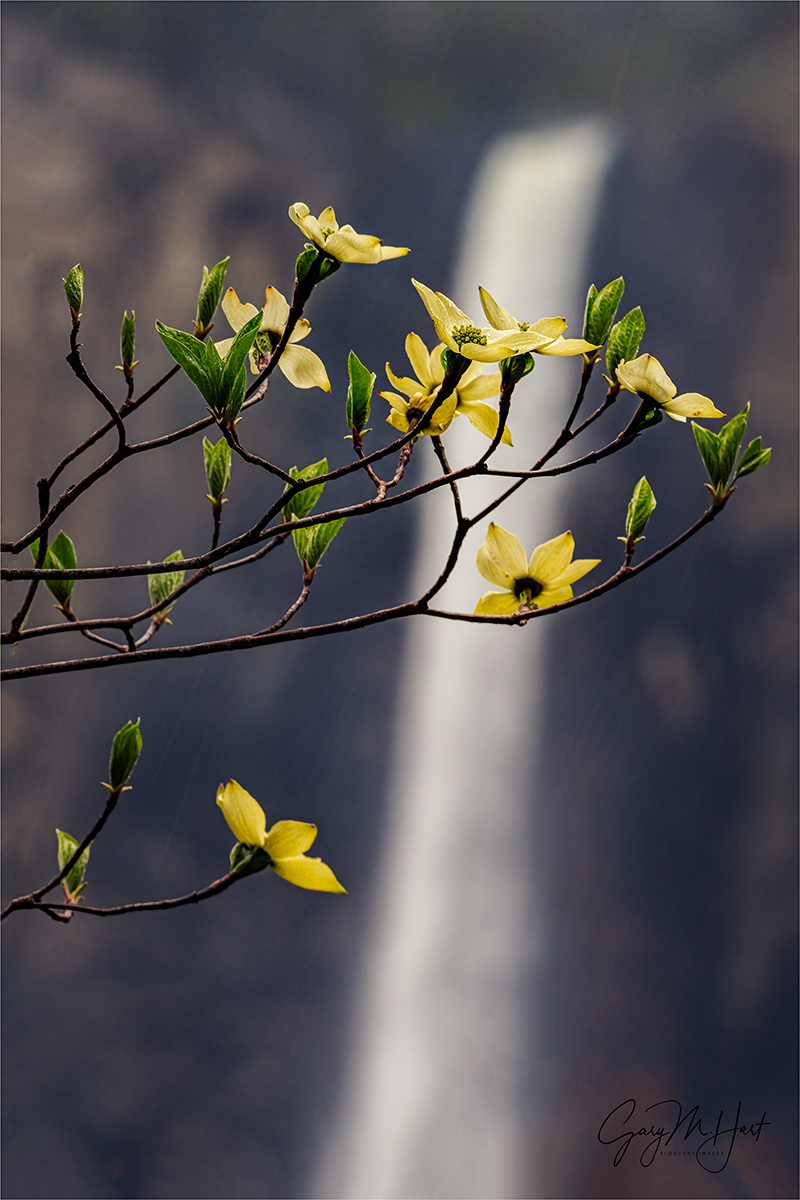
Spring Bloom, Dogwood and Bridalveil Fall, Yosemite
A week or so before capturing the dogwood image I’m sharing today, my brother Jay and I drove to Yosemite hoping to photograph the peaking dogwood bloom with Yosemite’s waterfalls at historic flows. There was indeed lots of water, but a cool spring had slowed the dogwood and they weren’t quite ready.
No problem—based on the dogwood’s premature state I observed in that first visit, I figured they needed another week or so to reach their full spring potential, so a week later Jay and I returned. Finding the dogwood in excellent shape, we spent pretty much the entire day photographing it.

Bridalveil Dogwood, Yosemite
With a light rain falling most of the day, one of the things in the back of my mind was attempting to reprise some version of a dogwood image I’d captured nearly 20 years earlier, one I consider a milestone in my aggressive relationship-seeking approach to photography. On the drive to Yosemite on that wet morning nearly 20 years ago, I decided I wanted to photograph a dogwood with a Yosemite icon in the background. That was the extent of my vision, but I pursued it relentlessly until I found a dogwood bloom I could pair with Bridalveil Fall. The rest, as they say, is history.
My goal on this year’s spring visit wasn’t to duplicate the old image, just my approach: blooming dogwood with Bridalveil Fall in the background. I returned to Valley View and found that original view of Bridalveil Fall blocked by other trees. So I traipsed about the forest looking for blooming dogwood with a clear sightline to Bridalveil Fall. That’s not as easy as you might think, but as you can see, I finally found a relationship that worked.
Instead of the close, wide angle shot I’d chosen all those years ago, this time I set up farther back, using a telephoto to enlarge Bridalveil and compress the distance between the two subjects. Because it was impossible for the dogwood and Bridalveil to be sharp (without focus-stacking, a personal no-no), I just embraced the softness in the fall, which helps the dogwood bracts stand out and makes it the primary subject.
It actually took about ten minutes before I was satisfied with the juxtaposition of dogwood and Bridalveil. Because there was a slight breeze, I bumped my ISO to 1600 for a faster shutter speed. I also played with different f-stops to find the right balance softness and clarity in Bridalveil. I think I like the old image better than the new one, but this one pleases me too, and it was a fun experience.
Natural Synergy
Click any image to scroll through the gallery LARGE


Connections (It’s Personal)
Posted on June 6, 2023
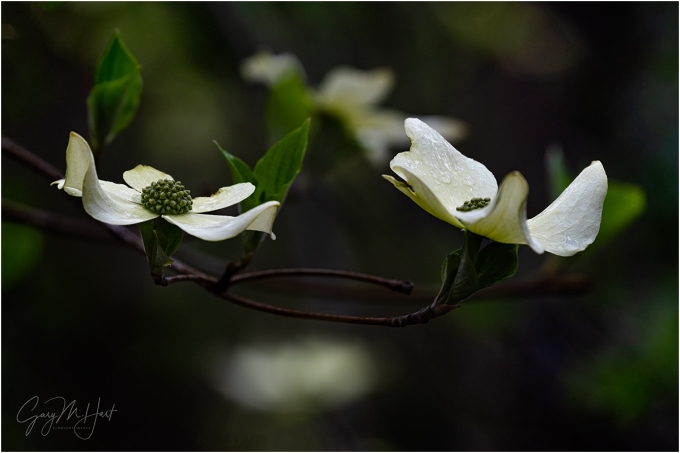
Afloat, Raindrops on Dogwood, Yosemite
Sony a7R V
Sony 100-400 GM
2 extension tubes (26mm total)
ISO 800
f/8
1/200 second
Once upon a time, whenever I heard a photographer say, “That’s exactly what I saw when I was there,” I’d cringe (because that’s impossible). Today, given the proliferation of AI generated and enhanced images, maybe I should rethink my perspective and just be glad that the photographer was there at all.
There’s a lot of buzz in the photography world about AI and its ability to manufacture images. I can’t deny AI’s benefits for many legitimate uses, but creating a landscape image from the comfort of your office chair with just a few words of description? Count me out.
Of course we’ve all seen landscape and nature images that were clearly faked, either through Photoshop manipulation (jumbo moon anyone?) or more recently with the help of AI. Somehow these images manage to fool enough people to generate a host of social media Likes, comments (“stunning!”), and shares, which tells me there’s a subset of photographers whose prime motivation is acclaim. Photography needs to make you happy, so if this makes them happy, I can’t begrudge these photographers the attention they need—my concern is the damage this inclination to solicit attention at any cost does to the credibility of the real photographers.
This is not a rant against image processing. In fact, in today’s world of digital capture, effective processing is an essential part of the creative process (as it has always been for B&W photography). But while the computer is important to digital capture, it’s there to serve the image, not generate it. Because I always want my creativity to happen in my camera, not my computer, I have to start thinking about processing long before I click the shutter. (The digital-capture equivalent of Ansel Adams’ “visualization” approach.)
Of course photography appeals to different people for different reasons. As much as I appreciate the processing power digital capture has brought to photography (especially to color photography—processing wasn’t a practical option for color film/transparency shooters), processing is probably my least favorite part of photography. And I know many excellent photographers who love processing and are far more masterful at it than I am.
Speaking only for myself as a creator and consumer, my photography is motivated by connection. When I create an image, I need to feel a personal connection with my subject before moving on the seeking to convey that connection in an image. This desire for connection also drives my need to write about my images—I pretty much never share a new image until I’ve written about its capture and what the image means to me (hence this blog).
When I view the photography of others, I want to feel like they’re conveying their own connection with the scene, not just trying to show me something pretty—and in so doing, they’re offering me a connection to their world. While every image from every photographer is processed (either by the photographer, by the camera, or both), the best processing is done in a way that allows me to ignore the processing so I can simply connect with the scene.
I realize that “connection” in this context is rather nebulous, but I do think connection helps explain why different images resonate more or less with different people. If you’re a photographer who hasn’t identified your own connections to the world, a good place to start would be to consider the things in your world that ignite that unsuppressible (reflexive?) urge to nudge a friend or loved one, point, and excitedly exclaim, “Look at that!”
“That” could be a dazzling city skyline, a happy dog stretching its head out the window of a passing car, a small child devouring an ice cream cone, a crisp mountain reflection, or an infinite number of other scenes you might encounter in your daily life. My own nudge-and-point (and raise my camera) triggers are almost always something in Nature—anyone spending time with my images (I hope) has a pretty good idea what they are. (Spoiler alert: rainbows, reflections, poppies, dogwood, anything celestial, and much more.) And speaking only for myself, writing about an image is as important as the capture and processing—not only does writing help me distill the feelings the scene provoked, it helps me understand my overall relationships with my subjects.
Even more important to me than the image I create is the in-Nature creation process where the connection actually starts. I’m not saying that I wander the woods with a camera consciously thinking about connections—it’s more a state I naturally fall into while in Nature that compels me to stop and make an image, or to patiently wait for the image to happen.
I know the subjects that resonate with me, and being as active on social media (as I have to be) gives me pretty good insight into the images that do and don’t resonate with others. So before posting a new image, I have a pretty good idea how many Likes, shares, and comments it will generate, but I never let that dictate the subjects I choose, or the images I share.
Just as I don’t share images that don’t thrill me, even when I know they’d be received enthusiastically, I also don’t hesitate to share personal favorites that will most likely generate crickets from the masses. But that’s okay—even though those personal favorites don’t elicit the volume of enthusiasm I’d like, the intensity of the enthusiasm I do receive from these images tells me connections were indeed made.
Today’s dogwood image is one of my potential “cricket” shares. It likely won’t thrill as many people as some of my more colorful, in-your-face-beauty landscapes do, but I also suspect there will be a few people with whom it connects intensely. It’s one of several I captured and processed on last month’s quick Yosemite overnighter with my brother (click the link for the full story).
Speaking of connection, few things in photography make me happier than exploring a forest like this, searching for intimate scenes that can only be revealed by a camera. When I get into a scene like this, with no one else requiring my attention and knowing I can be there as long as I need to be, time loses all meaning.
What I enjoy most about working these scenes is how different the world looks through my viewfinder than it looks to my eye. For example, the backgrounds in all of these forest dogwood images are almost always busier than what the image conveys. Through careful positioning, framing, depth management, and exposure, I’ve learned how to eliminate, simplify, complement, and disguise busy backgrounds.
My process starts with identifying a dogwood (or whatever the scene’s subject is) that I can isolate from its nearby surroundings, then moving around until I find a complementary background to be rendered as detail-less color and shape. This is almost always achieved by focusing close on a carefully chosen spot, usually using a telephoto zoomed to near the maximum focal length (or occasionally with my 90 macro), often with extension tubes to focus even closer (further limiting depth of field). I usually shoot these wide open (widest aperture for minimal DOF), but in this case I stopped down slightly to get a little more definition in the background dogwood.
Could I have stayed home and done something like this on my computer? Perhaps, but why rob myself of all that joy?
Workshop Schedule || Purchase Prints || Instagram
Personal Connections
Click any image to scroll through the gallery LARGE


The Dogwood Days of Spring
Posted on May 8, 2023
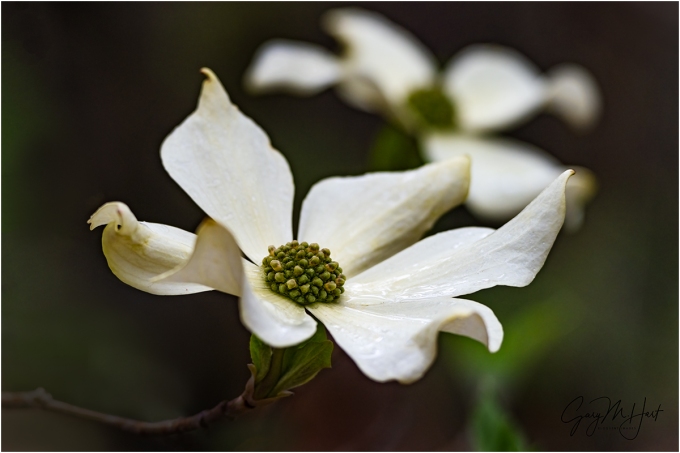
Dogwood Blooms, Yosemite
Sony a7R V
Sony 100-400 GM
2 extension tubes (26mm total)
ISO 800
f/5.6
1/250 second
In my first 14 years leading photo workshops, I never had to cancel a workshop. I have had to scramble a bit thanks to government shutdowns, hurricanes (really), closed roads, and power outages, but no cancellations. That record changed abruptly in spring 2020 when COVID-19 shut down the world, eventually costing me 14 workshops. Then, just as things started to reopen during the pandemic, extreme fire danger in the Eastern Sierra forced me to shut down another workshop.
By doubling up on workshops, and thanks to the patience and understanding of my affected customers, over the subsequent couple of years I was ultimately able to weather the cancellation storm with minimal (manageable) long term damage. In fact, this year’s second Iceland workshop in January was the final COVID make-up workshop—with clear sailing ahead, what could possibly go wrong?
Well…. First, a historically wet and cold winter delivered a historically deep Sierra snowpack. Then, after a cool spring, unseasonably warm temperatures last week goosed the dormant Sierra snowmelt, much of which had nowhere to go but Yosemite Valley, which forced closure of Yosemite Valley, flushing my May Yosemite Moonbow and Wildflowers photo workshop along with it. Not only was this bad news for my customers (not to mention my business), spring happens to be a personal favorite time to be in Yosemite. And this year I was particularly looking forward to all the water in Yosemite’s waterfalls and vernal pools.
For those keeping score at home, that’s 16 workshops lost in 3 years: 1 to fire, 1 to flood, and 14 to pestilence—clearly (as my wife pointed out), famine can’t be far behind. (Anyone who has endured a dinner at the Yosemite Valley Lodge cafeteria knows that’s not as much of a stretch as it sounds.) But seriously, unpredictability is a prime risk of pursuing profession so dependent on the fickle whims of Mother Nature. Still...
This month’s lost workshop was especially frustrating because the National Park Service, looking at the record Sierra snowpack and forecast hot temperatures, preemptively announced the closure of most of Yosemite Valley on the Wednesday before my workshop, which was scheduled to start the following Monday. The closure, they said, would begin at 10 p.m. Friday and continue until Wednesday at the earliest (their words), and possibly longer. Since my spring workshop is set entirely in Yosemite Valley (this year the high country will closed by snow until at least June), and was scheduled to span Monday through Thursday, I had no choice but to cancel. Immediately upon receiving the news, I scrambled to notify the workshop participants, cancel my lodging, and start the process of rescheduling everyone.
So imagine my surprise when, on Saturday, the NPS announced that Yosemite Valley would reopen Sunday, 3 days sooner than their promised “earliest.” Sigh. I instantly contacted my workshop hotel to see if it was too late to reinstate my group’s lodging (it wasn’t), then reached out to the cancelled group to find out who was still able to attend. I told them that even if only half were still available, I’d go ahead with the workshop as originally planned (but also that I’d still honor my cancellation policy for those who could no longer make it). Turns out all but 3 had already cancelled flights or made other plans, sadly confirming that my cancelled workshop count would officially hit 16.
As frustrating as this experience has been, I can’t really fault the NPS. The current Yosemite snowpack is truly unprecedented, and with no upstream dams on the Merced River or its tributaries, there’s absolutely no control over the runoff—the snowpack will send as much water as it wants to, whenever it wants to, and we downstream humans just need to deal with it. Which is exactly what the NPS did: In an abundance of (justifiable) caution, they decided to act proactively by clearing Yosemite Valley before the forecast extreme heat put them in react and evacuate mode. So while I appreciated the advance warning, since the snowmelt wasn’t as extreme as predicted, they soon reversed course—unfortunately too late to save my workshop.
All this got me thinking about how difficult it must be to manage Yosemite. With around 4 million visitors per year, Yosemite is one of the most visited national parks in the United States (the world?). Keeping all these people both safe and happy, while simultaneously protecting the wellbeing and beauty of this most special resource seems like an impossible task.
Yosemite’s total footprint is nearly 1200 square miles (slightly smaller than Rhode Island), but most of this area is remote backcountry that’s accessible only on foot. And instead delighting in the joys of High Sierra hiking and backpacking, virtually every one of Yosemite’s annual visitors tries to cram into the (slightly less than) 6 square miles of Yosemite Valley.
The result is, on a typical summer day, literally more cars in Yosemite Valley than parking places. Those lucky enough to score a parking spot are wise to leave their car there for the duration of their stay and navigate the park on foot, bicycle, or shuttle. In such a compact area teeming with pedestrians, cyclists, and vehicles, each with their own agenda—picture the occupants of Car 1 (including the driver) craning to admire the waterfalls and monoliths overhead, as the driver of Car 2 in front of them spies a pedestrian (or or cyclist, or deer) and slams on the brakes (SMASH!)—it’s a miracle there isn’t even more mayhem than there is.
Another problem the NPS constantly fights is the people who believe the rules only apply to everyone else and decide it’s okay to traipse through a clearly off-limits meadow, or climb over a protective guardrail: “I’m just one person and I’ll be quick”(photographers are especially frequent offenders). And then there are the people who treat Yosemite’s wildlife like personal pets who they need to feed and pose with for selfies.
Witnessing all this bedlam has caused me to realize that, despite my love for Yosemite and the care I take to follow the rules (and to ensure that my workshop students do as well), my mere presence in Yosemite risks making me part of the problem. As a result, I no longer schedule workshops for weekends, or during Yosemite’s most crowded months. In fact, I now refuse to visit Yosemite for any reason from mid-May through mid-October—even when someone offers to pay me for a private tour.
Though I generally resist doing anything in Yosemite in May, this month’s just-cancelled workshop was right on the cusp my self-imposed workshop curfew. But because the May full moon (necessary for a moonbow) fell in the first week the month, the dogwood bloom usually peaks the first week of May, and by starting May 1 I could completely avoid a weekend, I went ahead and scheduled it. I worried a little about the crowds, but never dreamed flooding would be my downfall.
On the other hand, the Yosemite Valley shutdown wasn’t without a small personal upside. Because I schedule my Yosemite workshops only for the times I’d most want to be there myself, I don’t get a lot of opportunity to photograph Yosemite on my own, during my favorite times to be there. But thanks to the cancellation, I was able to make two (!) personal trips to Yosemite—the first, when I’d normally have been doing last-minute workshop prep, was nice but turned out to be a complete photographic dud; the second, on what would have been the workshop’s final two days, was much more photographically successful.
Anxious to see Yosemite at peak water before Yosemite Valley closed, my brother Jay and I departed early on the Friday morning of the 10 p.m. closure day. Though the forecast called for nothing but blue skies, I hoped flooded meadows, blooming dogwood, and relatively few people would compensate. We struck out on all three fronts: while there was definitely a lot of water in the falls and meadows, the Merced wasn’t nearly as high as I’d seen it in prior wet springs; the dogwood were just starting, still quite tiny and mostly green; and the place was absolutely packed with people, to the point where parking was a real challenge. So we circled the valley a couple of times and drove home.
By the following week (the week my workshop had been scheduled for), the weather had cooled significantly and rain and snow had returned to the Sierra. Not only were these cloudy/stormy conditions better for photography, I figured (hoped) by then the dogwood would be really starting to pop. So on Wednesday afternoon Jay and I drove back to Yosemite, checked-in to our hotel, then made it into the park with about an hour to photograph before sunset.
With the dogwood blooming as hoped, we stopped for about 30 minutes to photograph the flowers (yes, I know they’re technically bracts, not flowers) in a light rain near the Pohono Bridge, then made it to the east side of the valley in time to catch a couple of reflections of Yosemite Falls before dark. We waited in the car for complete darkness, hoping the moon would pop out and give us a moonbow at the base of Upper Yosemite Fall, but the clouds seemed pretty committed, so we retreated to the hotel.
The next day was all about the dogwood, one of my absolute favorite things in the world to photograph. We stopped at most of my favorite dogwood spots, photographing a lot of close selective focus scenes like this one, but also some scenes with dogwood in the foreground and Bridalveil Fall or El Capitan in the background. A persistent light rain only made things better. In short, photography heaven.
Dogwood Blooms, Yosemite
This beautiful specimen I found across the road from Valley View, where we ended up photographing for almost an hour-and-a-half. Jay started up the road, while I settled in across from the parking lot and slowly made my way up the road, working both sides as I went. Using my 100-400 exclusively, mostly with extension tubes as well, I started with dogwood that allowed me to include Bridalveil Fall in the background, then the Merced River, and finally simply concentrated on individual flowers, or groups of flowers.
As always, my objective in these close focus scenes is to find a flower or flowers with a complementary background: other flowers, parallel trunks, dark shade, water, and so on. After an hour or so I came across a large tree bursting with large, fresh dogwood blooms and went to work.
It wasn’t long before I found this flower with everything I wanted: it was in perfect shape, with a fully intact central flower cluster and none of the spots or taters that mar older blooms; it glistened with rain; in the background was a similarly flawless specimen; and everything was surrounded by splashes of bright green embedded in dark shade.
I composed as tightly as I could while still including all of both flowers and the arcing branch supporting the nearest one. Even though the breeze was minimal, given limited light I set my ISO to 800 to guard against subtle motion blur. I knew I couldn’t get the entire bloom sharp, so I took special care to focus on the center, then magnified my capture to doublecheck focus after each click.
It’s never a good thing to cancel a workshop, for many reasons, but sometimes good things can come from bad situations if you simply maintain an open mind and keep moving forward.
Workshop Schedule || Purchase Prints || Instagram
A Dogwood Gallery (including a few new ones from this trip)


Every Picture Tells a Story
Posted on November 14, 2021

Autumn Evening, El Capitan, Yosemite
Sony a7RIV
Sony 24-105 G
1/15 seconds
F/10
ISO 100
Let’s have a show of hands: How many of you have been advised at some point in the course of your photographic journey to “tell a story with your images”? Okay, now how many of you actually know what that means? That’s what I thought. As good as the “tell a story” advice is (it is indeed), many photographers, with the best of intentions, parrot the advice simply because it sounded good when they heard it. But when pressed for details, are unable to elaborate.
Telling a story with a photo is probably easier when photographers can physically stage subjects and light to suit their objective (an art in itself), or in journalistic photography intended to distill the the essence of an instant by connecting it to an easily inferred chronology: a homeless man feeding his dog, dead fish floating in the shadow of belching smokestacks, or a wide-receiver spiking a football in the end zone.
This isn’t to say that we landscape photographers can’t tell stories with our images, or that we shouldn’t try. Nor does it mean that any one photographic form is inherently more or less creative than another. It just means that the rules, objectives, advantages, and limitations differ from form to form. Nevertheless, simply advising a landscape photographer to tell a story with her images is kind of like a baseball coach telling a pitcher to throw strikes, or a teacher instructing a student to spell better. Okay, fine—now what?
Finding the narrative
First, let’s agree on a definition of “story.” A quick dictionary check reveals that a story is “a narrative, either true or fictitious … designed to interest, amuse, or instruct….” Okay, that works.
The narrative part is motion. Your pictures need it. Narrative motion starts with a connection that grabs a viewers, pulling them into the frame, then compelling them to stay with visual motion that moves their eyes through the frame, providing a path to follow and/or a place to land. Put simply, the viewer needs to know what they’re supposed to do in the image.
While narrative motion happens organically in media consumed over time, such as a novel (in the mind’s eye), movie, or video, it can only be implied in a still photograph. And unlike the staged or journalistic photography mentioned above, landscape photographers are tasked with reproducing the world as we find it, in a static medium—another straitjacket on our narrative options. But without some form of narrative motion, we’re at a dead end story-wise. What’s a photographer to do?
Photography as art
Every art form succeeds more for what happens in its consumer’s mind than for what it delivers to the consumer’s senses. Again: Every art form succeeds more for what happens in its consumer’s mind than for what it delivers to the consumer’s senses. A song that doesn’t evoke emotion, or a novel that doesn’t paint mental pictures, may entertain but is soon forgotten.
Just as readers of fiction unconsciously fill-in the visual blanks with a mental visualization of a scene on the page, viewers of a landscape image will fill-in the narrative blanks with the personal stories the image inspires. In other words, an image should offer a place for the viewer’s own story to unfold.
Of course the story we’re creating isn’t a literal, “Once upon a time” or (with all due respect to Snoopy) “It was a dark and stormy night” story. Instead, the image we make must connect with our viewers’ stories to touch an aspect of their world: revive a fond memory, provide fresh insight into a familiar subject, inspire vicarious travel, to name just a few possible connections. If we offer images that tap these connections, we’ve given our image’s viewers a reason to enter, a reason to stay, and a reason to return. And most important, we’ve given them a catalyst for their internal narrative. Bingo.
Shoot what you love (not what you think your audience will love)
Think about your favorite novels. While they might be quite different, I suspect one common denominator is a protagonist with whom you relate. I’m not suggesting that immediately upon finishing that book you hopped on a raft down the Mississippi River, or ran downtown to have a dragon tattooed on your back, but in some way you likely found some personal connection to Huck Finn or Lisbeth Salander that kept you engaged. And the better that connection, the faster the pages turned.
And so it is with photography: Our viewers are looking for a connection, a sense that there’s a piece of the photographer in the frame. Because we can’t possibly know what personal strings our images might tug in others, and because those strings will vary from viewer to viewer, our best opportunity for igniting their story comes when we share our own relationship with a scene and let viewers find their own connection.
What? Didn’t I just say that it’s the viewer’s story we’re after? Well, yes—but really what needs to happen is the viewers’ sense of connection between our story and theirs. If you focus on photographing the scenes that most move you, those scenes (large or small) that might prompt you to nudge a loved-one and say, “Oooh, look at that!,” the more you’ll see and the greater your chance of establishing each viewer’s feeling of connection. Whether you’re moved by towering mountains, crashing surf, delicate wildflowers, or prickly cactus, that’s where you’ll find your best images.
Where did you get those shoes?
The cool thing is that your viewer doesn’t need to understand your story; she just needs to be confident that there is indeed a story. That’s usually accomplished by avoiding cliché and offering something fresh (I know, easier said than done).
For some reason this makes me think of Steely Dan lyrics, which rarely make sense to me, but were always fresh and I never for a second doubted that they did indeed (somehow) make sense to Donald Fagen. In other words, rather than becoming a distraction, Steely Dan’s lyrics were a source of intrigue that pulled me in and held me. So when I hear:
I stepped up on the platform
The man gave me the news
He said, You must be joking son
Where did you get those shoes?
I’m not bewildered, I’m intrigued.
These lyrics aren’t trying to tap my truth, they simply reflect Donald Fagen’s and Walter Becker’s truth (whatever that might be).
Even though I usually have no idea what Steely Dan is talking about, the vivid mental picture their lyrics conjure (which may be entirely different, though no more or less valid, than your or their mental picture) allows me to feel a connection. You, on the other hand, may feel absolutely nothing listening to “Pretzel Logic,” while “I Want To Put On My My My My My Boogie Shoes” gives you goosebumps for KC and the Sunshine Band. Different strokes….
Returning from the abstract to put all this into photographic terms, the more your images are true to the world as it resonates with you, and the less you pander to what you think others want to see, the greater the chance your viewer’s story will connect with yours.
About this image
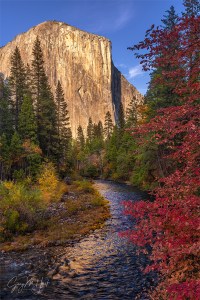
Autumn Evening, El Capitan, Yosemite
One of the things I’ve tried to do during the pandemic is make my workshop groups a little smaller, dropping down from 12 participants plus me and the photographer assisting me, to more like 8-10 participants plus me and my second photographer. Not great for my bottom line, but safer and easier to manage in this time of social distancing.
In my Yosemite Fall Color and Reflections photo workshop that wrapped up a little more than a week ago, not only did I enroll fewer students, I also had a couple of last minute cancellations that I chose not to fill after my assistant photographer had to bail too. The result was a group of 6 photographers plus me, exactly half my normal group size.
One big advantage of this downsized group was that I was able to take them to some views that I think are too small for a normal-size group—I show them where these spots are so they can go on their own, but that means I don’t get to visit.
One of these locations is the view of El Capitan in today’s image. I’ve always liked this spot for the way the Merced River guides the eye right to El Capitan, and for the trees that frame the scene. The result is a clear path for the viewer’s eye to follow, and an obvious destination for they eye to land.
This scene is nice in any season, but I find it especially nice in autumn, when the nearby dogwood flashes its extreme red, and splashes of yellow accent the towering evergreens upstream. We hit the jackpot on this visit, with the dogwood at its crimson best, and the late afternoon light warming the granite and reflecting gold in the river.
The view here is elevated about 15 (very) vertical feet above the river. Armed with my Sony a7RIV and 24-105 G lens, I planted my tripod right on the edge to eliminate a few foreground distractions, and used the dogwood to frame the right side of my scene, moving as far to the right as I could with merging the red leaves with El Capitan. Though the rich blue sky nicely complemented the sunlit granite, and I was grateful for a few wisps of clouds, I wasn’t particularly excited about the sky and decided to put the top of my frame just a little above El Capitan.
With my composition set up, I shot several frames, some with my polarizer oriented for maximum reflection, some for minimum reflections. When it was time to review and process my images from this shoot, I chose this one with the reflection dialed down because the fall color is more vivid (less affected by glare), and the subdued El Capitan reflection was bright enough, and stood out better against the polarizer-blackened water.
Workshop Schedule || Purchase Prints || Instagram
Every Picture Tells a Story
Click an image for a closer look, and to view a slide show.


I Love Trees
Posted on October 31, 2021

Redwood in Autumn, Tuolumne Grove, Yosemite
Sony a7RIV
Sony 24-105 G
1/5 second
F/16
ISO 400
I love trees, and try to feature them in my images as much as possible. When I say “feature,” I don’t mean simply including trees in an image (pretty hard to avoid as a landscape photographer with an affinity for California’s foothills and mountains), I mean actually using a tree or trees as the basis for my composition.
Given my love for trees, I’m blessed to live in California, where we have many beautiful arboreal specimens, in all shapes and sizes. Sadly, when most people think about California trees, their mind usually jumps to palm trees (one of my least favorite trees and not nearly as ubiquitous in most of the state as most people believe). But when I think about California trees, I go to our foothill oaks, gnarled bristlecones, and regal redwoods.
In fact, in a state with more than its share of unique natural features, California’s giant sequoia trees stand out—both figuratively and literally. It’s no exaggeration to say that the first sight of these massive giants will drop even the most immutable jaw.
Many outside the state don’t that we have two very distinct versions of redwood in California: there’s the coastal redwood, which is also quite massive and sometimes even slightly taller than its Sierra cousin. A coastal redwood can grow up 370 feet, while the giant redwoods top out at around 300 feet. And though a mature coastal redwood’s trunk might grow to more than 20 feet wide, that’s dwarfed by the 36-foot diameter of the General Sherman giant sequoia tree in Sequoia National Park. The giant redwoods also win the longevity battle, with some living more than 3000 years, while the coastal redwoods top out at around 2500 years.
Unfortunately, many people visit California with redwoods on their must-see check list, drive up or down the coast to the nearest redwood grove, check the been-there box, and return home without even realizing they missed the even larger trees farther east. (I won’t get into the debate of which redwood experience is “better,” except to say that in my mind, the coast redwood experience is more about the mystical stillness of the grove, while the giant redwood experience is more about the mind boggling mass of individual trees.)
In my previous blog post, I wrote about my recent visit to Tuolumne Grove in Yosemite. With clouds and occasional sprinkles, conditions for photography were ideal. But on my hike down, I was so struck by the electric fall color of the dogwood (also on my list of favorite trees) and other deciduous trees, I almost didn’t make it down to the redwoods.
Thankfully, I did make it. But getting there was only half the battle because redwoods’ size makes them really hard to photograph—capturing a redwood from top to bottom requires a combination of distance and wide angle that diminishes its unprecedented mass in a photo. And to me the most impressive part of a giant redwood is that massive girth.
On this visit I concentrated on finding large trees surrounded by fall color, meandering along the half-mile loop through the grove, enjoying the peaceful ambiance while keeping my eyes peeled for a suitable composition. Every once in a while I’d set up my tripod and click a frame, but whether it was a distracting trail or fence (nothing manmade in my images), or just a less than ideal vantage point (you can’t just wander haphazardly among these shallow-rooted giants), I started heading out of the grove without feeling like I had any real keepers.
Trudging back up the hill and about to exit the grove, I came across a striking redwood, one of the largest I’d seen that day. I realized that by standing in just the right spot and pressing tightly against the low wood fence, I could frame the broad trunk with an assortment of red and yellow dogwood, ferns, and other fall foliage. I stayed here for at least 20 minutes, trying a variety of perspectives and focal lengths before finally landing on this one. (This is also about the time I discovered an especially stupid and embarrassing mistake that I promise to share in a future “Photographers are Stupid” post.)
This shoot was gratifying for many reasons, but especially because, despite my love for trees and the relatively close proximity of the giant sequoias, I have none in my portfolio. Now I do.
Bonus tip
If you love trees (especially redwoods), or just think your world might be made a little better by improving your relationship with trees (spoiler alert: it will be), drop everything you’re reading and pick up The Overstory, by Richard Powers. You’re welcome.
Workshop Schedule || Purchase Prints || Instagram
Trees (including a palm tree!)


Yosemite’s Intimate (and Underrated) Beauty
Posted on October 24, 2021

Dogwood in Autumn, Tuolumne Grove, Yosemite
Sony a7RIV
Sony 24-105 G
1/6 second
F/16
ISO 400
Yesterday I got to spend a day in Yosemite. On my drive to Yosemite, In the back of my mind I was thinking that the day’s forecast of clouds with a chance of rain would be perfect for the intimate scenes I love so much. One of my go-to spots for this kind of photography is Bridalveil Creek, but it’s closed while NPS overhauls parking and access (how much longer will this take?!). As I started considering other options, it occurred to me that a long overdue visit to Tuolumne Grove might be in order.
In Yosemite, Mariposa Grove gets most of the attention from those who want to marvel at massive redwood, and with good reason—it’s by far the largest of Yosemite’s three sequoia groves, and has the largest trees. Mariposa Grove also has the most tourist-friendly infrastructure (a “feature” partially mitigated by a recent NPS overhaul designed to reduce human impact on the sequoias and their surroundings).
Of Yosemite’s two smaller sequoia groves, Merced and Tuolumne, I’ve always been partial to Tuolumne Grove—partly because of familiarity (it’s the grove I grew up visiting because it was closer to home), but also for its intimacy, and the abundance of photogenic dogwood lining the trail to-and-from and mingling among the big trees. In fact, I’ve had better luck photographing the grove’s dogwoods than its redwoods because, well, redwoods are hard (a topic for another day).
One “problem” with photographing Tuolumne Grove (and any other redwood grove) is that it requires clouds to prevent a distracting hodgepodge of highlights and shadows that test any camera’s comfort zone, and clouds in California are relatively rare. And the difficulty of doing justice to the size of a redwood tree in a still photo probably makes me guilty of not prioritizing Tuolumne Grove. With limited time and a surplus of more heralded subjects, most of my time in Yosemite is spent elsewhere.
With the clouds really starting to settle in, after lunch I decided to make the drive up to Tuolumne Grove. While I had no illusions of great success with the redwoods themselves (but who knows?), I looked forward to exploring the forest lit by nature’s softbox and dressed in fall color.
I knew the dogwood in Tuolumne Grove would be turning its autumn red, but I had no idea that I’d find entire hillsides saturated with a kaleidoscope of peak reds, oranges, and yellows, mixed with a few shades leftover green. In fact, the trail to the grove was so beautiful, it took me more than an hour to make the one mile hike down to the redwoods.
As much I love the grand views and dramatic skies that seem to attract a lot of attention, photographing intimate views of nature is probably my favorite kind of photography. Even in Yosemite, with its collection of iconic waterfalls and granite monoliths, I’m never happier than when I’m photographing the smaller scenes that aren’t recognizable as Yosemite.
But as beautiful as the surroundings on the were trail this afternoon, I really struggled to find a composition that did it justice. Instead of insisting on a composition with the elements I consider essential to a good image (a path for the eye to follow, strong visual anchor, no distracting elements), I just pointed in the direction of anything pretty (pretty much everywhere I looked) and started clicking.
Eventually this approach led me to a large dead tree in an area scarred by a recent fire. Scrutinizing my frame, I instantly realized I’d found my visual anchor. After that, my task became mostly a matter of moving around to eliminate all signs of the nearby trail, maximize the color behind the tree, juxtapose the foreground logs into something that wasn’t a disorganized (distracting) jumble, and eliminate the bright sky visible through the trees up the hill. (Even though it was cloudy, including sky that was much brighter than the forest would have pulled my viewers’ eye away from the colorful scene that was the whole point of the image, and reminded them of the world outside my frame.)
One more thing
In my previous post I sung praises of my (Breakthrough) polarizer, but I can’t emphasize too much what a difference removing the wet sheen from the leaves in this scene did for the color. If you think a polarizer is just to darken blue sky, please do yourself a favor and try it for your next fall color shoot.
Intimate Yosemite
Click an image for a closer look, and to view a slide show.


Photography and the Art of Compromise
Posted on May 2, 2021
Dogwood Trio, Merced River, Yosemite
Sony a7RIV
Sony 100-400 GM
1/80 second
F/9
ISO 800
The dilemma
Photography is all about compromise. For example, while everyone wants a lens that’s sharp, fast, compact, and cheap, the most we can usually get is two of these things. And photographers’ compromises aren’t limited to our equipment. Simply adding light to a scene can lead to frustrating, make-or-break compromises. Freezing a flower bobbing in an afternoon breeze requires a fast shutter speed. But increasing shutter speed means less light, forcing me to choose between opening my aperture at the cost of depth of field, or increasing my ISO and living with more noise. What’s a photographer to do?
The foundation
The bottom line for me is any compromise, no matter how small, is not acceptable unless it’s necessary.
I approach each scene knowing that my Sony Alpha camera’s (currently an a7RIV) “ideal” ISO is 100—this is the ISO that render’s the cleanest (least noise) image. I’m going to shoot everything at ISO 100 unless I have a specific reason not to. (Or I forgot to reset it from the prior image, always a possibility.)
I also approach my scenes with the understanding that my lens has an ideal f-stop range that I want to stay in unless circumstances dictate otherwise. Because I rarely take the time to test every lens at every possible focal length and f-stop combination, I usually make the mostly safe assumption that my lenses are sharpest between f/8 and f/11. Wide open or stopped all the way down, most lenses tend to be a little less sharp, especially in the corners. And stopping down to a small aperture also increases image softening diffraction (the spreading if light that happens when it passes through a small opening).
Shutter speed manages motion, but using a tripod takes camera motion out of the equation, which means I never need to compromise my ISO or f-stop to avoid camera shake. And as a landscape photographer, most of my subjects are stationary, so whenever possible, I use my camera’s native ISO (100), an f-stop between f/8 and f/11, and control my exposure with the shutter speed: If nothing is moving, what difference does it make if my shutter speed is 1/10 second or 10 seconds? (Hint: None.)
But…
Nature is not static, and sometimes I need to deal with motion in my scene. Whether it’s a tumbling cascade, wind-blown flower, or the celestial sphere circling above, I have to decide the shutter speed that achieves my desired motion effect. Or perhaps getting a frame sharp from foreground flowers to distant peaks forces me to stop my lens all way down to f/22, or capturing foreground detail on a moonless Milky Way night requires me to open up all the way to f/1.4. Either way, compromise has entered the equation.
When compromising my exposure settings it helps to know the limits of my equipment, how far I can push my exposure choices into the compromise zone without significant, unrecoverable quality loss. For example, while my camera’s native ISO is 100, I know I can push it much higher and still get a very usable image. And my Sony lenses are still sharp enough outside their ideal f-stop range that I don’t hesitate to use whatever f-stop the situation calls for. (This quality isn’t exclusive to Sony—other quality cameras and lenses do quite well when pushed to extremes.)
Compromise my image quality to achieve a desired result reduces my margin for error, making it extremely important that I make the right choices. Probably the most extreme compromise situation I encounter is the moonless-night darkness necessary for photographing the Milky Way. Even with my fastest lens, the Sony 24mm f/1.4 GM, wide open, to get a shutter speed that avoids stretching the pinpoint stars to little dashes, I have to push my camera’s ISO beyond thresholds I never imagined would be possible just a few years ago. This forces choices like, do I go with ISO 6400 and less noise but more star motion (longer shutter speed), or ISO 12800 and more noise but less star motion?
It would be nice if there were absolute answers to these compromise questions, but that’s rarely the case. Usually it’s matter of experience-based reckoning shaded by multiple choice processing options. In other words, I make the best guess I can, and often hedge by trying my second-, third-, and (sometimes) fourth-best guess. With several images to choose between, I scrutinize each closely and decide which will give me the best result.
About this image
I’m thinking about all this compromise stuff because I just processed this image from last week’s Yosemite spring workshop. The dogwood were exploding throughout Yosemite Valley, so my group spent several sessions dedicated mostly or entirely to dogwood. With my favorite Yosemite Valley dogwood zone closed due to roadwork, most of our dogwood time was spent on Northside Drive near Valley View.
I look for dogwood flowers or branches I can isolate against a strong background, and quickly landed on this one above the Merced River. It was late afternoon and the granite wall beneath Cathedral Rocks was catching the warm sunlight, spreading its gold reflection on the Merced River. With my Sony 100-400 GM lens (on my Sony a7RIV) to isolate the branch, I shifted position and focal length until I arrived at a composition that set the dogwood blooms against the gold background, framed by soft (out of focus) dogwood festooned branches in the background. I experimented with several f-stops before deciding f/9 gave me the best combination of sharp dogwood and soft background.
The problem was, at ISO 100 and f/9, getting the exposure I wanted meant a shutter speed of 1/10 second, not workable in the afternoon’s gentle but steady breeze. So I increased my ISO to 800, which gave me a 1/80 second shutter speed. A quick magnification of the image in my LCD told me I’d nailed the sharpness, but just in case, I increased the ISO to ISO 1600, for a 1/160 second shutter speed. (Turns out I didn’t need the faster shutter speed, but better to have it and not need it than need it and not have it.)
The Art of Compromise


The evolution of a landscape photographer
Posted on January 24, 2019

Dogwood Trio, Yosemite
Sony a7RIII
Sony 100-400 GM
ISO 400
f/14
1/50 second
One of my earliest photographic lessons was that clicking a picture of a beautiful subject, no matter how beautiful, does not ensure a beautiful result. A vivid sunset can indeed be quite pleasing to the eye, but picture of that sunset riddled with rooftops and telephone poles—well…, not so much. This got me thinking more about the individual components of a beautiful scene, and how I might best emphasize them and eliminate distractions.
Like most landscape photographers, I started with the low hanging fruit, concentrating on sunrises and sunsets in beautiful locations, but it wasn’t long before I realized that I wasn’t the only person doing this. Of course I haven’t stopped targeting this obvious beauty, but I also started looking for ways to capture nature’s more subtle beauty.
A Yosemite sunset, where everything in the scene is at infinity and stationary, can be captured on today’s cameras in full automatic mode. But framing, focusing, and freezing/blurring more intimate subjects requires complete mastery of motion, depth, and light. This mastery requires a clear understanding of the exposure variables: shutter speed, f-stop, and ISO. Fortunately, I had the advantage of cutting my photographic teeth back before cameras could control every aspect of exposure and focus, and with no ability to check my decision until the pictures returned from the lab, the wrong exposure choices wasted precious dollars—a great motivator.
One of the first intimate subjects I turned my camera toward was the dogwood that decorate Yosemite Valley each spring. Even though I was pretty comfortable with my camera’s exposure variables, it still took a little effort to figure out how to blend these technical skills with the composition side of the craft. The key for me was consciously identifying the qualities of my subject that draws my eye. For example, with dogwood, it’s the symmetrical flowers, the flowers’ candelabra-like spacing, the tree’s translucent petals and leaves, and (especially) the illusion of weightlessness of a suspended dogwood bloom.
Armed with that understanding and my exposure skills, I developed a toolbox of techniques for highlighting these features. Whether it was a close composition with a narrow depth of field against a soft forest background, a swaying dogwood branch suspended above flowing water, or a single bloom with a blurred Yosemite icon in the background, I was having a blast. And it was easy to these techniques to many subjects, from colorful leaves in autumn, to brilliant poppies each spring.
About this image
The dogwood in Yosemite Valley were at peak bloom, but I was dealing with the dynamic range problems inherent to a sunny spring afternoon. Photographers are frequently admonished to “Never blow the highlights,” but I saw an opportunity to use the bright sky to my advantage. Finding a shaded branch with three perfect dogwood flowers high overhead, I moved around until the branch was directly above and against the blue sky. Spot-metering on one of the flowers, I knew that everything my eye saw as blue, my camera would turn a hopelessly overexposed white that becomes a perfect background for these beautiful flowers.
A Dogwood Gallery
Click an image for a closer look and slide show. Refresh the window to reorder the display.


 Eloquent Images by Gary Hart