This is Why We Can’t Have Nice Things
Posted on February 20, 2024

Golden Touch, El Capitan and Horsetail Fall, Yosemite
Sony a7R V
Sony 24-105 f/4 G
ISO 64
f/10
1/10 second
I was planning to just write a brief Horsetail Fall update following last week’s workshop, but before I get into that, a couple of recent experiences have me wanting to say a few words about the bad photographer behavior I witness in my many travels.
The first occurred in Iceland, where Don Smith and I, along with our tour guides Albert Dros and Vincenzo Mazza (look them up!), guided our group on a short hike to a beautiful, and slightly off the beaten path, waterfall. Thrilled to find the scene blanketed with pristine snow, and to be the only ones there, we quickly set up on the footbridge spanning the river (the only place to photograph legally).
Everyone was quite content until a couple of other photographers wandered up the trail and joined us. Despite the fact that there was more than enough room for all of us on the bridge, these two newcomers ignored the “Keep Out” signs and hopped the barricade, trampling our perfect snow to set up shop in everyone’s frame as if we were all invisible. We tried in vain to get their attention (they clearly heard us but refused to acknowledge). Soon one of them whipped out a drone (also a violation of posted rules), launching it directly in front of the fall, while the other guy walked straight up to the base of the fall and planted himself directly in the middle of the scene (where it was impossible to compose him out).
I try not to stress too much about photographers who are simply unaware that they’re in my frame because it’s usually not too hard to remove them later, in Photoshop. But this kind of willful disregard for others transcends photography, damaging the experience for all visitors and reflecting poorly on all photographers.

Horsetail Fall Southside Drive crowd (2017): This is why we can’t have nice things (picture from the Yosemite Exploration Center)
The other instance of selfish photography is the “My shot is more important than the wellbeing of the natural beauty I’ve come to photograph” attitude that I witness every time I try to photograph Horsetail Fall. (This isn’t unique to Horsetail Fall.)
The general consensus among Yosemite photographer, with which I agree, is that the best Horsetail Fall photography spot on the valley floor is a raised riverbank on the Southside Drive side of the Merced River. Believe it or not, I used to be able to show up with a group to this location about 45 minutes before sunset, confident that all in my care would be able to find an unobstructed view.
But when the crowds took over (some photographers even claiming the prime spots for this sunset shot before breakfast) and the number of photographers far exceed the number of available places to set up, I started opting for the relative peace of the Northside Drive locations. I wasn’t terribly surprised to witness cars actually driving off-road and into the forest to park, and by the reports of Southside Drive fisticuffs that started to appear. All this Southside mayhem culminated with the riverbank’s collapse under the weight of the assembled masses, leading to the complete shutdown of Merced River south bank Horsetail Fall photography. Problem solved—or so I believed.
Put me in the camp of those who think that the NPS does an amazing job managing the virtually unmanageable crowds that swarm Yosemite Valley to photograph Horsetail Fall each February. The whole experience has gotten better (more enjoyable) with the Southside Drive ban, relatively liberal reservation system (it’s not that hard to view the Horsetail phenomenon with only a little planning and effort) to curtail crowds, and Northside Drive pedestrian accommodations.
Nevertheless, each year I still see photographers attempting to sneak into the prime Southside Drive view as if the rules don’t apply to them. Some simply park in the Southside Drive turnouts clearly marked “No Parking,” apparently oblivious to the $280 that will await their return.
More egregious (because it can’t be written off to ignorance) in my mind are the photographers who park legally, then sneak along the south river, shielded from view from the road by the elevated riverbank. This year, while waiting with the joyful crowd on Northside Drive, I actually saw several of these scofflaws (such a great word) skulking about across the river, apparently completely oblivious to the fact that they are quite visible to everyone on Northside Drive, including the numerous rangers (with 2-way radios), or to the fact that the rangers actually patrol the south riverbank each February afternoon and evening.
Maybe I’m just getting old, but it both angers and saddens me that there are photographers whose selfish desire exceeds their respect for their subjects, because it’s attitudes like these that lead to even further restrictions for everyone. A photograph should never be more important than its subject.
Now I need to go chase some kids off my lawn…
So anyway…
Some years Horsetail Fall is completely dry in February, other years it’s there but you really have to look closely to locate the Horsetail wet spot on El Capitan. This year I’d say the baseline flow in Horsetail Fall is good but not great, clearly visible as a thin white stripe descending from the top of El Capitan’s sloped east shoulder. By “baseline flow” I mean the minimum you can expect on any given day—a decent flow with the potential to ramp up nicely with a warm storm that drops heavy rain on the Horsetail watershed (above 7000 feet). Also this year, thanks to recent high country snowfall, there’s enough snow in that watershed that a few days of sunlight and above average temperatures could bring a noticeable flow increase.
FYI, if you want to photograph the Horsetail Fall phenomenon this year, you have about a week of good light remaining (as I write this on February 20)—but don’t forget that weekend visits require reservations. The crowds this year seem pretty typical, and shouldn’t pose a problem if you can park and start the 1 1/2 mile walk a couple of hours before sunset (the longer you wait to park, the farther you’ll need to walk). (Learn more about photographing Horsetail Fall in my Horsetail Fall Photo Tips article.)
Last week’s workshop group had two successful Horsetail Fall shoots—neither “epic,” but both very nice in their own way (and definitely worth the walk and wait). The workshop started last Tuesday—given the week’s weather forecast, I was more hopeful than optimistic about our Horsetail Fall chances. Since it looked like that first day might be our best (and maybe only) shot at getting it, after our orientation we headed straight up to Yosemite Valley and got ourselves into position beneath the fall, near the El Capitan Picnic Area (not my favorite spot, but the best for this group because of some mobility challenges).
We found the fall flowing decently (well enough to photograph) and the light good, until about 40 minutes before sunset when the afternoon’s promising mix of sunlight and clouds was replaced without warn by sunlight-swallowing clouds. As we waited (hoped) for the sunlight to return, I kept telling my group about my many last-minute Horsetail Fall miracle experiences, when the has dropped into an unseen (from our location the valley floor) gap on the horizon to paint the fall red.

Red Horsetail Fall, El Capitan, Yosemite
And that’s exactly what we got. This time it came so late that the light completely skipped the golden phase, going straight to red for about five minutes before turning off for the night. While the light this evening wasn’t as intense as I’ve seen it, the color was great and everyone was pretty thrilled.
But we weren’t done. The forecast improved as the week progressed, so after a Wednesday rain that recharged the flow, combined with a (new) “mostly sunny” Thursday promise from the weatherman, I decided to give the group another shot. I wouldn’t have done this if I thought the best we could do would be to repeat Tuesday, but because I knew the fall was flowing better, and I’d formulated a plan to get the whole group into an even better position about a quarter mile east of the picnic area, I thought it would be worth going for it. Still, I gave everyone the option to opt out for a different location, but no one took me up and we all returned to Horsetail.
For most of Thursday evening everything went exactly as planned: the fall’s flow was noticeably better, we ended up exactly where I’d hoped, and the sunlight was brilliant. Better still, a collection of clouds spent the evening performing a beautifully choreographed dance atop El Capitan.
The Horsetail Fall great light window lasts less than 10 minutes, starting out brilliant gold before slowly transitioning to orange, then coral, and ultimately (if the light lasts all the way to the end) ruby red. This evening we clicked like crazy as the shadow approached Horsetail and the light warmed to the intense gold stage. But just about the time started to get just a little optimistic that we might be in store for something truly special, the sunlight faded and never returned.
Fortunately, we did end up catching all of the gold phase, which was further enhanced by a few puffy clouds catching the same light, so all was not lost. Even though we missed the red of Tuesday evening, it seemed pretty unanimous that this was the better of the two shoots.
So I guess maybe sometimes we still can have nice things.
Join Me In Yosemite
Workshop Schedule || Purchase Prints || Instagram
Horsetail Fall
Click any image to scroll through the gallery LARGE


Reflecting on Reflections
Posted on February 14, 2024

Sweet Sunset, Lake Manly and Badwater Basin, Death Valley
Sony a7R V
Sony 24-105 f/4 G
ISO 100
f/11
1/30 second
One of the (many) great things about choosing landscape photo workshops to earn my livelihood is that selling images is optional. Don’t get me wrong, I love selling images (and every image you see on my blog or in social media is for sale), but since my income doesn’t depend on it, I don’t need to sell images. That allows me to photograph only the things I want to photograph, as many times as I want to photograph them, and to never choose a subject based on the image’s potential salability.
It seems like I’m most drawn to subjects and phenomena that feel to me like gifts, with the ability to elevate “ordinary” beauty. People following my blog or browsing my galleries probably have a pretty good idea of what those things are. If you’ve been paying attention, you’ve probably figured out that I find immense joy in the night sky (moon, stars, Milky Way), dramatic weather (lightning, rainbows, and so on), poppies, dogwood, fall color—I could go on, but you get the idea.
Another subject near the top of that list of joys is reflections. Without discounting reflections’ inverted doubling of Nature’s beauty that engages the brain in fresh ways, I think the thing that most draws me to a mirror reflection is the utter stillness required, and the soothing tranquility that stillness conveys.
Water reflections come in many forms, from a mirror-sharp inverted mountain peak atop a still pool, to an abstract shuffle of color and texture on a gently undulating lake. And rainbows are an a particularly special kind of reflection.
Without getting too far into the physics of light, it’s important to understand that every object we see and photograph that doesn’t generate its own light, comes to us courtesy of reflected light. For example, when sunlight strikes Half Dome in Yosemite, some of the sun’s photons bounce straight into our eyes and there it is. Other photons enter the water to reveal submerged sand and rocks, and some strike the surface and carom like a billiard ball ricocheting of the cushion and up into our eyes, creating a reflection. In other words, what we know as a reflection is in fact re-reflected light (reflected first from Half Dome, and again by the river).
When the reflective surface is disturbed by waves, the angle of the reflective light is continuously shuffled—depending on the amount of disturbance (size and frequency of the waves), the reflection can range from slightly distorted to abstract blends of color and shape to totally erased.
The best reflections happen when the reflective subject is fully lit, while the calm reflective surface is shaded from direct light. But that doesn’t mean good reflections aren’t possible when the subject is shaded or the surface is sunlit, or when small waves disturb the water.
Some locations are known for their reflections. That’s usually because they’re in an inherently calm, wind-sheltered environment, and/or the water is especially shallow (relative to its surface area).
The shallowness of the water is an often overlooked aspect of the reflection recipe, but it makes sense if you understand the fundamentals of wave formation. Waves are actually a circular motion in the water imparted by wind, with most of the wave motion happening beneath the surface—the deeper the water, the larger the potential wave. Unimpeded, waves can travel thousands of miles—until they encounter a beach, or shallow water that interferes with their circular motion. But waves that form atop shallow water are limited in size and travel by the lakebed or riverbed. Not only does shallow water mean smaller waves, the shallower the water, the sooner the surface smoothes when the wind stops.
A perfect example of a large, shallow body of water that seems designed for reflections is almost always dry Lake Manly in Death Valley. The origins of Lake Manly in Badwater Basin date back nearly 200,000 years. In its earliest millennia, Lake Manly was much deeper, far more expansive, and persisted year-round. But in recent millennia, it has become an ephemeral lake, usually dry and filling only when rare intense storms generate enough runoff. The life of these recent versions of Lake Manly is measured in weeks or months.
The current version of Lake Manly formed when Tropical Storm (and former hurricane) Hilary saturated Death Valley with more than a year’s worth of rain (2.2 inches) in one day. Because Death Valley isn’t equipped to handle so much water at once, Hilary brought flooding that washed out roads, displaced rocks, carved new channels, and reshaped canyons. And with no outlet for all this water, after doing its damage, this runoff had to come to rest somewhere—and where better than the lowest place in North America?
At its peak volume last August, the newest incarnation of Lake Manly was 7 miles long and 4 miles wide, but no more than 2 feet deep. By late January its surface area had shrunk to half its original size, and the lake’s depth was measured in inches.
Despite its diminished size, Lake Manly was more than big enough to provide spectacular, valley-wide reflections for my workshop group. In addition to photographing mountain and sky reflections from the valley floor, we also enjoyed beautiful sunset reflections from Dante’s View, more than 5000 feet above Badwater.
My group’s first visit was a planned sunrise shoot, but an unprecedented pea-soup fog—I’d talked to 20-year residents who had never seen fog in Death Valley—thwarted our sunrise dreams, as well as our dreams of catching snow-capped Telescope Peak and its neighbors reflecting in glassy water. Even with the fog we enjoyed truly unique photography that morning, but since I wanted my group to get an opportunity for the dazzling reflections I knew were possible, I brought them back to Badwater that night.
We were fortunate that Death Valley’s chronic blue sky held off for another day, delivering instead a cohort of clouds that caught the sunset color and reflected back to us from the surface of Lake Manly. Since the clouds and color were better to the north, I turned my attention away from Telescope Peak and pointed in this direction, just in time to capture this image.
The scene this evening was so special, we ended up staying out until the sky darkened enough for moonlight photography. But that’s a story for another day….
Workshop Schedule || Purchase Prints || Instagram
A Gallery of Reflections
Click any image to scroll through the gallery LARGE


Searching for Serendipity
Posted on February 8, 2024
 Dante’s Moon, Badwater, Death Valley
Sony a7R V
Sony 24-105 f/4 G
ISO 100
f/11
1/30 second
Miriam-Webster defines serendipity as, “Finding valuable or agreeable things not sought for.” Wikipedia calls it, “An unplanned fortunate discovery.” Though I can’t quibble with these definitions, I think photographers can create their own serendipity by keeping their eyes and mind open to unexpected opportunities.
Sometimes Mother Nature bludgeons us with serendipitous events that are too obvious to ignore—for example, a double rainbow suddenly coloring a gray downpour, a sunset that ramps up just as you’re about to pack up your gear, or maybe a rocket streaking through your Milky Way scene. But Nature’s more subtle gifts usually require our internal serendipity receivers to be tuned a little more sensitively—the unexpected is there if we keep an open mind.
Unexpected gifts from Nature are probably the single greatest joy I get from photography. But given the importance of planning and execution nature photography requires, it’s easy to understand how we might become so fixated on a specific plan that serendipity slips by undetected. The intense focus on a subject that shrinks the world and enables photographers to extract the best from one scene, also leads to overlooked scenes.
Over my many years photographing Nature, I’ve learned that rather than being mutually exclusive, laser focus and openminded awareness not only can coexist, they can actually collaborate to create photographic synergy.
Toward this goal, I’ve established a few techniques that nudge me into examining my surroundings more closely. These simple steps have become so ingrained in my photographic process that they no longer require conscious thought—in other words, the mere act of concentrating on my primary subject doesn’t mean my surroundings are denied the attention they deserve as well.
The first, and simplest, of these techniques is to periodically stop and do a slow 360, keeping a few questions in mind: What’s going on with the light, sky, shadows? What in the surrounding landscape draws my eye? Is anything moving? Then, to force myself to consider these observations even more closely, I try to anticipate what each of these factors will be doing over the next few minutes.
Another way to shake my single-minded focus while working any given scene is making sure I don’t move on without checking in on different perspectives: switch my camera’s orientation, zoom tighter and wider, reframe and/or adjust focus to emphasize different elements in my composition, and reposition my camera to change foreground/background relationships. I can’t tell you the number of times something unexpected and even better has magically appeared just because I adjusted some aspect of my perspective.
Despite these tools, extended periods away from my camera can make my serendipity generator a little creaky. So, following my recent two-and-a-half month workshop break, last month’s Death Valley / Alabama Hills workshop proved to be just what I needed.
Both locations, with their unique and diverse features, are great places to oil up the works and get my vision humming. And this workshop group in particular showed strong and varied vision that inspired everyone (myself included) during our daily image reviews.
I time this workshop to coincide with the full moon. Because the best full moon views in both Death Valley and the Alabama Hills face west, our moonsets come at sunrise. But that doesn’t mean we never see a sunset moonrise too. Even though the view isn’t great, and I never actually plot and plan a Death Valley moonrise, wherever I photograph a Death Valley sunset, I try to keep an eye on the east horizon for the moon’s arrival.
On our second evening, I took the group out to Badwater for sunset and the rare opportunity to photograph Lake Manly. Badwater Basin is almost always dry, but every once in a while extreme runoff will briefly restore it, adding a few inches of water that can stretch for miles, and for a few weeks or months transform the arid basin into a vast mirror. This version of Lake Manly is the vestigial runoff of Tropical Storm (and former hurricane) Hilary that laid waste to Death Valley last August.
The photography this evening was everything we’d hoped for—calm winds for a pristine reflection, and just enough nice clouds to catch the sunset color. The best Badwater views face west, toward 11,000 foot Telescope Peak, and north, up the valley. So while I knew the nearly full moon would be rising above the valley’s east wall this evening, lacking any kind of a view in that direction, the moon’s arrival wasn’t really a priority. Nevertheless, I occasionally glanced that way, and doubled-down when a cohort of clouds scooted across the eastern horizon and started catching sunset light.
And suddenly there it was, edging above the shear valley wall a little north of Dante’s View. With nothing beneath the moon but nondescript brown cliffs, at first I was content to simply watch it climb, but as the clouds closed in on the moon and their pink continued to intensify, I couldn’t help repositioning my camera.
With the clouds, moon, and color moving fast, the composition I ended up with was as simple as the scene was serendipitous. Since the scene really was all about the pink clouds and rising moon, I zoomed my 24-105 lens until my frame included as little of the surrounding (less appealing) elements as possible, and underexposed slightly to ensure lunar detail, emphasize the color, and darken (deemphasize) the barren mountain ridges.
The Badwater view and reflection this evening was so spectacular, especially when sunset started to color the sky, it would have been easy for this convergence of moon, clouds, and color to have unfolded behind my back, completely unseen. Instead, on an evening filled with the beautiful conditions I’d hoped for, I also got to enjoy one of those serendipity moments I love so much.
Workshop Schedule || Purchase Prints || Instagram
A Gallery of Serendipity Scenes (That I Didn’t Come Looking For)
Click any image to scroll through the gallery LARGE


A (Big) Mistake, and a (Small) Rant
Posted on January 29, 2024

Sunstar and Reflection, Lake Wanaka, New Zealand
Sony a7R IV
Sony 12-24 GM
1/320 second
F/18
ISO 100
By the time you read this, I’ll be done with my break and well into my Death Valley Winter Moon workshop. I’ll have gone from a stretch of two-and-a-half months with no workshops, to a stretch of one month with four workshops (and all the travel that entails): Death Valley, Iceland (10+ days), and two in Yosemite. And while I’ll kind of miss going through my old unprocessed images, I’m also really looking forward to creating new stuff—and there’s comfort in the knowledge that I only scratched the surface of my old images, and they’re not going anywhere.
I wrote that paragraph more than a week ago, on the day before I left for Death Valley, fully intending to complete last week’s blog post during workshop breaks. The plan was to expand on a prior post about how I seek and create new takes on scenes I’ve photographed many times, using the above newly discovered and processed image of the solitary Lake Wanaka willow tree in New Zealand.
So. Imagine my alarm (among other things) when I arrived in Death Valley at around 8:00 p.m. Sunday night (the day before the workshop started), and realized that I’d forgotten my computer. Oops. Suddenly, how to squeeze this week’s blog into my busy workshop schedule was the least of my worries, replaced in a heartbeat by concerns about how I’d run my workshop, and my ability to run my business.
I’ve been doing 12 to 18 workshops per year for more than 15 years and have forgotten many things, ranging from dental floss, to my Kindle, to important lenses, but never my computer. I mean, even forgetting my camera bag (which I’m proud to say has never happened…, well, not exactly) would be more frustrating and disappointing than the actual existential crisis this felt like.
Not only was all my workshop material (roster, permits, presentation material, and so on) on my computer, I have to connect my computer to a flatscreen TV to deliver my workshop orientation, training, and image reviews (a major part of the trip). And then there’s the business stuff I need to deal with each day—not just writing my blog, but answering e-mails, organizing upcoming workshops (see list of my next month’s workshops above), website maintenance, social media posts, among many more things that need my attention every day. Some can be accomplished on my iPhone, but at the cost of much time—a rare commodity during a workshop—and great effort.
Following a few minutes of hyperventilation (punctuated with a variety of choice words), I started working on solutions. With my brother Jay assisting me, I reasoned that I could use his computer to display the orientation and training material—which of course is at home on my computer. No problem, since all that material is on Dropbox too, all I have to do is login to Dropbox on his computer and download the files I need. With that insight I started to breath easier, until…
Also in the bag with my computer is the HDMI cable I need to connect to the TV in the meeting room. But surely, even at a place as remote as Death Valley, someone must have an HDMI cable for sale or loan. Apparently not—not even the general store in Furnace Creek (which, it turns out, is pretty much worthless), or the hotel front desk (which I thought must have a box of cables and adapters abandoned by prior guests), could help. My optimism was further dashed when, at some point during my cable search, I realized that even scoring an HDMI cable would be of little value without the USB-C adapter that allows it to connect to the computer.
So I pulled up Google on my phone and searched for the closest Walmart (desperate times), and found one only an hour away, in Pahrump (not a typo), Nevada. Since I’d always dreamed of making the two-hour roundtrip to Pahrump on the morning a workshop starts, you can probably imagine how thrilled I was. But like I say, desperate times…
Workshop solution in place, I went to work on solutions for handling the business stuff. First, I drafted my wife to box up my computer and overnight it first thing Monday morning—UPS Next Day Early ($$$gulp$$$). Next I logged into Dropbox on Jay’s computer, downloaded my business and workshop material, which went refreshingly smoothly. Then I went to bed.
Early Monday morning I made the drive to Pahrump without drama and was back with the necessary cable by 10:00 a.m. This pretty much solved my short term workshop problem, but since Jay’s computer is set up completely differently than mine, and he doesn’t have a mouse (pretty essential for the image review), I was still quite anxious for my computer to arrive.
As simple as that sounds, rest assured, it was not. After dropping the computer with UPS, we learned that FedEx might be better delivering to Death Valley, so my wife retrieved the box from the UPS Store (kudos to them) and drove it to FedEx. So far so good.
Now might be a good time for me to digress and express my overall frustration with national park concessionaires in general, before moving on to Xanterra in Death Valley in particular. Since national park concessionaires win a bid to service their parks, once they’re in they have little competition and, it seems, even less incentive to make their customers happy.
Since I have similar frustrations at all national parks, I can only assume that the concessionaire experience at the parks I don’t visit is similar. But I’ll limit expressing my specific frustrations to the concessionaires at the parks I visit most frequently: Yosemite (Aramark), Grand Canyon (Aramark, Delaware North, Xanterra), and Death Valley (Xanterra).
Most hotels and restaurants out in the real world seem to bend over backward to satisfy their customers, but at the national parks every request seems to be an inconvenience. My latest reminder of this was the difficulty I had simply taking delivery of my computer (that I’d spent significant dollars to get delivered as early as possible on Tuesday) in a timely manner.
For some reason the front desk at Furnace Creek Ranch doesn’t accept packages for customers (maybe this is a thing, but I’ve never encountered this at other hotels), with all incoming shipments going to either the commissary (open 1:00 to 4:00 p.m.) or Post Office (open 8:00 a.m to 4:00 p.m.). Worse still, for any given package, no one seems to know which one will get it.
Since my iPhone wouldn’t connect to the WiFi network (don’t know if the problem was on my end or theirs), and Death Valley cellular service is virtually useless for anything but phone calls, I spent most of my Tuesday break time (between the morning shoots and 1:00 p.m. image review) running around between the front desk, post office, and commissary trying to determine whether my computer had arrived. At each spot all I got was a shrug before being sent to one of the other choices.
It eventually became apparent that I wouldn’t have my computer in time for the Tuesday image review, but surely I’d have it afterward, so I could at least catch up on my business stuff Tuesday evening. When it still hadn’t arrived by the time we departed for our afternoon/sunset shoot, I remained confident that it would be waiting for me when I returned—especially since I’d made it abundantly clear to all parties (front desk, commissary, post office) how important it was that I get it today.
I returned after our sunset/moonlight shoot to learn that my computer had in fact been delivered to the commissary that afternoon (yay!), which as promised had tried to give it to the front desk for me to pick up later, but the front desk refused it (boooooo!) and instead hot-potatoed the package to the post office—which closed at 4 p.m. By the time I picked it up Wednesday I was so far behind with other stuff that finishing my blog was no longer a priority. So here we are, a week late…
So, did anyone die because I didn’t get my computer on Tuesday? No. But I don’t think I could have been more clear (and respectful) expressing my delivery’s importance. Just the slightest effort on the part of the people at the front desk (where my greatest frustration lies) would have meant the difference between an extremely satisfied and an extremely dissatisfied customer. If I treated my customers with the same disregard, I’d be an ex photo workshop leader.
End of rant…
Everything else about this workshop turned out to be wonderful. I had a fantastic group—lots of fun, and across the board extremely good photographers who thoroughly enjoyed each other. And the photography conditions were off-the-charts—between water at Badwater (reflections!), nice clouds (including unprecedented fog!) and great light throughout, spectacular sunrise/sunset color, and a couple of excellent sunrise moonset shoots, this was probably the best overall photography I’ve had in 15 years of Death Valley workshops. But since I haven’t had time yet to process my images, I return you now to the original programming…

Sunstar and Reflection, Lake Wanaka, New Zealand
Rather than duplicate the information in my June Variations on a Tree post, I’ll just add to what I wrote there with a few more words about this New Zealand morning in June 2022.
Every time I Don Smith and I take a workshop group to Lake Wanaka, I try to find a new way to photograph this tree. I’ve featured clouds, sunrise/sunset color, fog, reflections, submerged rocks, the moon, the Milky Way, and stars. I’ve also varied my perspective, focal length, and orientation to vary the background and framing. But for some reason, I’ve never tried a sunstar.
It didn’t take long to realize that this crystal clear morning was ideally suited for checking the Wanaka Tree sunstar box. Not only was the morning sky virtually cloudless, the lake surface was unusually disturbed, making for less than ideal clarity and reflections.
Anticipating the sunstar opportunity with the approaching sun, I put on my 12 – 24 lens (great sunstar lens), dialed my aperture to f/18, and positioned myself for a horizontal frame with the sun offset from the tree. As soon as the sun appeared I started clicking like crazy, adjusting my shutter speed with each click to maximize my exposure options later (not to blend, just so I’d have a lot to choose from). After about 30 seconds of this, I spontaneously decided to race along the lakeshore to align the tree and sun, and had enough time squeeze off a handful of vertical frames before the sun rose too high.
Join Don Smith and me in New Zealand
Workshop Schedule || Purchase Prints || Instagram
Wanaka Tree Collection


Back to the Future
Posted on January 17, 2024
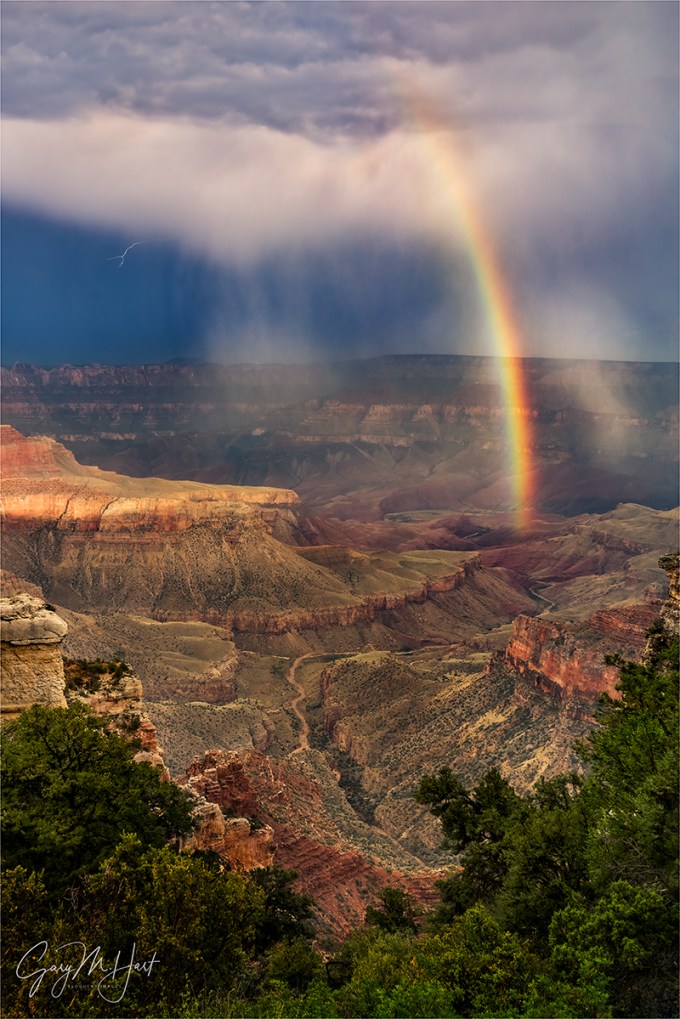
Electric Rainbow, Walhalla Overlook, Grand Canyon
Sony a7RII
Sony/Zeiss 24-70 f4
1/6 seconds
F/9
ISO 200
I’m coming to the end of a (much appreciated) break in my workshop schedule that has allowed me to focus on family, recharge mentally, and catch up on necessary but less than pressing business stuff (that’s easy to put off until I stress about it).
During this span I made a conscious decision to put my camera down and just chill. That doesn’t mean that I haven’t created (depending on your definition of “create”) new images, but it does mean that my recent creations have been old captures, newly uncovered and processed for the first time. Turns out, looking back at past images is a great way to uncover future images.
In fact, I’ve enjoyed returning to past images so much that I want to encourage other photographers to try it—even if (unlike me) you meticulously go through each image the instant you return from a shoot and are convinced when you’re done that there’s nothing left. At the very least, you might be surprised by the memories that come flooding back—not just general recollections of a vivid sunset or glowing moonrise, but long forgotten details that made the experience special.
But I’m also pretty confident that you’ll uncover stuff you missed, or didn’t fully appreciate the first time. Each time I go through old images, I’m reminded that my creative vision has evolved and refined, and that the things that appeal to me have changed. I’ve also discovered that improvements in my processing software (Lightroom, Photoshop, and Topaz DeNoise AI), as well as my own processing skill, enable me to process images I once believed beyond hope.
It doesn’t hurt that I, unlike many (most?) photographers, never delete anything. Anything. Many people are both surprised and baffled when I reveal that, but I actually have some pretty good reasons.
- Disk space is cheaper than time, and I just don’t have the time to scrutinize every single click closely enough to know without a doubt I’ll never want to return to it.
- (As I mentioned above) improvements in software and my own processing skill can and do recover previously “unrecoverable” images.
- I often return to the EXIF data of images I’ll never process to determine things like where I’ve been and when I was there; to generate reports on lens usage and image orientation (horizontal or vertical) to see if I should shake up my approach to my subjects; and to remind myself of forgotten landscape details.
- I know myself well enough to know that if I deleted images, anytime I have trouble locating an old image, I’ll immediately panic about possibly having accidentally deleted it.
To facilitate my future return to past images, when I import the images from my latest shoot, I have Lightroom copy them into a shoot-specific folder while also renaming each image to include lots of descriptive info: trip/location; capture date; camera used; the camera’s image number. Despite the fact that I have a (fairly cryptic) shorthand to compress all this info, my image names can be pretty long—and they get longer when I actually process an image and add more description. But so what?
When I open Lightroom to search for images, I just go to the folder for the year I want to search, and find the subfolder for the specific trip I’m looking for, and start browsing until something stops me. But rather just randomly pick this starting point, I use several processes for targeting potential images. To illustrate my point, below are a few new-old images that I recently revived and blogged about, plus how I found them. (Click the image for its blog story.)
Pick a favorite image and find other images from the same shoot
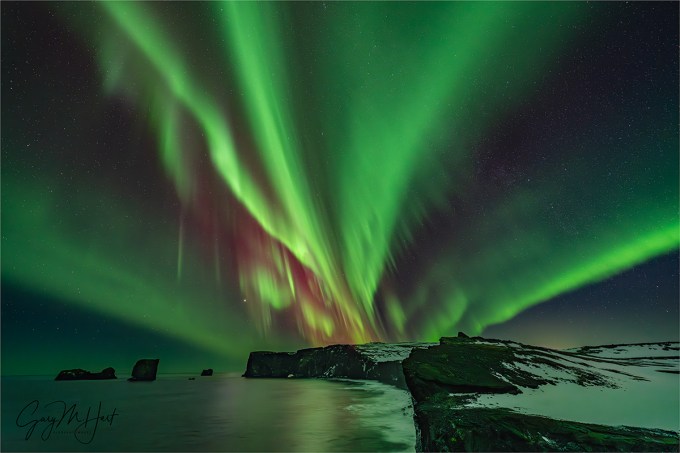
Nature’s Light Show, Aurora Over Dyrhólaey Coast, Iceland
I love returning to a shoot has already created at least one great image because it’s extremely likely that there are many more there. (This can be so easy, sometimes it almost feels like cheating.)
For example, the northern lights experience from last year’s Iceland trip was one of the most spectacular, and productive, shows (aurora or anything else) I’ve ever witnessed, one that I know I’ll be mining for new images for many years.
I’d already processed a vertical version of this scene, but wanted to add a horizontal version that conveys more of the landscape and sky’s breadth. This night I photographed each composition many times (rather than recomposing after each click), so what I was looking for was less about composition and more about what the lights were doing. The fact that this was an extremely difficult choice tells me there are many more to return to any time I choose.
Pick a favorite location
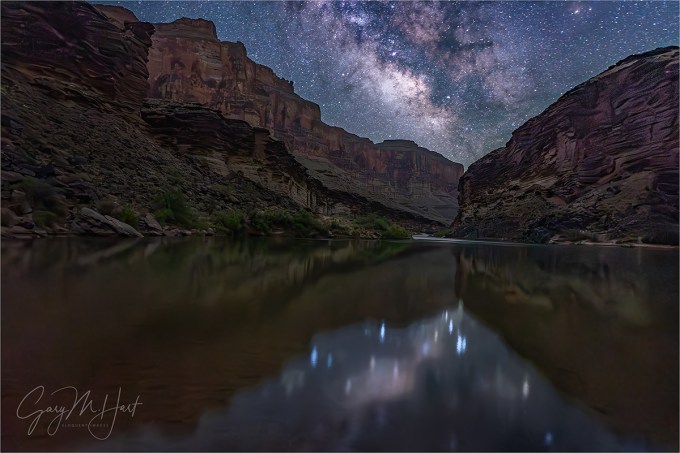
Celestial Reflection, Milky Way Over the Colorado River, Grand Canyon
My Grand Canyon raft trip is always a highlight of my year, and a favorite part of this trip that’s full of favorites is photographing the Milky Way in the darkest skies imaginable. I knew I had Grand Canyon Milky Way reflection images I really liked from a trip a few years ago, but the first time I viewed them (shortly after the trip) I was disappointed by the noise in the darkest parts of the already dark scene, and reluctantly wrote them off as lost.
But since then, I’ve been so amazed by Lightroom’s new noise reduction tool that I thought these images might just be the ultimate test. To say (hyperbole alert) I was absolutely blown away by the results would be an understatement. After working on this image and a similar one from a different year, I can’t wait to see what other “unrecoverable” dark sky images I might be able to revive.
Pick a beautiful spot that hasn’t been productive yet
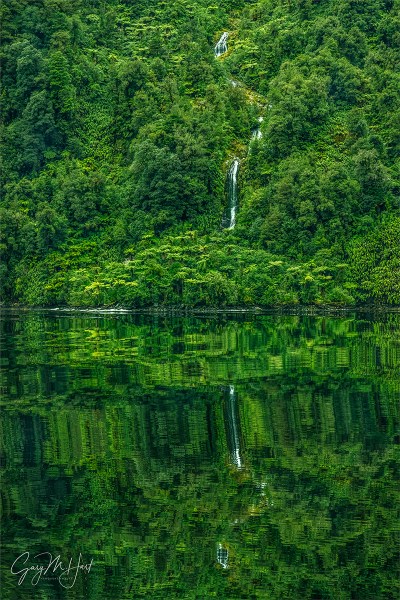
Lush Reflection, Doubtful Sound, New Zealand
This one’s a little more challenging, but I’ve learned that as my vision evolves, I discover things that didn’t grab me initially. Doubtful Sound is one of the most breathtaking places I’ve ever seen in my life. But despite Doubtful Sound’s wall-to-wall beauty, but for whatever reason, I’ve never been super happy with my captures here.
So a few weeks ago I returned to Doubtful Sound virtually. Not only did I find this completely overlooked little waterfall reflection scene, I also identified others with potential, and came away with lots of ideas for my next visit.
Return to a memorable and/or especially productive trip
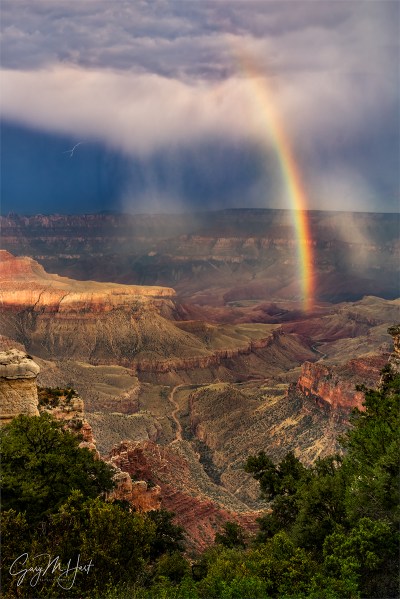
Electric Rainbow, Walhalla Overlook, Grand Canyon
Since I never delete anything, there’s comfort knowing I can return to every single image that I’ve taken in my digital life (if you’re keeping score at home, that’s all the way back to 2003), a fact that make revisiting memorable trips from the distant past might my favorite technique for uncovering “new” images.
To find an image for this week’s blog, I returned to a Grand Canyon monsoon trip that had been so productive for lightning and rainbows, I’ve always wanted to go back to see what else might be there. Scrolling through that trip’s folder in Lightroom, I almost immediately came across this long forgotten North Rim rainbow. But as soon as I saw the Lightroom previews, memories of this afternoon surged back.
With time to kill on the North Rim between workshops, Don Smith and I did what we always do: chase lightning. This was back when we had no reliable lightning app, and before the cellular service was good enough to allow us to use a lightning app even if we had one, so we just ventured out lightning hunting the old fashioned way—get in the car and go look for it. This time we ended up on Cape Royal Road, with our ultimate (sunset) destination Cape Royal itself. But pulling into Walhalla Overlook, just up the road from Cape Royal, the sky looked so promising that we stopped and set up our cameras and Lightning Triggers and pointed the whole thing down the ravine and toward the darkest clouds.
I started horizontal to increase my chance of catching lightning, but we hadn’t been there long when a rainbow started to materialize against the saturated clouds and I quickly adjusted my composition to vertical so I could include all of it. Of course no matter how beautiful the scene is, you still have to do more than aim the camera in its direction and click. In this case, when recomposing I took care to allow the foreground shrubs to complete their arc at the bottom of my composition. This create a virtual frame at the bottom of the scene, instead of two dark blobs (of shrubs) framing lighter rock, which would have been an open (subconscious) invitation to any eye to exit the scene at the bottom (the dark frame holds the eye in the scene).
Every once in a while my Lightning Trigger would click a picture of its own, but I didn’t pay any attention neither of us ever saw any lightning. These rogue clicks are actually extremely common because the Lightning Trigger is so sensitive, it alway picks up far more lightning than the eye (and camera) sees—it happens so much that eventually you just tune them out.
I can’t tell you why I never processed any of these rainbow images, but I would guess it’s because there was so much other great stuff on this trip, and shortly after I returned my attention had to turn to my upcoming Hawaii Big Island workshop. But imagine my surprise as I scanned these forgotten captures to find a small fragment of lightning. Certainly nothing to build an image around, but a great little accent for a beautiful rainbow.
I still have a couple of spaces in next year’s Grand Canyon Monsoon (lightning!) workshop
Workshop Schedule || Purchase Prints || Instagram
Stormy Weather
Click any image to scroll through the gallery LARGE


Peak Color
Posted on January 9, 2024

Twin Peaks, Mt. Tasman and Aoraki / Mt. Cook, New Zealand
Sony α1
Sony 24 – 104 f/4 G
ISO 100
f/11
.6 seconds
The first time I visited New Zealand (way back in 1995), I was surprised not just by the number of mountains, but also by their size. New Zealand’s mountains reminded me very much of the Eastern Sierra peaks I visit every year for the way their serrated profiles tower above the surrounding landscape. And while the east-side view of the Sierra Crest is truly spectacular, the New Zealand mountain experience also includes glaciers, rainforests, and an assortment of massive, glacier-carved turquoise lakes that are so pristine, locals drink straight from them.
It’s no coincidence that Don Smith and I concentrate our annual New Zealand winter workshop in the Southern Alps, the backbone of the South Island and home to all 20 of New Zealand’s 10,000+ foot peaks and all of its glacial lakes. We choose winter not just for the Milky Way’s prominence in the night sky, but also to maximize the snow on the Southern Alps.
Fox Glacier on the South Island’s West Coast is the farthest north our groups get. Our stated reason for being here is our heli-hike on Fox Glacier (we helicopter onto the glacier for a guided hike and an intimate view of its crevasses, caves, pools, and seracs), we’ve come to appreciate many other features of this segment of our workshop—specifically, the (aptly named) Blue Pools as well as the various waterfalls of Haast Pass, and the spectacular views of New Zealand’s two tallest peaks, Mt. Tasman (on the left in this image; 11,473 feet) and Aoraki / Mt. Cook (12,218 feet).

Dark Sky Dreams, Lake Matheson, New Zealand
Our Lake Matheson hike during our stay in Fox Glacier (also the name of the town where we stay) is a particular highlight because of its mirror reflection of Tasman and Aoraki/Cook. But on our last morning in Fox Glacier, we photograph sunrise on the two peaks from Fox Glacier Vista, an underrated vantage point that’s a great way to wrap up our stay.
Given all the sights we see throughout the 10 days of this workshop, it’s easy to overlook this brief stop before our long drive to Aoraki / Mt. Cook National Park on the other side of the Southern Alps (less than 30 miles as the crow flies, but nearly 300 (breathtaking) miles as the Mercedes Sprinter Van drives). But the view here is nice, even during an ordinary sunrise, and always worth the stop.
The sunrise on our Fox Glacier departure morning in 2022 was anything but ordinary. We always depart for this shoot expecting a nice shoot, but usually my mind is more on the long drive ahead and I’m content to stand back an drink in the view. But this morning we could tell from the instant we arrived that the ingredients were in place for something truly special: Right at our feet, a frosty glaze covered the meadow and spread all the way to the trees, and in the distance, layers of broken clouds hovered above the peaks, which in the crystal clear air appeared etched against the horizon.
Read about the science behind sunrise/sunset color
Though it was still fairly dark, hints of color were already seeping into the clouds behind the Southern Alps. This was Don’s and my first visit following two years lost to COVID, and I immediately saw that the vista we knew so well had been expanded and upgraded, something I initially found disorienting. While the rest of the group rushed to set up at the most obvious vantage point, I took a couple of minutes to explore along the short trail to make sure we weren’t missing something new, before returning confident that we were indeed in the best place. (I was so focused on the view during this little jaunt that I failed to notice a small piece of jutting root that aggressively reached out to send me sprawling in the dirt—my skinned knees and bruised ego were only slightly comforted by the knowledge that no one actually witnessed my face-plant.)
In these situations, when spectacular conditions rival the scene I came to photograph, I try not to get too cute with my compositions. If there’s an obvious complex option that doesn’t distract from the natural beauty of the moment, I’ll take it, but generally I prefer to let the scene speak for itself by keeping my composition as simple as possible.
But that doesn’t mean I don’t pay attention to the entire scene. In this case we were limited by a fence between us and the meadow, and since I already knew the view, I concentrated on simple framing. With the combination of matching snow-capped Tasman and Aoraki bookending the closer Craig Peak, and parallel horizontal layers throughout the scene, it didn’t take a rocket scientist to identify an opportunity for what I call “aggressive symmetry.” The pair of larger foreground trees, while not perfectly in balance with the rest of the frame, were close enough to symmetrically arranged that I was pleased with their (unavoidable) inclusion.
Given the way the color was progressing as the sun brightened behind the mountains, I worked out my composition long before it peaked, clicking every few seconds while saying to myself each time, surely this must be maximum color. But it just kept intensifying—the thrill of witnessing it was matched only by the thrill of listening to the rest of the group react to what we were seeing.
As I clicked, I couldn’t help think that this was turning out to one of those sunrises (or sunsets) with color so vivid that I know people viewing the images won’t believe they’re real. Fortunately, from sunrises/sunsets to wildflowers to auroras, photographers know that there’s nothing subtle about color in Nature, and that when Mother Nature wants to, she really can dial the vivid up past the point of credibility. The best way to describe these moments is that to me it feels like the atmosphere possesses a physical component that penetrates my skin and pretty much everything else it touches until I feel like the entire world is actually humming with color.
You never know when Nature’s little (or big) surprises will happen, but their possibility is the thing gets me out of bed in winter darkness, keeps me out well past dinnertime, and makes all the cold, rain, snow, or whatever other hardships Mother Nature wants to throw my way, tolerable.
Join Don and me in New Zealand
Workshop Schedule || Purchase Prints || Instagram
Sunrise / Sunset Color
Click any image to scroll through the gallery LARGE


The Exception That Proves the Rule
Posted on January 2, 2024
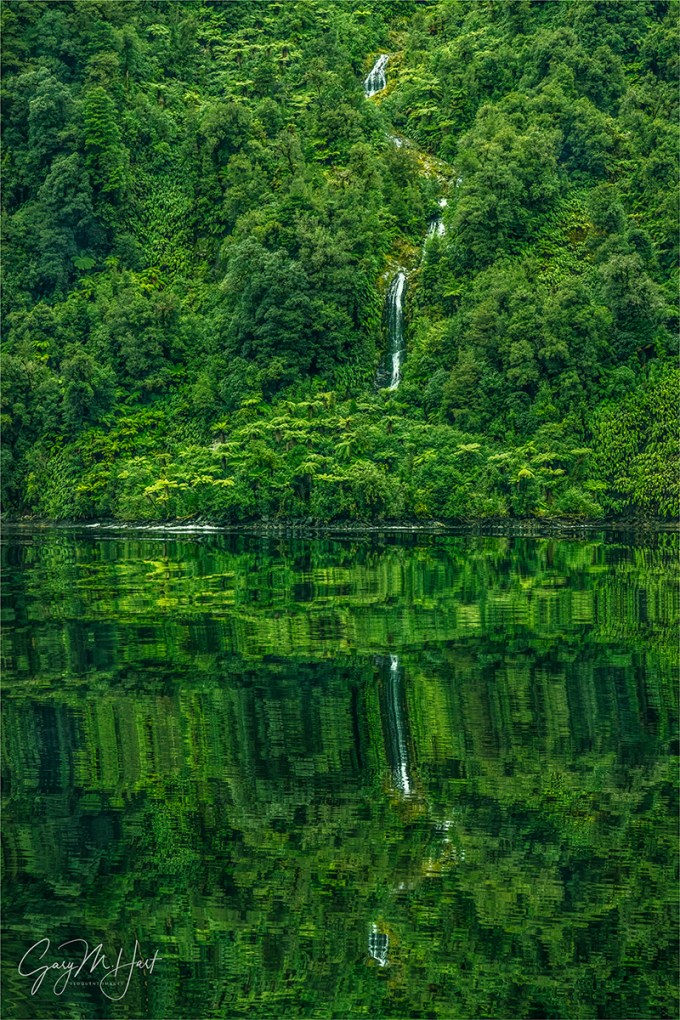
Lush Reflection, Doubtful Sound, New Zealand
Sony a7R V
Sony 24-105 f/4 G
ISO 800
f/8
1/80 second
A few years ago I blogged about shooting sans tripod on my annual Grand Canyon raft trip. You have no idea how large a paradigm shift this was for me, but I tried to rationalize my sacrilege by saying that any shot without a tripod is better than no shot at all. Since then I’ve been a little more willing to forego my tripod when the situation calls for it, but each each time I do only reinforces for me all the reasons I’m so committed to tripod shooting in general.
But I can’t deny that there are times when a tripod just won’t work. For example, sports and wildlife shooters who deal with moving targets can’t be tied down by a tripod. And climbers usually have better things to do with their hands than fumble with a tripod, not to mention the fact that tripods tend to perform less than optimally on a vertical surface. On the other hand, because I only shoot landscapes on solid ground, my own style has evolved to incorporate the tripod’s many benefits, with only extremely rare exceptions.
Part of my landscape-centric, tripod-only approach is a simple product of the way I’m wired—I’m pretty deliberate in my approach to most things, usually tilting toward planning and careful consideration over quick decision making and cat-like reflexes. That likely explains why my sport of choice is baseball, (even though I’m not a golfer) I actually enjoy golf on TV, and prefer chess and Scrabble to any video game (I’m pretty sure that the last video game I played was Pong). It also explains my preference for photographing stationary landscapes—I just need to know that my subject will still be there when I’m ready, no matter how long that takes.
But no matter how stationary the subject is, adding a bobbing boat to the equation pretty much negates the tripod. One example is the Grand Canyon raft trip, which involves many hours each day floating through spectacular, continuously changing scenery, and where every bend in the river advances the story like turning pages in a novel. And every (non-COVID) winter Down Under since 2018, Don Smith and I have done a New Zealand photo workshop, that, among many spectacular solid ground opportunities, features an all day cruise on Doubtful Sound.
Misnamed, Doubtful Sound isn’t a sound at all, but rather a spectacular fiord (FYI, that’s how they spell fjord down there)—a narrow, twisting, multi-fingered ocean inlet lined with towering glacier-carved walls cut by plunging waterfalls. And as if that’s not beautiful enough, consider also the sound’s ubiquitous rainforest green against a background of snow-capped peaks, and you might understand why this breathtaking fiord is near the top of my list of reasons for declaring New Zealand the most beautiful place I’ve ever photographed.
Because I once rigidly proclaimed that I never take a (serious) photo without my tripod, on my earliest Grand Canyon raft trips I settled for low-res, “I was there” jpeg snaps with a waterproof point-and-shoot—fine for social media, but far from the quality a professional photographer requires. But after several years I finally (I’m a slow learner) admitted to myself that I was missing too many great images by only shooting solid ground images, and started breaking out my “adult” camera while floating the Colorado River’s many long stretches between rapids.
So, by the time Don and I started doing the annual Doubtful Sound cruise, I was mentally fortified enough to forego my tripod for a full day without suffering a panic attack. This transition wasn’t without its growing pains—photographing “stationary” landscapes from a moving boat was challenging enough (as far as I was concerned, my subjects were no longer stationary), but me trying to capture, using a camera set-up for tripod-only landscapes, dolphins leaping in our boat’s wake was downright downright comical. The best dolphin images I could manage that first year were of the splashes left after their tails disappeared beneath the water. Since then I’ve just accepted the fact that I’m not a wildlife shooter and have just been content to watch the (thrilling) show—but I do now at least take the time before each cruise to set up my camera for action, just in case…
Thanks to its lofty walls and numerous twists, most of Doubtful Sound is sheltered enough to allow glassy reflections throughout. And given the number of waterfalls plunging into the sound—many that that flow year-round, far more that pop up only after one of the sound’s (frequent) showers—I don’t know if anyone has bothered to name the smaller ones like the one in this image from last year’s cruise.
This waterfall stood out for its verdant surroundings and shimmering reflection. With our boat moving laterally fast enough that the scene changed by the second (my worst nightmare), I moved much more quickly than I’m comfortable to capture it, pretty much just framing and clicking by feel.
Of course this whole experience further underscored why I prefer using a tripod. But it also fortified my resolve not to be limited by my tripod-always-no-exception rule. As this image demonstrates, today’s stabilization and high ISO technology obviates what was once considered the tripod’s primary value: eliminating hand-held motion blur. Despite standing on a rocking boat and shooting at 104mm and 1/80 second, this image really is just as sharp as it would have been with my tripod.
But just as sharp is only part of the quality equation, because capturing it also forced me to compromise by using 800 ISO—far from a dealbreaker, given my camera’s high ISO capability and today’s noise reduction processing tools, but less than ideal. Nevertheless, the thing I most miss without my tripod (or at least, without the stationary world that allows me to use a tripod) is the ability to craft my image and give a beautiful scene like this enough attention to find those extra little somethings that take it to the next level.
As much as I appreciated the ability to fire at will while floating beneath Doubtful’s vertical green walls, the landscape photographer in me missed the ability to savor the scene, and to be the one who decides when it’s time to click, and time to move on. In this case, had my tripod and I been solidly planted on terra firma, I’d have taken the time to study the subtly variegated foliage, identify the most distinctive shrubs and patterns, and monitor the shifting reflection, before framing and clicking. And had I been using a tripod, I’d also have had much more shutter-speed flexibility for managing the scene’s motion—both in the tumbling fall and the undulating reflection.
But alas, none of that was possible in this situation. So I have to settle for being extremely happy that I was able to capture a very small part of what makes Doubtful Sound (and New Zealand) so special.
Don and I would love to share New Zealand with you in person
Workshop Schedule || Purchase Prints || Instagram
The Most Beautiful Place on Earth
Click any image to scroll through the gallery LARGE


2023: The Year of Fire and Ice
Posted on December 26, 2023


One of my favorite things to do at year’s end is to look back at the images that made the year especially memorable. And my favorite part of this exercise is the realization that, even though I can’t say how, I know I’ll be similarly rewarded in the coming year.
But what to do with the images I’ve selected? I’ve always struggled with the popular “top-whatever” end-of-year countdowns because the choices are so subjective and criteria dependent. Am I trying to identify my “best” images (and anyway, how is “best” defined?), or should I focus on my most memorable experiences?
Instead, I simply prefer identifying the images that make me happiest, using a variety of criteria that can include special memories, great effort, personal creativity, or just plain gifts from Nature that are so beautiful my only job is to not screw the moment up. And I’ve done enough of these end of year retrospectives to know that my favorites won’t necessarily be yours—and vice versa.
Among 2023’s unforgettable experiences were the two greatest northern lights shows I’ve ever witnessed, a volcanic eruption, a photobombing rocketship, and a lightning display that was as thrilling as it was unexpected. But also in there are some quiet moments, like wandering through a stand of blooming dogwood in a light rain, or exploring fall color draped cascades and pools beneath a towering waterfall. It was especially gratifying to share most of these experiences with workshop students.
Coming up with a predetermined number of images, then putting those selections in some kind of order, is arbitrary and inevitably requires choices I don’t want to make—and will almost certainly regret. So I just put them all in a gallery, set them to sort randomly (the order will be different for each viewer and each visit), and let you pick your own favorites. One year the Highlights gallery might have only seven or eight images; the next year there could be two dozen. Maybe 2023 was an especially bountiful year, or maybe it’s just that my standards have dropped, but this year I ended up with 36 images—and reserve the right to add more. And since virtually every one of them was featured in a blog, you can browse 2023 blog history (just keep scrolling down until you get to the image you’re looking for) to read the story of any image that especially strikes you.
Workshop Schedule || Purchase Prints || Instagram
2023 Highlights (Unabridged)


A Shot in the Dark
Posted on December 19, 2023

Nature’s Light Show, Aurora Over Dyrhólaey Coast, Iceland
Sony α1
Sony 12-24 GM
6 seconds
F/2.8
ISO 6400
At its best, still photography reveals aspects of the world invisible to, or overlooked by, human vision. In nature photography, we create these visual revelations when we use an extremely fast exposure to freeze the intricate detail of a lightning bolt that’s a memory before our brain registers it. Or when we dial up a long exposure to turn pinpoint stars into symmetrical arcs that reveal Earth’s rotation.
As a lifelong admirer of the night sky, I’m a huge fan of the camera’s ability to see in the dark far better than I can, extracting stars and celestial color too faint for my eyes. This is possible because cameras can accumulate light over an extended period, and because the camera’s ability to “see” color is less dependent on the amount of light it captures than the human eye is.
No subject more clearly demonstrates the camera’s light gathering ability better than the Milky Way. A relatively faint ribbon of light in even the darkest sky, a high ISO (extremely light sensitive), large aperture, multi-second exposure (30 seconds or less to minimize star streaking) brings to life the exquisite color and detail of starlight infused with interstellar dust and gas.
This ability to accumulate light also helps the camera extract color from apparent darkness. But just as important to the camera’s light gathering advantage over the human eye is the way it does it. The human eye uses a collaboration of rods and cones to collect light, with the rods doing the heavy lifting in low light, pulling enough monochrome information for us to discern shapes, while providing little help with color and depth. The cones that complete the scene with color and depth information require much more light to do their job. But a digital sensor, though blind to depth, captures photons using tiny photosites specifically designed to discern color.
With the first DSLRs, way back in the early 2000s, successful night photography required help from external light, like light painting with artificial light (which I never do) or moonlight (which I did all the time). But sensor technology has improved steadily over the years, not just the sensors’ resolution, but their light capturing ability too. Today I don’t hesitate photographing dark sky, the darker the better. Nevertheless, despite many years photographing the night sky, it wasn’t until 5 years ago that I got to photograph an aurora.
In January of 2019 Don Smith and I had traveled to Iceland to scout for a future photo workshop. We chose winter to ensure the longest, darkest nights for the best chance to view an aurora. Having seen thousand of pictures of the northern (and southern) lights, I believed I had an idea of what to expect, but I had no idea. No. Idea.
Before I start raving about the camera’s ability to photograph an aurora’s unseen color, let me just say that no picture can do justice to the experience of witnessing an aurora in person. I’m not talking about the green, horizon-hugging glow that lucky high-latitude Lower-48 residents enjoy from time to time (that’s still worth staying up and freezing for, BTW), but an actual sky-spanning dance of light beams, waves, and swirls. Rivaled only (in my book) by a total solar eclipse and a brilliant comet, a brilliant aurora display might possibly be the most beautiful thing you’ll ever witness in Nature.
But, despite lacking the dynamics of personal aurora experience, a camera does do better than the eye in one important aurora aspect: color. That’s because to the naked eye, many aurora displays aren’t bright enough to engage the cones and appear monochrome to our eyes. A camera, on the other hand, reveals auroras in all their kaleidoscopic glory. And though color in an extremely strong aurora is indeed plainly visible to the unaided eye, no matter how strong the aurora, the camera will always “see” more color than we will.
Since that first visit, I’ve returned to Iceland most winters, and have viewed many beautiful northern lights shows. Each was unique and beautiful in its own way, but hold a gun to my head and ask me to pick a favorite, and I think it would be a tie between back-to-back nights early this year (January)—first at Kirkjufell, then at Dyrhólaey on the South Coast. The Kirkjufell night was special because it featured a spectacular display above an Iceland icon. The Dyrhólaey show, while lacking the instantly recognizable foreground of the previous night, was even brighter and more expansive, at times spanning the entire sky.


I blogged about both nights earlier this year:
- Kirkjufell: It’s All About the People
- Dyrhólaey 1: Lights, Camera, Action!
- Dyrhólaey 2: Blessings
The image I’m sharing today is another one from the Dyrhólaey night. With our eyes we could actually see a little of the green, but not the red. And as beautiful as this image is, even with my 12 – 24 lens at its widest, it didn’t come close to capturing the entire horizon-spanning display.
One more thing
When there’s not enough light for visible color, colors in the night sky become the photographer’s processing choice. For my Milky Way images, that’s mostly a matter of adjusting my white balance in Lightroom until sky color feels right. I find a lot of other photographers’ night images too cyan for my taste, and if you look at my older night images, you’ll see that I used to skew them fairly blue. But in my recent night images, I’ve gone for something closer to black with just a hint of blue/violet, which is what I’ve done with the background sky in this image.
The color of the northern lights is similarly subjective, and starts with the color temperature my camera’s auto white balance chooses. Since I don’t have as much experience photographing auroras as I do the Milky Way, I’ve started identifying northern lights images that I like, taken by other photographers, then try to adjust my own images’ white balance in Lightroom to something that comes close to that. But looking at the gallery below, with greens that skew toward yellow (warmer), and some that skew toward blue (cooler), it’s clear that this is still a work in progress. But it does appear that I’m moving a toward cooler aurora images. And believe it or not, none of my northern lights images have any saturation added because they don’t need it—just giving the scene a little more light than my eyes see is all that’s necessary to bring out this eye-popping color.
The Lights Fantastic
Click any image to scroll through the gallery LARGE


Dressed to Chill
Posted on December 13, 2023
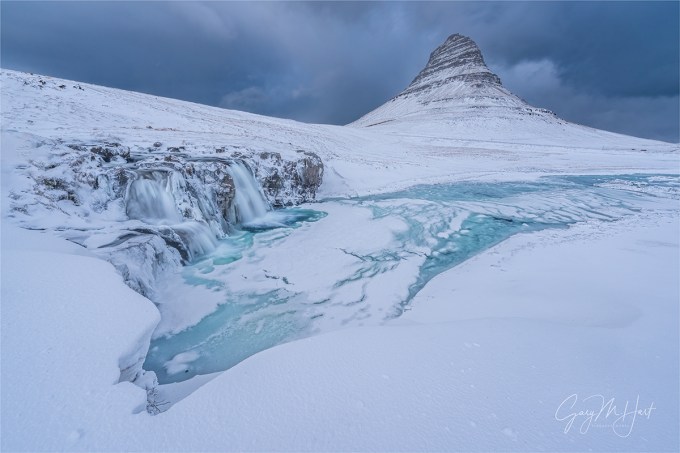
Winter Chill, Kirkjufell and Kirkjufellsfoss, Iceland
Sony a7R V
Sony 12-24 GM
1 second
F/11
ISO 100
From brisk to chilly to freezing to downright frigid, we warm blooded humans have lots of labels for the discomfort imposed by low temperatures. But I’ve always felt that we need something beyond frigid, something that adequately conveys the true suffering low temperatures inflict, and would like to submit an even chillier option: stupid cold. At the risk of stating the obvious, “stupid cold” is so cold, the only people out in it without a life-or-death reason (for example, the house is on fire) are, well….
Before I get into my latest encounter with stupid cold, let me offer a little background. Being California born and raised, I often find myself with a slightly higher “it’s too cold” threshold than the average person. I’m not exactly proud to say that pretty much any time the temperature drops below 50, I’m breaking out the wool hat, gloves, and down jacket. Without shame. I get a lot of grief for this from workshop participants hardened by more extreme climes, but I take the abuse with a shrug and smile because I’m warm. In fact, no matter how cold it gets in California, I’ve always been able to bundle up enough to stay comfortable. Viva la Mediterranean climate.
So why in the world would Don Smith and I schedule Iceland photo workshops in January? Because Mediterranean climates alone do not a photographer make. And as you’ve heard me say many times, the best time for photography is usually the worst time to be outside.
As you might guess, Iceland winters are no exception to this rule. While Iceland is beautiful year round, in winter low-angle sunlight creates an all-day golden “hour,” long nights maximize the aurora viewing potential, pristine snow purifies the harsh terrain, cathedral-like ice caves dot the island’s many glaciers, and storm-whipped surf attacks the volcanic coast with relentless fury.
On the other hand, witnessing Iceland’s winter beauty means enduring “normal” highs in the 30s and lows in the 20s in the warmest parts of the country, and colder if you venture north and away from the ocean. Suffice to say, even on a good day, January in Iceland approaches my own stupid-cold threshold. Add to that frequent cold snaps that drop the mercury down to single digits and lower, combined with wind that can rip off a car door (Icelanders always park facing the wind), and I start feeling stupider by the minute.
Of course many people live places that get this cold, but how many of them actually go out specifically at the times when it’s coldest (after dark until sunrise)—and then just stand there? Unfortunately, when you’re a photographer, sitting by the fire when the northern lights are dancing, or staying in bed at sunrise, are never viable options.
So anyway, about those single digit lows. Surely, I rationalized, anyone who can endure San Francisco Giants night games at Candlestick Park (RIP) in July (as Mark Twain never said but should have, “The coldest winter I ever spent was a summer in San Francisco.”) can (given enough layers) handle whatever Iceland has to dish out. So, on my first visit I simply employed my tried and true Candlestick Park infinite layer approach. I mined my closet for cold weather gear, crammed everything I found into my largest suitcase, then crossed my fingers when the IcelandAir ticket agent hefted the bulging cube onto the scale (49.8 pounds, thankyouverymuch). Off to Iceland.
Don and I landed in Reykjavik to find temperatures as advertised. Wind too. I know, now you’re going to tell me about your Antarctica penguin expeditions, or that time in Saskatchewan when you stayed up all night to photograph the northern lights, but you don’t know true suffering until you sit through the last pitch of a night game at “the Stick.” Or so I thought.
My Candlestick more-is-better strategy turned out to be okay for Iceland (I didn’t die), but I can’t say I didn’t suffer for my craft on that first visit. Flannel-lined pants kept my legs happy enough, and my torso survived inside a long-sleeve undershirt, Pendleton wool shirt, and a Patagonia Down Sweater. A conventional wool cap kept my ears from turning black and falling off, but I fear they’ll never forgive me.
Worst of all, the thing thirty years of Candlestick experience hadn’t prepared me for, was cold hands and feet. Oh. My. God. Wool socks and high-top hiking boots? Not even close. And I thought I was ready with my thin poly running gloves as liners beneath thick wool gloves. Ha! The problem, I soon realized was that as cold as Candlestick’s concrete was, it wasn’t nearly as cold as the Iceland snow I stood on for hours at a time. And unless you’re keeping score, watching a baseball game doesn’t require hands unless there’s something to cheer for (a rare event indeed during most of my Giants Candlestick years). At the ‘Stick I could sit on my (gloved) hands, or bury them in pockets or beneath my wool blanket (never left home without one), and not think about them again until I pulled my keys from my pocket in the parking lot. But a camera, it turns out, requires hands. Fingers too. I quickly found that I could compose, focus, and click maybe three frames before the cold drove me to our car to pound life back into my numb digits. Not a productive approach.
Never let it be said that I don’t learn from my mistakes. When Don and I returned the next year, I was ready. And on each subsequent visit, I’ve upped my cold weather game to the point that I now scoff at single digits with sub-zero wind chills.
For me it’s all about layers. Not just piling on California-grade cold weather gear until I’m comfortable (but look like an Apollo astronaut), but actually layering clothing designed for layering and extreme cold: silk, wool, down, and Gore-Tex. Now I start winter mornings with thin wool liner socks under thick wool socks, heavy-duty insulated (don’t skimp on the insulation) and waterproof boots, silk long-johns, fleece-lined guide pants (jeans, even lined, don’t cut it and are worthless when wet), lined powder pants (lifesavers in extreme cold), silk or wool long-sleeve undershirt, insulated flannel shirt, down vest, down parka, layered gloves (more on this later), neck gaiter, and a down hat that covers my ears and snaps under my chin. I don’t usually wear all of these layers at once; instead, I add and subtract layers as conditions dictate, but never make the mistake of packing a layer away in the suitcase where I can’t get to it until I get to my room (and I no longer need it).
This year another big concession I made to Iceland’s winter cold was upgrading my jacket (again). Since the Patagonia Down Sweater I used on that first visit was woefully inadequate, the next year I upgraded to super-puffy North Face down jacket (picture the Michelin Man). That was plenty warm enough, but not waterproof, or as long as I’d like. So this year I purchased the warmest down parka LL Bean sells—it’s waterproof and drops all the way down below my butt.
Another important consideration is rain (worse than snow). Since my boots and parka are waterproof, all I need to add to my warmth layers when the forecast hints at the possibility of rain (no matter how slight), are waterproof over-pants (the powder pants qualify, but can be too warm), a waterproof hat, and an umbrella. Since I’m waterproof head-to-toe, the umbrella is more for my camera than me when I’m shooting.
Back to the gloves. Gloves are probably the number one Catch-22 for most photographers because thick enough to keep your fingers warm pretty much guarantees too thick to control a camera. But after years of trying, and drawers full of abandoned gloves, I think I’ve finally cracked the code.
It starts with the acceptance that there’s no one size fits all solution. Therefore, on all cold weather trips I always carry three pairs of gloves. First, I have a pair of Eddie Bauer First Ascent gloves that are thick enough to provide some warmth on their own (warmer than my running gloves), but tactile enough to enable me to easily control all my camera’s buttons and dials, as well as my phone’s touch screen, with all fingers. Over these I slip a pair of Black Diamond convertible (the top pulls back to expose the fingers beneath) fleece mittens. My third pair is the warmest down gloves I can find—these go on (and the others come off) when I’m just standing around (for example, waiting for the northern lights) and my fingers are starting to chill from inactivity.
The thinner gloves and mittens combination while shooting keeps my hands warm enough (though not quite toasty) to use my camera in single digit, windy conditions. And since, even with the mittens fully engaged, I can still focus and press the shutter button, I only need to expose the thinner glove (of one hand) for a few seconds at a time to adjust a dial or press a button.
About this image
Going through prior trips searching for unprocessed images, I found this one from early in this year’s first (of two) Iceland workshops. This was an unusually chilly evening on the Snaefellsnes Peninsula, even by Iceland January standards. I don’t have the exact numbers, but I’m guessing that the temperature was around 20F, and the wind was around 20 MPH as well. But I was ready.
Despite the clouds this evening, I found the fresh snow especially beautiful and set out to find a composition to capture it. Because Kirkjufellfoss (the waterfall) was flowing nicely (it’s often frozen when we visit), I walked a little farther down the trail than I normally do to get a better angle on the fall. Also wanting to feature lots of foreground snow and turquoise water, and include all of Kirkjufell and some clouds, I opted for my 12-24 lens. Going to 12mm relegated Kirkjufell to a less prominent role than it plays when you’re actually there, but that was fine because this emphasizes my favorite elements that evening: the snow and water.
Join Don and Me in Iceland (add yourself to the waiting list for first shot at the next trip)
Workshop Schedule || Purchase Prints || Instagram
Stupid Cold
Click any image to scroll through the gallery LARGE


 Eloquent Images by Gary Hart